Kenneth Jeffrey Marshall
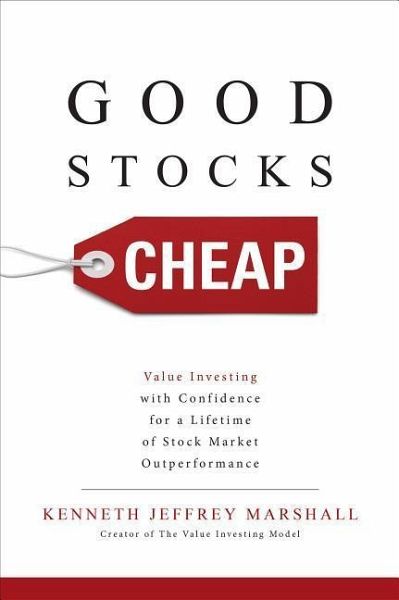
Good Stocks Cheap: Value Investing with Confidence for a Lifetime of Stock Market Outperformance
Kenneth Jeffrey Marshall
Good Stocks Cheap: Value Investing with Confidence for a Lifetime of Stock Market Outperformance
- Gebundenes Buch
- Merkliste
- Auf die Merkliste
- Bewerten Bewerten
- Teilen
- Produkt teilen
- Produkterinnerung
- Produkterinnerung
For investors of all levelsâ a unique, three-part model proven to pinpoint stocks that supercharge any portfolio, in good times and bad
Andere Kunden interessierten sich auch für
Barry RitholtzHow Not to Invest14,99 €
Darius ForouxThe Stoic Path to Wealth13,99 €
Adam SeesselWhere the Money Is26,99 €
Darius ForouxThe Stoic Path to Wealth13,99 €
Mark DouglasTrading in the Zone46,99 €
Jeffrey A. HirschStock Trader's Almanac 202538,99 €
Peter LeedsPenny Stocks for Dummies29,99 €-
-
-
For investors of all levelsâ a unique, three-part model proven to pinpoint stocks that supercharge any portfolio, in good times and bad
Produktdetails
- Produktdetails
- Verlag: McGraw-Hill Education
- Seitenzahl: 240
- Erscheinungstermin: 14. Juni 2017
- Englisch
- Abmessung: 238mm x 154mm x 27mm
- Gewicht: 452g
- ISBN-13: 9781259836077
- ISBN-10: 125983607X
- Artikelnr.: 46879058
- Herstellerkennzeichnung
- Libri GmbH
- Europaallee 1
- 36244 Bad Hersfeld
- gpsr@libri.de
- Verlag: McGraw-Hill Education
- Seitenzahl: 240
- Erscheinungstermin: 14. Juni 2017
- Englisch
- Abmessung: 238mm x 154mm x 27mm
- Gewicht: 452g
- ISBN-13: 9781259836077
- ISBN-10: 125983607X
- Artikelnr.: 46879058
- Herstellerkennzeichnung
- Libri GmbH
- Europaallee 1
- 36244 Bad Hersfeld
- gpsr@libri.de
Kenneth Jeffrey Marshall teaches value investing in the Masters in Finance program at the Stockholm School of Economics in Sweden, and at Stanford University. He also teaches asset management in the MBA program at the Haas School of Business at the University of California, Berkeley. Marshall is a past member of the Stanford Institute for Economic Policy Research; he taught Stanford's first-ever online value investing course in 2015. He earned his MBA at Harvard Business School.
Preface
Acknowledgements
Introduction
Part I: FOUNDATIONS
Chapter 1: The Quiet Outperformer
Chapter 2: Why Stocks?
Chapter 3: Price and Value are Different
Chapter 4: Measuring Performance
Part II: THE VALUE INVESTING MODEL
Chapter 5: Understanding the Business
Chapter 6: Accounting is a Language
Chapter 7: Capital Employed
Chapter 8: Operating Income
Chapter 9: Free Cash Flow
Chapter 10: Book Values and Shares
Chapter 11: Past Performance
Chapter 12: Future Performance
Chapter 13: Shareholder-Friendliness
Chapter 14: Inexpensiveness
Chapter 15: Price Drives Risk
Chapter 16: Misjudgment and Misaction
Part III: MAINTENANCE
Chapter 17: Portfolios and Selling
Chapter 18: Endurance
Chapter 19: Generating Ideas
Chapter 20: Differences Among Value Investors
Chapter 21: Preservation
Glossary
Bibliography
Notes
Index
Acknowledgements
Introduction
Part I: FOUNDATIONS
Chapter 1: The Quiet Outperformer
Chapter 2: Why Stocks?
Chapter 3: Price and Value are Different
Chapter 4: Measuring Performance
Part II: THE VALUE INVESTING MODEL
Chapter 5: Understanding the Business
Chapter 6: Accounting is a Language
Chapter 7: Capital Employed
Chapter 8: Operating Income
Chapter 9: Free Cash Flow
Chapter 10: Book Values and Shares
Chapter 11: Past Performance
Chapter 12: Future Performance
Chapter 13: Shareholder-Friendliness
Chapter 14: Inexpensiveness
Chapter 15: Price Drives Risk
Chapter 16: Misjudgment and Misaction
Part III: MAINTENANCE
Chapter 17: Portfolios and Selling
Chapter 18: Endurance
Chapter 19: Generating Ideas
Chapter 20: Differences Among Value Investors
Chapter 21: Preservation
Glossary
Bibliography
Notes
Index
Preface
Acknowledgements
Introduction
Part I: FOUNDATIONS
Chapter 1: The Quiet Outperformer
Chapter 2: Why Stocks?
Chapter 3: Price and Value are Different
Chapter 4: Measuring Performance
Part II: THE VALUE INVESTING MODEL
Chapter 5: Understanding the Business
Chapter 6: Accounting is a Language
Chapter 7: Capital Employed
Chapter 8: Operating Income
Chapter 9: Free Cash Flow
Chapter 10: Book Values and Shares
Chapter 11: Past Performance
Chapter 12: Future Performance
Chapter 13: Shareholder-Friendliness
Chapter 14: Inexpensiveness
Chapter 15: Price Drives Risk
Chapter 16: Misjudgment and Misaction
Part III: MAINTENANCE
Chapter 17: Portfolios and Selling
Chapter 18: Endurance
Chapter 19: Generating Ideas
Chapter 20: Differences Among Value Investors
Chapter 21: Preservation
Glossary
Bibliography
Notes
Index
Acknowledgements
Introduction
Part I: FOUNDATIONS
Chapter 1: The Quiet Outperformer
Chapter 2: Why Stocks?
Chapter 3: Price and Value are Different
Chapter 4: Measuring Performance
Part II: THE VALUE INVESTING MODEL
Chapter 5: Understanding the Business
Chapter 6: Accounting is a Language
Chapter 7: Capital Employed
Chapter 8: Operating Income
Chapter 9: Free Cash Flow
Chapter 10: Book Values and Shares
Chapter 11: Past Performance
Chapter 12: Future Performance
Chapter 13: Shareholder-Friendliness
Chapter 14: Inexpensiveness
Chapter 15: Price Drives Risk
Chapter 16: Misjudgment and Misaction
Part III: MAINTENANCE
Chapter 17: Portfolios and Selling
Chapter 18: Endurance
Chapter 19: Generating Ideas
Chapter 20: Differences Among Value Investors
Chapter 21: Preservation
Glossary
Bibliography
Notes
Index