
Andere Kunden interessierten sich auch für
 The Government Inspector17,99 €
 Plays of Near & Far15,99 €
") Back to Methuselah (Esprios Classics)27,99 €
Back to Methuselah (Esprios Classics)27,99 € The Rivals17,99 €
 Plays by Women34,99 €
 The Second Mrs Tanqueray17,99 €
 Dangerous Corner17,99 €


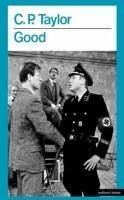
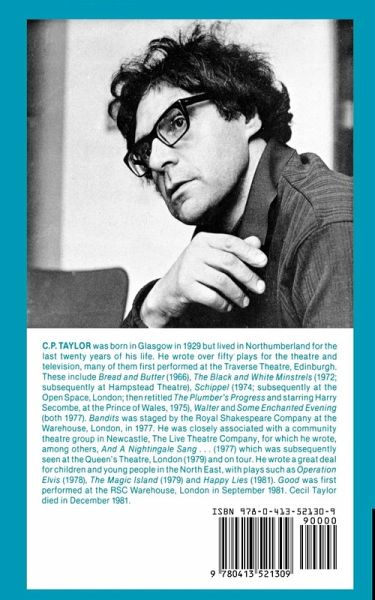
'Germany in the Thirties. Nothing, I should have thought, was harder to dramatise. Witness all those turgid films and telly-plays full of stuffed SS uniforms. But C. P. Taylor's Good is an original and intelligent play, light in texture but serious in content, that tries to work out how decent, liberal, humane men came to be swept up by the Nazi juggernaut.' - Michael Billington, Guardian 'Taylor's play is about moral compromise in a political fog, and like all good plays is as much abou tnow as then.' - Snoo Wilson, Time Out 'A fine mature new play from one of our best (though underrated) dramatists.' John Elsom, Listener The first production of Good, with Alan Howard in the lead, was by the Royal Shakespeare Company at their London Warehouse in September 1981. The production was revived in January 1982.