102,99 €
inkl. MwSt.
Versandkostenfrei*Erscheint vorauss. 20. März 2026
Melden Sie sich
hier
hier
für den Produktalarm an, um über die Verfügbarkeit des Produkts informiert zu werden.

51 °P sammeln
Andere Kunden interessierten sich auch für
 Proper Jihad12,99 €
 Muslims in Medieval Italy114,99 €
 Bilingual Version English Germany Standar Edition") The Life of Prophet Idris AS (Enoch) Bilingual Version English Germany Standar Edition18,99 €
The Life of Prophet Idris AS (Enoch) Bilingual Version English Germany Standar Edition18,99 € Bilingual Version English Germany") Islamic Folklore The Biography of Prophet Ayyub AS (Job) Bilingual Version English Germany14,99 €
Islamic Folklore The Biography of Prophet Ayyub AS (Job) Bilingual Version English Germany14,99 € Being German, Becoming Muslim66,99 €
 Islam and the Governing of Muslims in France41,99 €
 The Mysterious Letters of the Qur'an45,99 €




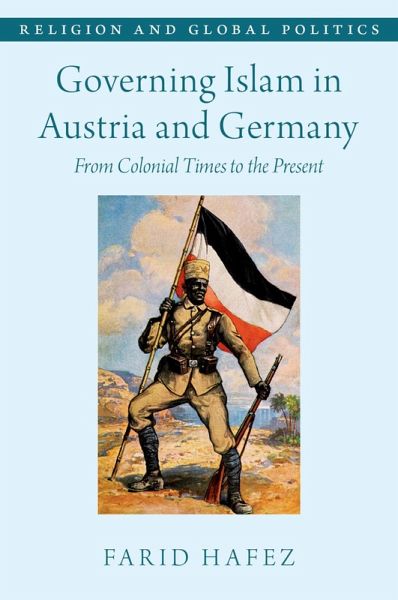
Governing Islam in Austria and Germany argues that the foundations of contemporary policies towards Islam in Austria and Germany are deeply rooted in colonial practices from the late 19th and early 20th centuries. Author Farid Hafez traces how colonial knowledge and governing techniques vis-à-vis Muslims--acquired during the Austro-Hungarian occupation of Bosnia and Herzegovina and the German Kaiserreich's rule over Tanzania and parts of Togo and Cameroon--shaped both the Nazi regime's approach to Muslims and postwar European policies. Hafez introduces the theory of Islampolitik, a concept that examines how modern European states regulate and govern their Muslim populations. Islampolitik is not simply administrative or cultural policy; it is a mode of governance aimed at managing a constructed, racialized version of Muslim identity and Islam. Colonial legacies still inform the racial politics of religion in Europe, positioning Muslim populations as subjects of control. Governing Islam in Austria and Germany: From Colonial Times to the Present offers a new methodological lens to analyze Austria and Germany's contemporary policies toward Muslims, uncovering the ways in which past imperial logics underpin state administration and religious education. Bridging colonial history, racial politics, and contemporary politics, Hafez shows how Muslim communities were not only managed but strategically incorporated into imperial and national frameworks.