
Andere Kunden interessierten sich auch für
 From Anglo-Saxon to Early Middle English150,99 €
") Outlines Of English And Anglo-Saxon Grammar (1857)21,99 €
Outlines Of English And Anglo-Saxon Grammar (1857)21,99 € A Guide To The Anglo-Saxon Tongue25,99 €
 Textual and Material Culture in Anglo-Saxon England139,99 €
 The Elements Of Anglo-Saxon Grammar33,99 €
 On The Use Of The Subjunctive Mood In Anglo-Saxon22,99 €
 A Second Anglo-Saxon Reader26,99 €

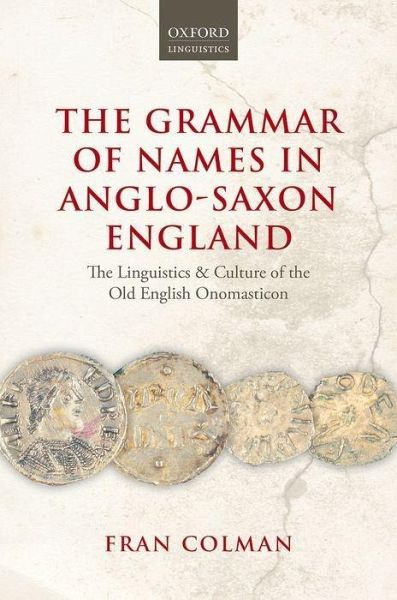
This book examines the etymology, semantics, and grammatical behaviour of personal names in Anglo-Saxon England and considers their evolving place in Anglo-Saxon history and culture. The results of Dr Colman's wide-ranging investigation also have consequences for traditional analyses of linguistic structures.
This book examines personal names, including given and acquired (or nick-) names, and how they were used in Anglo-Saxon England. It discusses their etymologies, semantics, and grammatical behaviour, and considers their evolving place in Anglo-Saxon history and culture. From that culture survive thousands of names on coins, in manuscripts, on stone and other inscriptions. Names are important and their absence a stigma (Grendel's parents have no names); they may have particular functions in ritual and magic; they mark individuals, generally people but also beings with close human contact such as dogs, cats, birds, and horses; and they may provide indications of rank and gender.
This book examines personal names, including given and acquired (or nick-) names, and how they were used in Anglo-Saxon England. It discusses their etymologies, semantics, and grammatical behaviour, and considers their evolving place in Anglo-Saxon history and culture. From that culture survive thousands of names on coins, in manuscripts, on stone and other inscriptions. Names are important and their absence a stigma (Grendel's parents have no names); they may have particular functions in ritual and magic; they mark individuals, generally people but also beings with close human contact such as dogs, cats, birds, and horses; and they may provide indications of rank and gender.