
Andere Kunden interessierten sich auch für
 Lenin, Hegel, and Western Marxism189,99 €
 Arguments Within English Marxism20,99 €
 What Was Bolshevism?225,99 €
 Immanent Externalities145,99 €
 In the Tracks of Historical Materialism16,99 €
 Raising the Red Flag166,99 €
 The Ends of Utopian Thinking in Critical Theory136,99 €






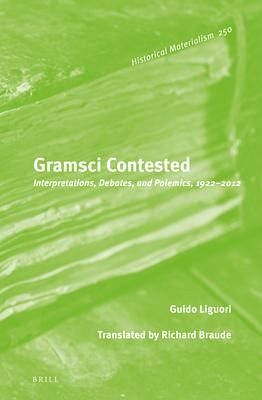
Antonio Gramsci is one of the most globally celebrated figures of twentieth-century Italy, renowned in the world for his contributions to philosophy, political theory, sociology, cultural studies and historiography. Yet his work has been equally discussed, debated and contested within Italy itself, a constant reference point whether in fervent agreement or angry polemics for parties and tendencies across the Italian left from the late 1910s down to our present day. In this fundamental overview of Gramscis reception in Italy and his contested legacy within a range of traditions, Guido Liguori provides a balanced view of the many uses to which Gramscis thought has been put, with a particular focus on the important relationship with the Italian Communist Party leader, Palmiro Togliatti. This book was first published in Italian as Gramsci conteso: Storia di un dibattito 1922-1996 by Editori Riuniti, 1996 (2nd Ed. 2012).