184,99 €
inkl. MwSt.
Versandkostenfrei*Erscheint vorauss. 14. April 2026
Melden Sie sich
hier
hier
für den Produktalarm an, um über die Verfügbarkeit des Produkts informiert zu werden.

92 °P sammeln
Andere Kunden interessierten sich auch für
 British Music and Literary Context126,99 €
 Music and Literature in German Romanticism126,99 €
 The Montpellier Codex127,99 €
 With Mornefull Musique: Funeral Elegies in Early Modern England112,99 €
 Music, Myth and Story in Medieval and Early Modern Culture121,99 €
 The Wagnerian Romances36,99 €
 Music Speaks116,99 €

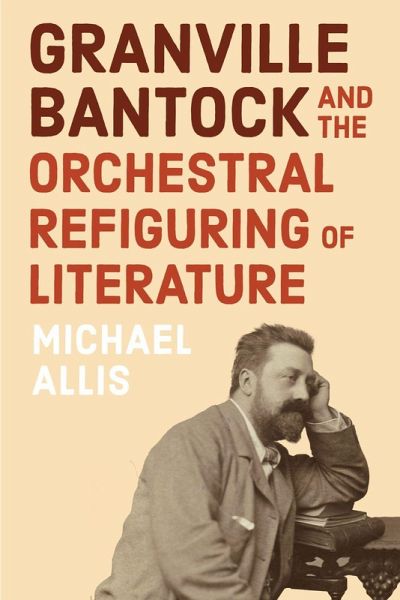
Illuminates Bantock's experimentation with musical structure to create effective representations of literature, while offering new notions of the modern in late nineteenth- and early twentieth-century music. Granville Bantock (1868-1946) remains one of the most significant British composers of the late nineteenth and early twentieth century. This book provides an in-depth exploration of a series of orchestral compositions by Bantock based on different forms of literature (the poem, the drama, the novel) penned by a wide range of authors including Robert Browning, Samuel Butler, Dante, Ernest Dowson, Thomas Moore, Percy Shelley, Sophocles and Robert Southey. The majority of the musical works discussed date from Bantock's most successful period as a composer (c.1899-1911), when his music was perceived to be 'modern'. Although critics were struck by his skills in orchestration, central to his modernist credentials is his distinctive approach to musical structure. The book's in-depth analyses, drawing on a wide range of literary scholarship, demonstrate a more meaningful way to appreciate these designs as individual responses to the literary texts on which they are based. As well as tackling the vexed issue of programme music, the book also highlights Bantock's association with orientalism. As the first major study of Bantock's orchestral music, this book not only demonstrates the composer's experimentation with musical structure to create effective representations of literature, but its findings also have a wider significance in terms of notions of the modern and the interdisciplinary potential of music-literature studies in general.