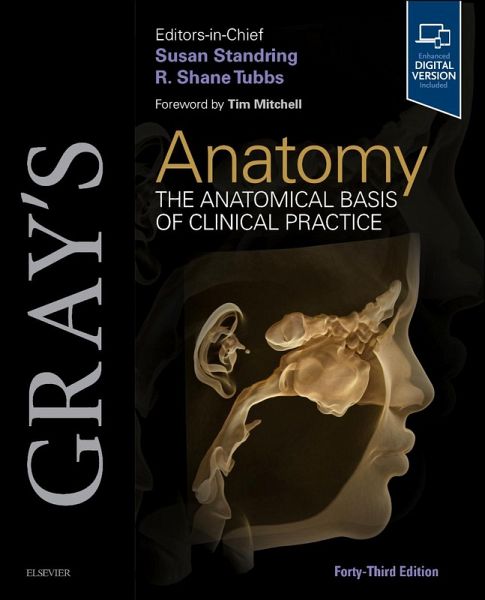
First published in 1858, and in continual publication since that date, Gray s Anatomy has been trusted by generations of clinicians around the world as the pre-eminent anatomical reference book. Building on this tradition of excellence and authority, the 43rd edition of Gray s Anatomy has been meticulously revised and updated by world-leading anatomists, scientists and surgeons, to provide unrivalled, evidence-based coverage of regional anatomy, neuroanatomy, cell biology, embryogenesis and development. A systems-based perspective is provided via additional chapters in the accompanying…mehr
First published in 1858, and in continual publication since that date, Gray s Anatomy has been trusted by generations of clinicians around the world as the pre-eminent anatomical reference book.
Building on this tradition of excellence and authority, the 43rd edition of Gray s Anatomy has been meticulously revised and updated by world-leading anatomists, scientists and surgeons, to provide unrivalled, evidence-based coverage of regional anatomy, neuroanatomy, cell biology, embryogenesis and development. A systems-based perspective is provided via additional chapters in the accompanying eBook.
Succinct text, lavish illustrations, stunning photos and modern medical imaging are combined with an enhanced range of supplementary electronic materials to create a complete, integrated package, in an attractive, accessible format. Gray s Anatomy 43rd edition provides new insights, plus the depth, relevance and accuracy that readers have come to expect from this renowned publication.Each chapter has been updated by international field leaders to cover the evidence-based, clinically relevant anatomy that underpins safe and effective practiceFeatures the latest radiological images, including high-resolution X-ray, multiplanar CT and MRI views, using state-of-the-art cinematic rendering for clarity and improved understandingAcclaimed Gray s artwork further honed to enhance consistency, clarity and anatomical precisionThe printed book comes with the complete, enhanced eBook - including additional text, Tables and illustrations, two chapters on the systemic anatomy of the peripheral nervous system and the vascular and lymphatic systems, 2D and 3D videos, an annotated list of eponyms, and many specially commissioned Commentaries discussing new and emerging topics related to clinical anatomy
Dr. R. Shane Tubbs is Neurosurgery Professor; Structural & Cellular Biology Professor and Anatomical Research Director, CNRC; Surgical Anatomy Director at Tulane School of Medicine His "reverse translational anatomy? lab works researches clinical/surgical problems through anatomical studies. This investigative paradigm has resulted in over 1,500 peer reviewed publications. Dr. Tubbs' lab has made novel discoveries in human anatomy and many anatomical feasibility studies from his lab have been used by surgeons from around the world. He has been a visiting professor to major institutions in the U.S. and worldwide. Dr. Tubbs has authored/edited over 50 books including Gray's Anatomy Review, Gray's Clinical Photographic Dissector of the Human Body, Netter's Introduction to Clinical Procedures, Anatomy for Plastic Surgery of the Face, Head, and Neck, Nerves and Nerve Injuries, A History of Human Anatomy, and Bergman's Comprehensive Encyclopedia of Human Anatomic Variation. He is an edi
tor for the 41st and 42nd editions of Gray's Anatomy, the 5th through 7th editions of Netter's Atlas of Human Anatomy and is the editor-in-chief of the journal Clinical Anatomy, which is the official journal of the American and British Associations of Clinical Anatomists. Dr. Tubbs was recently named chair of the Federative International Programme on Anatomical Terminologies.
Inhaltsangabe
SECTION 1: Cells, Tissues and Systems 1. Basic structure and function of cells 2. Integrating cells into tissues 3. Nervous system 4. Blood, lymphoid tissues and haemopoiesis 5. Functional anatomy of the musculoskeletal system 6. Smooth muscle and the cardiovascular and lymphatic systems 7. Skin and its appendages SECTION 2: Embryogenesis and Development 8. Preimplantation development 9. Implantation and placentation 10. Cell populations at gastrulation 11. Overarching concepts in development 12. Cell populations at the start of organogenesis 13. Development of the heart and circulation 14. Development of the nervous system 15. Development of the skin and appendages 16. Development of the eye 17. Development of the ear 18. Development of the head and neck 19. Development of the back 20. Development of the limbs 21. Development of lungs, thorax and diaphragm 22. Development of the peritoneal cavity, gastrointestinal tract and its adnexae 23. Development of the urogenital system 24. Pre- and postnatal growth and the neonate SECTION 3: Neuroanatomy 25. Overview of the nervous system 26. Autonomic nervous system 27. Ventricular system 28. Vasculature of the brain 29. Spinal cord 30. Brainstem 31. Cerebellum 32. Diencephalon 33. Basal ganglia 34. Cerebral hemispheres SECTION 4: Head and Neck 35. Head and neck: overview and surface anatomy 36. Skull 37. Intracranial region 38. Neck 39. Face and scalp 40. Mouth 41. Infratemporal and pterygopalatine fossae and temporomandibular joint 42. Nose, nasal cavity and paranasal sinuses 43. Pharynx 44. Larynx 45. External and middle ear 46. Internal ear 47. Orbit and accessory visual apparatus 48. Eye SECTION 5: Back 49. Back 50. Spinal cord and spinal nerves: gross anatomy SECTION 6: Pectoral Girdle and Upper Limb 51. Pectoral girdle and upper limb: overview and surface anatomy 52. Shoulder girdle and arm 53. Elbow and forearm 54. Wrist and hand SECTION 7: Thorax 55. Thorax: overview and surface anatomy 56. Thoracic wall and breast 57. Pleura, lungs, trachea and bronchi 58. Diaphragm and phrenic nerves 59. Mediastinum 60. Heart 61. Great and major systemic blood vessels SECTION 8: Abdomen and Pelvis 62. Abdomen and pelvis: overview and surface anatomy 63. Anterolateral abdominal wall 64. Posterior abdominal wall and retroperitoneum 65. Mesentery, peritoneum and peritoneal cavity 66. Abdominal oesophagus and stomach 67. Small intestine 68. Large intestine 69. Liver 70. Gallbladder and biliary tree 71. Pancreas 72. Spleen 73. Suprarenal gland 74. Lesser pelvis and perineum 75. Kidney and ureter 76. Urinary bladder, prostate and urethra 77. Male reproductive system 78. Female reproductive system SECTION 9: Pelvic Girdle and Lower Limb 79. Pelvic girdle and lower limb: overview and surface anatomy 80. Pelvic girdle, hip, gluteal region and thigh 81. Knee and leg 82. Ankle and foot Systemic anatomy 83. The systemic anatomy of the peripheral nervous system 84. The systemic anatomy of the vascular and lymphatic systems
SECTION 1: Cells, Tissues and Systems 1. Basic structure and function of cells 2. Integrating cells into tissues 3. Nervous system 4. Blood, lymphoid tissues and haemopoiesis 5. Functional anatomy of the musculoskeletal system 6. Smooth muscle and the cardiovascular and lymphatic systems 7. Skin and its appendages SECTION 2: Embryogenesis and Development 8. Preimplantation development 9. Implantation and placentation 10. Cell populations at gastrulation 11. Overarching concepts in development 12. Cell populations at the start of organogenesis 13. Development of the heart and circulation 14. Development of the nervous system 15. Development of the skin and appendages 16. Development of the eye 17. Development of the ear 18. Development of the head and neck 19. Development of the back 20. Development of the limbs 21. Development of lungs, thorax and diaphragm 22. Development of the peritoneal cavity, gastrointestinal tract and its adnexae 23. Development of the urogenital system 24. Pre- and postnatal growth and the neonate SECTION 3: Neuroanatomy 25. Overview of the nervous system 26. Autonomic nervous system 27. Ventricular system 28. Vasculature of the brain 29. Spinal cord 30. Brainstem 31. Cerebellum 32. Diencephalon 33. Basal ganglia 34. Cerebral hemispheres SECTION 4: Head and Neck 35. Head and neck: overview and surface anatomy 36. Skull 37. Intracranial region 38. Neck 39. Face and scalp 40. Mouth 41. Infratemporal and pterygopalatine fossae and temporomandibular joint 42. Nose, nasal cavity and paranasal sinuses 43. Pharynx 44. Larynx 45. External and middle ear 46. Internal ear 47. Orbit and accessory visual apparatus 48. Eye SECTION 5: Back 49. Back 50. Spinal cord and spinal nerves: gross anatomy SECTION 6: Pectoral Girdle and Upper Limb 51. Pectoral girdle and upper limb: overview and surface anatomy 52. Shoulder girdle and arm 53. Elbow and forearm 54. Wrist and hand SECTION 7: Thorax 55. Thorax: overview and surface anatomy 56. Thoracic wall and breast 57. Pleura, lungs, trachea and bronchi 58. Diaphragm and phrenic nerves 59. Mediastinum 60. Heart 61. Great and major systemic blood vessels SECTION 8: Abdomen and Pelvis 62. Abdomen and pelvis: overview and surface anatomy 63. Anterolateral abdominal wall 64. Posterior abdominal wall and retroperitoneum 65. Mesentery, peritoneum and peritoneal cavity 66. Abdominal oesophagus and stomach 67. Small intestine 68. Large intestine 69. Liver 70. Gallbladder and biliary tree 71. Pancreas 72. Spleen 73. Suprarenal gland 74. Lesser pelvis and perineum 75. Kidney and ureter 76. Urinary bladder, prostate and urethra 77. Male reproductive system 78. Female reproductive system SECTION 9: Pelvic Girdle and Lower Limb 79. Pelvic girdle and lower limb: overview and surface anatomy 80. Pelvic girdle, hip, gluteal region and thigh 81. Knee and leg 82. Ankle and foot Systemic anatomy 83. The systemic anatomy of the peripheral nervous system 84. The systemic anatomy of the vascular and lymphatic systems