
Will Ryan
Gray's Sporting Journal's Noble Birds and Wily Trout
Creating America's Hunting and Fishing Traditions
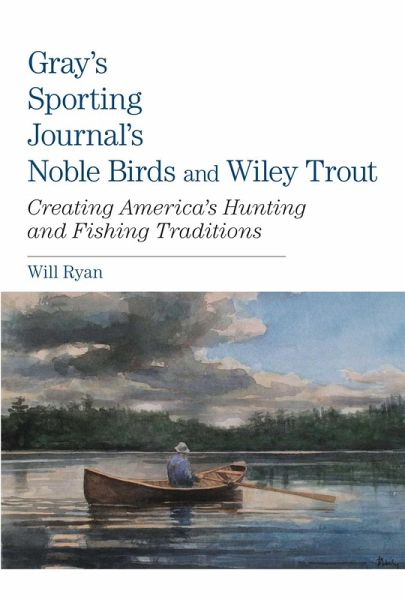
Will Ryan
Gray's Sporting Journal's Noble Birds and Wily Trout
Creating America's Hunting and Fishing Traditions
- Gebundenes Buch
- Merkliste
- Auf die Merkliste
- Bewerten Bewerten
- Teilen
- Produkt teilen
- Produkterinnerung
- Produkterinnerung
A history of hunting and fishing through excerpted documents and as “narrated” by Gray's Sporting Journal columnist Will Ryan.
Andere Kunden interessierten sich auch für
 A R Harris CassCatching the Wily Sea-trout28,99 €
 Frederick Peter Delmé RadcliffeThe Noble Science: A few General Ideas on Fox-hunting, for the use of the Rising Generation of Sport32,99 €
 Art CarterThe Sporting Craftsmen53,99 €
 The Noble Art of Venerie or Hunting31,99 €
 Ivan L MahoneyTrout Flies & Flowers15,99 €
 Jason RandallTrout Sense22,99 €
 Doug SwisherFlies for Selective Trout21,99 €
-
-
-


A history of hunting and fishing through excerpted documents and as “narrated” by Gray's Sporting Journal columnist Will Ryan.
Produktdetails
- Produktdetails
- Verlag: Globe Pequot Publishing
- Seitenzahl: 336
- Erscheinungstermin: 17. Dezember 2013
- Englisch
- Abmessung: 231mm x 157mm x 36mm
- Gewicht: 748g
- ISBN-13: 9780762782888
- ISBN-10: 0762782889
- Artikelnr.: 37742643
- Herstellerkennzeichnung
- Libri GmbH
- Europaallee 1
- 36244 Bad Hersfeld
- gpsr@libri.de
- Verlag: Globe Pequot Publishing
- Seitenzahl: 336
- Erscheinungstermin: 17. Dezember 2013
- Englisch
- Abmessung: 231mm x 157mm x 36mm
- Gewicht: 748g
- ISBN-13: 9780762782888
- ISBN-10: 0762782889
- Artikelnr.: 37742643
- Herstellerkennzeichnung
- Libri GmbH
- Europaallee 1
- 36244 Bad Hersfeld
- gpsr@libri.de
By Will Ryan
Introduction. Inside the Outdoors begins with an anecdote that sets the
stage for a sketch of the “heart” of the book – that hunters and anglers
ultimately bind the society they seek to escape.
Chapter 1: Explorers, Naturalists and Early Sport Hunters
“Ibis-shooting in Louisiana” by Anonymous, 1853.
A look at recreational hunting and fishing circa 1850, this chapter will
include a look at tall tales (Davy Crockett) and the naturalists (Bartram,
Wilson, Audubon) and how this material suddenly held a commercial interest.
Chapter 2: British Influence
“Squaring the Keeper” by Francis Francis, 1880.
This chapter will profile British hunting and fishing at mid-19th century,
and show how early American outdoor writers drew from that experience and
its literature. Francis’s tale portrays the angler as a rascal worried
about his reputation – to this day, an enduring persona for anglers the
world over.
Chapter 3:Outdoors as Escape.
“Point Judith” by Robert Barnwell Roosevelt, 1865.
Theodore Roosevelt’s uncle marched to his own drummer, writing colorful
hunting and fishing books while the Civil War raged. His were the first
sporting books published in America, and they were bibles in their day,
heavily influenced by British writers, but in the end more rollicking,
scandalous (American) version of the outdoor life.
Chapter 4:. The Business of Fun.
“A Fight With A Trout” by Charles Dudley Warner, 1878.
Coming of age during the Gilded Age, the American sporting experience
emerged with a distinctly commercial dimension, beginning with sporting
goods retailers who just happened to end up writers, too (Thaddeus Norris,
John Krider, and others). Promotional magazine articles extolling the
virtues of certain devices or locations were present nearly from the
beginning. Regardless of century, Americans have always been able to smell
the money.
Part II
Chapter 5:Conservation, Scarcity and the Sporting Ethic.
“Climbing for White Goats” by George Bird Grinnell, 1894.
Market hunting, increased participation in sport hunting and fishing, and
environmental destruction all had a devastating impact on native stocks of
fish and game. How to increase the numbers of sportsmen and the fish and
game populations became a real problem, and Grinnell’s story shows how
sportsmen reframed scarcity as “elusive,” “challenging,” and therefore…
“sporting.”
Chapter 6: Wing-shooting Gentlemen.
“A Match at Chickens” by Edwyn Sandys, 1905.
If the 19th century belonged to the big-game hunter, with tales of daring
and brawn, the 20th heralded the wing-shooter, whose dexterity and
quick-thinking seemed well matched to the new century. Grouse and duck
hunters, following suit, increasingly waited for their quarry to take
flight rather than ground swatting them or raking them on the water. Sport,
put simply, became definable by the method used.
Chapter 7: Fly fishing.
“Plain Fishing” by Frank Stockton, 1888.
This chapter continues the story of how fishing and hunting methods took on
a social meaning, amidst growing tension between city sports and country
folks. This tale involves a city fisherman who uses flies, and his country
host who is the bait-fishing father of two comely daughters. After a
weekend of country living, including a sermon of sorts on the pretension of
fly fishing, the visitor comes to appreciate the beauty of “plain fishing.”
Chapter 8:A Travelin’ Man.
“Fishing for Black Bass on the Maumee Rapids” by J.E. Gunkel, 1896.
Increasingly, midwestern bass fishing became a form of boosterism. In towns
on the eastern Great Lakes, in fact, black bass became the face of the
local economy, as in “Cape Vincent: Home of the Gamey Black Bass.” This
chapter will look at the rise of tourism, and also how this development
related to the previous chapter’s look at growing tensions between city
sports and their small-town hosts, and to the regional elevation of certain
species.
Chapter 9: Guides.
“After Grouse with Hiram” by Max Foster, 1906.
One of the great ironies of the sportsman’s search for manliness and virtue
was that he often engaged a guide to aid in his quest, even as he (the
sport) decided what the experience meant and what he needed to do
method-wise to make it mean that. After all, the guys who lived in the
country (i.e., the guides) knew where the grouse were. Almost invariably
guides were treated as partners, nostalgia was used as salve for any
tensions that might show, and money never changed hands.
Chapter 10: Danger!
“An Escape from Niagara Falls” by Orrin E. Dunlap, 1901.
Hunting and fishing needed some element of actual danger in order to rise
above simple child’s play and confer manly virtues on the participants. The
challenge became, at least in the minds of many, how to make sure the
nation’s men wouldn’t get soft with all the sentimentality and citifying,
and with no war to toughen them up.
Chapter 11: Can I Go?
“A Fatal Success” by Henry Van Dyke, 1913
What to do with the loved ones while you’re busy fighting bears? Turn of
the century stories typically featured women who outfished, outshot their
male-companions (usually husbands, but often would-be husbands, in which
case the heroine would typically swear off the rod or gun, having secured
the catch she was after.) In “A Fatal Success” the woman not only boats the
fish, she shows no sign of ever again staying home.
Part III
Chapter 12:Huntin’ Camp.
“That Ten-Point Buck” by Leonard DeWitt Sherman, 1912.
Big-game hunters saw themselves following in path of Boone and Crockett,
right down to building a cabin in the woods. As this chapter shows, deer
camp became a two-week tradition associated with the white-tail deer, which
in time would become the most prized game animal on the continent.
Chapter 13: Front Page News.
“A Lion Drive,” by John T. McCutcheon, 1910.
When former president Theodore Roosevelt celebrated his “retirement” with a
well-publicized safari, The Chicago Tribune announced a safari of its own,
one that would appear in serial form. Hunting and fishing was considered
news of the highest order – particularly when they involved celebrity
globetrotting.
Chapter 14: Pushing Boundaries.
“Great Sport: A Fishing Story,” by Aimee Morrison, 1919.
Hunting and fishing also became a way for Americans to do things “out
there” they wouldn’t do “in here.” Increasingly, in the early 1920s,
articles appeared by women on their own in the outdoors. This piece is a
classic example of that change. Of particular interest is the idea that Ms.
Morrison is a self-taught fly fisher, unescorted, in a sporting camp with
boys who do their best to keep her out of the tree house. But she has more
than enough pluck to make the club.
Chapter 15: Life As We Know It.
“Jean Pierre and the Mayflies” by Romilly Fedden, 1919.
Outdoors as healing has been one of the great promises of the outdoor life
since Boone kicked it with the Indians back in the 1700s, and came back
whole. The aftermath of WWI gave us perhaps the greatest fishing story ever
told, “Big Two Hearted River,” Hemingway’s haunting story of post traumatic
stress, or “shell-shock,” as it was known. The story profiled in this
chapter was written by an Englishman in the trenches of World War I and is
in the Nick Adams tradition of exploring how hunting and fishing had become
a way to get a fellow’s bearings. This chapter will show how, for an
activity that began on the margins of society, fishing and hunting had now
become a way to reconnect.
Chapter 16: Modern Love.
“Geese” by Rex Beach, 1921. The new outdoor story starts with a touch of
fame (Max Foster and Grantland Rice are the hunting buddies in this piece),
the desire for game, the fantasy of the perfect duck blind or boat or
convenience, the tug of home – and the self-irony to understand how the
entire experience was at once socially created and naturally human. Beach’s
story gives us that and, in many ways, offers a look at what the outdoor
experience will become in the decades ahead.
stage for a sketch of the “heart” of the book – that hunters and anglers
ultimately bind the society they seek to escape.
Chapter 1: Explorers, Naturalists and Early Sport Hunters
“Ibis-shooting in Louisiana” by Anonymous, 1853.
A look at recreational hunting and fishing circa 1850, this chapter will
include a look at tall tales (Davy Crockett) and the naturalists (Bartram,
Wilson, Audubon) and how this material suddenly held a commercial interest.
Chapter 2: British Influence
“Squaring the Keeper” by Francis Francis, 1880.
This chapter will profile British hunting and fishing at mid-19th century,
and show how early American outdoor writers drew from that experience and
its literature. Francis’s tale portrays the angler as a rascal worried
about his reputation – to this day, an enduring persona for anglers the
world over.
Chapter 3:Outdoors as Escape.
“Point Judith” by Robert Barnwell Roosevelt, 1865.
Theodore Roosevelt’s uncle marched to his own drummer, writing colorful
hunting and fishing books while the Civil War raged. His were the first
sporting books published in America, and they were bibles in their day,
heavily influenced by British writers, but in the end more rollicking,
scandalous (American) version of the outdoor life.
Chapter 4:. The Business of Fun.
“A Fight With A Trout” by Charles Dudley Warner, 1878.
Coming of age during the Gilded Age, the American sporting experience
emerged with a distinctly commercial dimension, beginning with sporting
goods retailers who just happened to end up writers, too (Thaddeus Norris,
John Krider, and others). Promotional magazine articles extolling the
virtues of certain devices or locations were present nearly from the
beginning. Regardless of century, Americans have always been able to smell
the money.
Part II
Chapter 5:Conservation, Scarcity and the Sporting Ethic.
“Climbing for White Goats” by George Bird Grinnell, 1894.
Market hunting, increased participation in sport hunting and fishing, and
environmental destruction all had a devastating impact on native stocks of
fish and game. How to increase the numbers of sportsmen and the fish and
game populations became a real problem, and Grinnell’s story shows how
sportsmen reframed scarcity as “elusive,” “challenging,” and therefore…
“sporting.”
Chapter 6: Wing-shooting Gentlemen.
“A Match at Chickens” by Edwyn Sandys, 1905.
If the 19th century belonged to the big-game hunter, with tales of daring
and brawn, the 20th heralded the wing-shooter, whose dexterity and
quick-thinking seemed well matched to the new century. Grouse and duck
hunters, following suit, increasingly waited for their quarry to take
flight rather than ground swatting them or raking them on the water. Sport,
put simply, became definable by the method used.
Chapter 7: Fly fishing.
“Plain Fishing” by Frank Stockton, 1888.
This chapter continues the story of how fishing and hunting methods took on
a social meaning, amidst growing tension between city sports and country
folks. This tale involves a city fisherman who uses flies, and his country
host who is the bait-fishing father of two comely daughters. After a
weekend of country living, including a sermon of sorts on the pretension of
fly fishing, the visitor comes to appreciate the beauty of “plain fishing.”
Chapter 8:A Travelin’ Man.
“Fishing for Black Bass on the Maumee Rapids” by J.E. Gunkel, 1896.
Increasingly, midwestern bass fishing became a form of boosterism. In towns
on the eastern Great Lakes, in fact, black bass became the face of the
local economy, as in “Cape Vincent: Home of the Gamey Black Bass.” This
chapter will look at the rise of tourism, and also how this development
related to the previous chapter’s look at growing tensions between city
sports and their small-town hosts, and to the regional elevation of certain
species.
Chapter 9: Guides.
“After Grouse with Hiram” by Max Foster, 1906.
One of the great ironies of the sportsman’s search for manliness and virtue
was that he often engaged a guide to aid in his quest, even as he (the
sport) decided what the experience meant and what he needed to do
method-wise to make it mean that. After all, the guys who lived in the
country (i.e., the guides) knew where the grouse were. Almost invariably
guides were treated as partners, nostalgia was used as salve for any
tensions that might show, and money never changed hands.
Chapter 10: Danger!
“An Escape from Niagara Falls” by Orrin E. Dunlap, 1901.
Hunting and fishing needed some element of actual danger in order to rise
above simple child’s play and confer manly virtues on the participants. The
challenge became, at least in the minds of many, how to make sure the
nation’s men wouldn’t get soft with all the sentimentality and citifying,
and with no war to toughen them up.
Chapter 11: Can I Go?
“A Fatal Success” by Henry Van Dyke, 1913
What to do with the loved ones while you’re busy fighting bears? Turn of
the century stories typically featured women who outfished, outshot their
male-companions (usually husbands, but often would-be husbands, in which
case the heroine would typically swear off the rod or gun, having secured
the catch she was after.) In “A Fatal Success” the woman not only boats the
fish, she shows no sign of ever again staying home.
Part III
Chapter 12:Huntin’ Camp.
“That Ten-Point Buck” by Leonard DeWitt Sherman, 1912.
Big-game hunters saw themselves following in path of Boone and Crockett,
right down to building a cabin in the woods. As this chapter shows, deer
camp became a two-week tradition associated with the white-tail deer, which
in time would become the most prized game animal on the continent.
Chapter 13: Front Page News.
“A Lion Drive,” by John T. McCutcheon, 1910.
When former president Theodore Roosevelt celebrated his “retirement” with a
well-publicized safari, The Chicago Tribune announced a safari of its own,
one that would appear in serial form. Hunting and fishing was considered
news of the highest order – particularly when they involved celebrity
globetrotting.
Chapter 14: Pushing Boundaries.
“Great Sport: A Fishing Story,” by Aimee Morrison, 1919.
Hunting and fishing also became a way for Americans to do things “out
there” they wouldn’t do “in here.” Increasingly, in the early 1920s,
articles appeared by women on their own in the outdoors. This piece is a
classic example of that change. Of particular interest is the idea that Ms.
Morrison is a self-taught fly fisher, unescorted, in a sporting camp with
boys who do their best to keep her out of the tree house. But she has more
than enough pluck to make the club.
Chapter 15: Life As We Know It.
“Jean Pierre and the Mayflies” by Romilly Fedden, 1919.
Outdoors as healing has been one of the great promises of the outdoor life
since Boone kicked it with the Indians back in the 1700s, and came back
whole. The aftermath of WWI gave us perhaps the greatest fishing story ever
told, “Big Two Hearted River,” Hemingway’s haunting story of post traumatic
stress, or “shell-shock,” as it was known. The story profiled in this
chapter was written by an Englishman in the trenches of World War I and is
in the Nick Adams tradition of exploring how hunting and fishing had become
a way to get a fellow’s bearings. This chapter will show how, for an
activity that began on the margins of society, fishing and hunting had now
become a way to reconnect.
Chapter 16: Modern Love.
“Geese” by Rex Beach, 1921. The new outdoor story starts with a touch of
fame (Max Foster and Grantland Rice are the hunting buddies in this piece),
the desire for game, the fantasy of the perfect duck blind or boat or
convenience, the tug of home – and the self-irony to understand how the
entire experience was at once socially created and naturally human. Beach’s
story gives us that and, in many ways, offers a look at what the outdoor
experience will become in the decades ahead.
Introduction. Inside the Outdoors begins with an anecdote that sets the
stage for a sketch of the “heart” of the book – that hunters and anglers
ultimately bind the society they seek to escape.
Chapter 1: Explorers, Naturalists and Early Sport Hunters
“Ibis-shooting in Louisiana” by Anonymous, 1853.
A look at recreational hunting and fishing circa 1850, this chapter will
include a look at tall tales (Davy Crockett) and the naturalists (Bartram,
Wilson, Audubon) and how this material suddenly held a commercial interest.
Chapter 2: British Influence
“Squaring the Keeper” by Francis Francis, 1880.
This chapter will profile British hunting and fishing at mid-19th century,
and show how early American outdoor writers drew from that experience and
its literature. Francis’s tale portrays the angler as a rascal worried
about his reputation – to this day, an enduring persona for anglers the
world over.
Chapter 3:Outdoors as Escape.
“Point Judith” by Robert Barnwell Roosevelt, 1865.
Theodore Roosevelt’s uncle marched to his own drummer, writing colorful
hunting and fishing books while the Civil War raged. His were the first
sporting books published in America, and they were bibles in their day,
heavily influenced by British writers, but in the end more rollicking,
scandalous (American) version of the outdoor life.
Chapter 4:. The Business of Fun.
“A Fight With A Trout” by Charles Dudley Warner, 1878.
Coming of age during the Gilded Age, the American sporting experience
emerged with a distinctly commercial dimension, beginning with sporting
goods retailers who just happened to end up writers, too (Thaddeus Norris,
John Krider, and others). Promotional magazine articles extolling the
virtues of certain devices or locations were present nearly from the
beginning. Regardless of century, Americans have always been able to smell
the money.
Part II
Chapter 5:Conservation, Scarcity and the Sporting Ethic.
“Climbing for White Goats” by George Bird Grinnell, 1894.
Market hunting, increased participation in sport hunting and fishing, and
environmental destruction all had a devastating impact on native stocks of
fish and game. How to increase the numbers of sportsmen and the fish and
game populations became a real problem, and Grinnell’s story shows how
sportsmen reframed scarcity as “elusive,” “challenging,” and therefore…
“sporting.”
Chapter 6: Wing-shooting Gentlemen.
“A Match at Chickens” by Edwyn Sandys, 1905.
If the 19th century belonged to the big-game hunter, with tales of daring
and brawn, the 20th heralded the wing-shooter, whose dexterity and
quick-thinking seemed well matched to the new century. Grouse and duck
hunters, following suit, increasingly waited for their quarry to take
flight rather than ground swatting them or raking them on the water. Sport,
put simply, became definable by the method used.
Chapter 7: Fly fishing.
“Plain Fishing” by Frank Stockton, 1888.
This chapter continues the story of how fishing and hunting methods took on
a social meaning, amidst growing tension between city sports and country
folks. This tale involves a city fisherman who uses flies, and his country
host who is the bait-fishing father of two comely daughters. After a
weekend of country living, including a sermon of sorts on the pretension of
fly fishing, the visitor comes to appreciate the beauty of “plain fishing.”
Chapter 8:A Travelin’ Man.
“Fishing for Black Bass on the Maumee Rapids” by J.E. Gunkel, 1896.
Increasingly, midwestern bass fishing became a form of boosterism. In towns
on the eastern Great Lakes, in fact, black bass became the face of the
local economy, as in “Cape Vincent: Home of the Gamey Black Bass.” This
chapter will look at the rise of tourism, and also how this development
related to the previous chapter’s look at growing tensions between city
sports and their small-town hosts, and to the regional elevation of certain
species.
Chapter 9: Guides.
“After Grouse with Hiram” by Max Foster, 1906.
One of the great ironies of the sportsman’s search for manliness and virtue
was that he often engaged a guide to aid in his quest, even as he (the
sport) decided what the experience meant and what he needed to do
method-wise to make it mean that. After all, the guys who lived in the
country (i.e., the guides) knew where the grouse were. Almost invariably
guides were treated as partners, nostalgia was used as salve for any
tensions that might show, and money never changed hands.
Chapter 10: Danger!
“An Escape from Niagara Falls” by Orrin E. Dunlap, 1901.
Hunting and fishing needed some element of actual danger in order to rise
above simple child’s play and confer manly virtues on the participants. The
challenge became, at least in the minds of many, how to make sure the
nation’s men wouldn’t get soft with all the sentimentality and citifying,
and with no war to toughen them up.
Chapter 11: Can I Go?
“A Fatal Success” by Henry Van Dyke, 1913
What to do with the loved ones while you’re busy fighting bears? Turn of
the century stories typically featured women who outfished, outshot their
male-companions (usually husbands, but often would-be husbands, in which
case the heroine would typically swear off the rod or gun, having secured
the catch she was after.) In “A Fatal Success” the woman not only boats the
fish, she shows no sign of ever again staying home.
Part III
Chapter 12:Huntin’ Camp.
“That Ten-Point Buck” by Leonard DeWitt Sherman, 1912.
Big-game hunters saw themselves following in path of Boone and Crockett,
right down to building a cabin in the woods. As this chapter shows, deer
camp became a two-week tradition associated with the white-tail deer, which
in time would become the most prized game animal on the continent.
Chapter 13: Front Page News.
“A Lion Drive,” by John T. McCutcheon, 1910.
When former president Theodore Roosevelt celebrated his “retirement” with a
well-publicized safari, The Chicago Tribune announced a safari of its own,
one that would appear in serial form. Hunting and fishing was considered
news of the highest order – particularly when they involved celebrity
globetrotting.
Chapter 14: Pushing Boundaries.
“Great Sport: A Fishing Story,” by Aimee Morrison, 1919.
Hunting and fishing also became a way for Americans to do things “out
there” they wouldn’t do “in here.” Increasingly, in the early 1920s,
articles appeared by women on their own in the outdoors. This piece is a
classic example of that change. Of particular interest is the idea that Ms.
Morrison is a self-taught fly fisher, unescorted, in a sporting camp with
boys who do their best to keep her out of the tree house. But she has more
than enough pluck to make the club.
Chapter 15: Life As We Know It.
“Jean Pierre and the Mayflies” by Romilly Fedden, 1919.
Outdoors as healing has been one of the great promises of the outdoor life
since Boone kicked it with the Indians back in the 1700s, and came back
whole. The aftermath of WWI gave us perhaps the greatest fishing story ever
told, “Big Two Hearted River,” Hemingway’s haunting story of post traumatic
stress, or “shell-shock,” as it was known. The story profiled in this
chapter was written by an Englishman in the trenches of World War I and is
in the Nick Adams tradition of exploring how hunting and fishing had become
a way to get a fellow’s bearings. This chapter will show how, for an
activity that began on the margins of society, fishing and hunting had now
become a way to reconnect.
Chapter 16: Modern Love.
“Geese” by Rex Beach, 1921. The new outdoor story starts with a touch of
fame (Max Foster and Grantland Rice are the hunting buddies in this piece),
the desire for game, the fantasy of the perfect duck blind or boat or
convenience, the tug of home – and the self-irony to understand how the
entire experience was at once socially created and naturally human. Beach’s
story gives us that and, in many ways, offers a look at what the outdoor
experience will become in the decades ahead.
stage for a sketch of the “heart” of the book – that hunters and anglers
ultimately bind the society they seek to escape.
Chapter 1: Explorers, Naturalists and Early Sport Hunters
“Ibis-shooting in Louisiana” by Anonymous, 1853.
A look at recreational hunting and fishing circa 1850, this chapter will
include a look at tall tales (Davy Crockett) and the naturalists (Bartram,
Wilson, Audubon) and how this material suddenly held a commercial interest.
Chapter 2: British Influence
“Squaring the Keeper” by Francis Francis, 1880.
This chapter will profile British hunting and fishing at mid-19th century,
and show how early American outdoor writers drew from that experience and
its literature. Francis’s tale portrays the angler as a rascal worried
about his reputation – to this day, an enduring persona for anglers the
world over.
Chapter 3:Outdoors as Escape.
“Point Judith” by Robert Barnwell Roosevelt, 1865.
Theodore Roosevelt’s uncle marched to his own drummer, writing colorful
hunting and fishing books while the Civil War raged. His were the first
sporting books published in America, and they were bibles in their day,
heavily influenced by British writers, but in the end more rollicking,
scandalous (American) version of the outdoor life.
Chapter 4:. The Business of Fun.
“A Fight With A Trout” by Charles Dudley Warner, 1878.
Coming of age during the Gilded Age, the American sporting experience
emerged with a distinctly commercial dimension, beginning with sporting
goods retailers who just happened to end up writers, too (Thaddeus Norris,
John Krider, and others). Promotional magazine articles extolling the
virtues of certain devices or locations were present nearly from the
beginning. Regardless of century, Americans have always been able to smell
the money.
Part II
Chapter 5:Conservation, Scarcity and the Sporting Ethic.
“Climbing for White Goats” by George Bird Grinnell, 1894.
Market hunting, increased participation in sport hunting and fishing, and
environmental destruction all had a devastating impact on native stocks of
fish and game. How to increase the numbers of sportsmen and the fish and
game populations became a real problem, and Grinnell’s story shows how
sportsmen reframed scarcity as “elusive,” “challenging,” and therefore…
“sporting.”
Chapter 6: Wing-shooting Gentlemen.
“A Match at Chickens” by Edwyn Sandys, 1905.
If the 19th century belonged to the big-game hunter, with tales of daring
and brawn, the 20th heralded the wing-shooter, whose dexterity and
quick-thinking seemed well matched to the new century. Grouse and duck
hunters, following suit, increasingly waited for their quarry to take
flight rather than ground swatting them or raking them on the water. Sport,
put simply, became definable by the method used.
Chapter 7: Fly fishing.
“Plain Fishing” by Frank Stockton, 1888.
This chapter continues the story of how fishing and hunting methods took on
a social meaning, amidst growing tension between city sports and country
folks. This tale involves a city fisherman who uses flies, and his country
host who is the bait-fishing father of two comely daughters. After a
weekend of country living, including a sermon of sorts on the pretension of
fly fishing, the visitor comes to appreciate the beauty of “plain fishing.”
Chapter 8:A Travelin’ Man.
“Fishing for Black Bass on the Maumee Rapids” by J.E. Gunkel, 1896.
Increasingly, midwestern bass fishing became a form of boosterism. In towns
on the eastern Great Lakes, in fact, black bass became the face of the
local economy, as in “Cape Vincent: Home of the Gamey Black Bass.” This
chapter will look at the rise of tourism, and also how this development
related to the previous chapter’s look at growing tensions between city
sports and their small-town hosts, and to the regional elevation of certain
species.
Chapter 9: Guides.
“After Grouse with Hiram” by Max Foster, 1906.
One of the great ironies of the sportsman’s search for manliness and virtue
was that he often engaged a guide to aid in his quest, even as he (the
sport) decided what the experience meant and what he needed to do
method-wise to make it mean that. After all, the guys who lived in the
country (i.e., the guides) knew where the grouse were. Almost invariably
guides were treated as partners, nostalgia was used as salve for any
tensions that might show, and money never changed hands.
Chapter 10: Danger!
“An Escape from Niagara Falls” by Orrin E. Dunlap, 1901.
Hunting and fishing needed some element of actual danger in order to rise
above simple child’s play and confer manly virtues on the participants. The
challenge became, at least in the minds of many, how to make sure the
nation’s men wouldn’t get soft with all the sentimentality and citifying,
and with no war to toughen them up.
Chapter 11: Can I Go?
“A Fatal Success” by Henry Van Dyke, 1913
What to do with the loved ones while you’re busy fighting bears? Turn of
the century stories typically featured women who outfished, outshot their
male-companions (usually husbands, but often would-be husbands, in which
case the heroine would typically swear off the rod or gun, having secured
the catch she was after.) In “A Fatal Success” the woman not only boats the
fish, she shows no sign of ever again staying home.
Part III
Chapter 12:Huntin’ Camp.
“That Ten-Point Buck” by Leonard DeWitt Sherman, 1912.
Big-game hunters saw themselves following in path of Boone and Crockett,
right down to building a cabin in the woods. As this chapter shows, deer
camp became a two-week tradition associated with the white-tail deer, which
in time would become the most prized game animal on the continent.
Chapter 13: Front Page News.
“A Lion Drive,” by John T. McCutcheon, 1910.
When former president Theodore Roosevelt celebrated his “retirement” with a
well-publicized safari, The Chicago Tribune announced a safari of its own,
one that would appear in serial form. Hunting and fishing was considered
news of the highest order – particularly when they involved celebrity
globetrotting.
Chapter 14: Pushing Boundaries.
“Great Sport: A Fishing Story,” by Aimee Morrison, 1919.
Hunting and fishing also became a way for Americans to do things “out
there” they wouldn’t do “in here.” Increasingly, in the early 1920s,
articles appeared by women on their own in the outdoors. This piece is a
classic example of that change. Of particular interest is the idea that Ms.
Morrison is a self-taught fly fisher, unescorted, in a sporting camp with
boys who do their best to keep her out of the tree house. But she has more
than enough pluck to make the club.
Chapter 15: Life As We Know It.
“Jean Pierre and the Mayflies” by Romilly Fedden, 1919.
Outdoors as healing has been one of the great promises of the outdoor life
since Boone kicked it with the Indians back in the 1700s, and came back
whole. The aftermath of WWI gave us perhaps the greatest fishing story ever
told, “Big Two Hearted River,” Hemingway’s haunting story of post traumatic
stress, or “shell-shock,” as it was known. The story profiled in this
chapter was written by an Englishman in the trenches of World War I and is
in the Nick Adams tradition of exploring how hunting and fishing had become
a way to get a fellow’s bearings. This chapter will show how, for an
activity that began on the margins of society, fishing and hunting had now
become a way to reconnect.
Chapter 16: Modern Love.
“Geese” by Rex Beach, 1921. The new outdoor story starts with a touch of
fame (Max Foster and Grantland Rice are the hunting buddies in this piece),
the desire for game, the fantasy of the perfect duck blind or boat or
convenience, the tug of home – and the self-irony to understand how the
entire experience was at once socially created and naturally human. Beach’s
story gives us that and, in many ways, offers a look at what the outdoor
experience will become in the decades ahead.