
Andere Kunden interessierten sich auch für
") Great Power, No Responsibility (Spider-Ham Original Graphic Novel)8,49 €
Great Power, No Responsibility (Spider-Ham Original Graphic Novel)8,49 € Wars Without End96,99 €
 Power, Privilege, and Public Health in the United States30,99 €
 Love, Power, and Justice26,99 €
 Beyond State, Power, and Violence36,99 €
 Women, Power, and Property47,99 €
 Women, Power, and Political Representation32,99 €

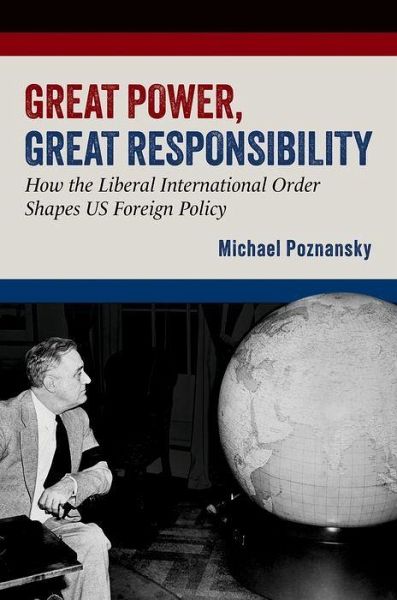
In Great Power, Great Responsibility, Michael Poznansky explores how the "liberal international order" established after World War II has influenced US foreign policy from 1945 to the present. Proponents argue that its impact has been profound, producing a system that has been more rule-bound and beneficial than any previous order. Critics charge that it has failed to prevent the US itself from consistently violating rules and norms. Poznansky contends that the answer lies in-between, with America's approach to compliance a function of two primary factors: the intensity of competition over international order; and the burden of complying with the liberal order's core tenets. Drawing on nine case studies, the book sheds important light on the future of US foreign policy in an era where American unipolarity has ended and great power rivalry has returned.