
Andere Kunden interessierten sich auch für
 Southern Rhodesia-South Africa Relations, 1923-195338,99 €
 Southern Rhodesia-South Africa Relations, 1923-195338,99 €
 How Europe Underdeveloped Africa17,99 €
 Namibia's Red Line38,99 €
 The Ndebele, Frank Oates, and Knowledge Production in the 1870s31,99 €
 Africans and Britons in the Age of Empires, 1660-198047,99 €
 More9,49 €


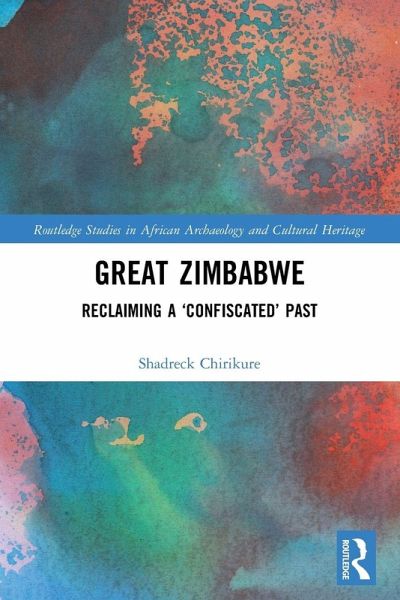
Conditioned by local ways of knowing and doing, Great Zimbabwe develops a new interpretation of the famous World Heritage site of Great Zimbabwe.
It combines archaeological knowledge, including recent material from the author's excavations, with native concepts and philosophies. Working from a large data set has made it possible, for the first time, to develop an archaeology of Great Zimbabwe that is informed by finds and observations from the entire site and wider landscape. In so doing, the book strongly contributes towards decolonising African and world archaeology. Written in an accessible manner, the book is aimed at undergraduate students, graduate students, and practicing archaeologists both in Africa and across the globe.
The book will also make contributions to the broader field such as African Studies, African History, and World Archaeology through its emphasis on developing synergies between local ways of knowing and the archaeology.
It combines archaeological knowledge, including recent material from the author's excavations, with native concepts and philosophies. Working from a large data set has made it possible, for the first time, to develop an archaeology of Great Zimbabwe that is informed by finds and observations from the entire site and wider landscape. In so doing, the book strongly contributes towards decolonising African and world archaeology. Written in an accessible manner, the book is aimed at undergraduate students, graduate students, and practicing archaeologists both in Africa and across the globe.
The book will also make contributions to the broader field such as African Studies, African History, and World Archaeology through its emphasis on developing synergies between local ways of knowing and the archaeology.
'Shadreck Chirikure deploys decolonial thought and indeed decolonial theory as he delves into indigenous African ideation to decolonize archaeology. What is delivered is a refreshing and indeed original re-reading of Great Zimbabwe and its location in world archaeology. This is indeed a timely and essential book coming out at a moment of insurgent and resurgent planetary decolonization.' Sabelo J. Ndlovu-Gatsheni, Professor and Chair of Epistemologies of the Global South, University of Bayreuth, Germany