
Andere Kunden interessierten sich auch für
 Green Synthesis and Antimicrobial Activity of Titanium Dioxide Nanoparticles30,99 €
 Multifunctional Materials and Modeling98,99 €
 Distribution and Synthesis of Alkaloids Among Plant kingdom12,99 €
 Microwave-Assisted Organic Synthesis99,99 €
 Synthesis of Nanospherical MFI Zeolite via Hydrothermal Method34,99 €
 The Fractal Physics of Polymer Synthesis99,99 €
 Freudian Analysis & Jungian Synthesis38,99 €


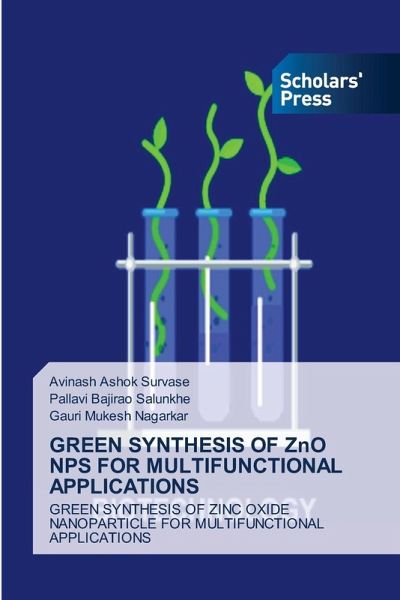
Parthenium hysterophorus, a highly invasive weed from the Asteraceae family, is widely recognized for its detrimental ecological impact. However, recent studies highlight its significant antimicrobial and antibiofilm potential. This plant is rich in bioactive compounds, including alkaloids, flavonoids, phenols, terpenes, and pseudoguaianolides, which contribute to its therapeutic properties. Among its emerging applications, the green synthesis of nanoparticles using P. hysterophorus extracts has gained attention due to its eco-friendly and cost-effective nature. In particular, zinc oxide (ZnO) nanoparticles derived from P. hysterophorus exhibit remarkable antibacterial and antibiofilm activities. Despite its medicinal potential, P. hysterophorus remains an aggressive invasive species, necessitating further research to harness its benefits while mitigating its ecological threats. Our significance of P. hysterophorus-derived nanoparticles used for antimicrobial, antibiofilm, antioxidant and anticancer applications, offering sustainable and effective solutions against drug-resistant infections.