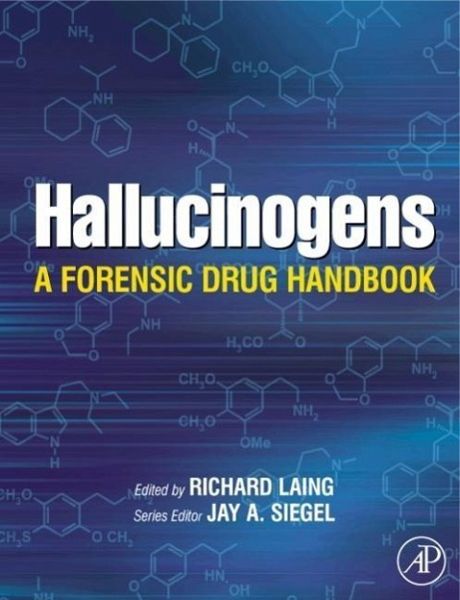
Hallucinogens: A Forensic Drug Handbook is a comprehensive reference for everyone involved in the identification, investigation, and forensic analysis of hallucinogenic drugs. The text begins with a review of the history of these drugs and their abuse, and then takes an in-depth look at the many different types of hallucinogens, their chemical make-up, how they affect users, how they are manufactured and distributed, and how they can be detected and analyzed. Hallucinogens covers the most commonly abused drugs such as LSD, MDMA ("Ecstasy"), and PCP ("Angel Dust"), as well as many lesser-known…mehr
Hallucinogens: A Forensic Drug Handbook is a comprehensive reference for everyone involved in the identification, investigation, and forensic analysis of hallucinogenic drugs. The text begins with a review of the history of these drugs and their abuse, and then takes an in-depth look at the many different types of hallucinogens, their chemical make-up, how they affect users, how they are manufactured and distributed, and how they can be detected and analyzed. Hallucinogens covers the most commonly abused drugs such as LSD, MDMA ("Ecstasy"), and PCP ("Angel Dust"), as well as many lesser-known chemical substances that cause similar effects. Chapters have been contributed by leading analysts and investigators around the world, and are highlighted with numerous illustrations. This unique handbook will serve is a cross-disciplinary source of information for forensic toxicologists, law enforcement officers, and others involved in the fight against drugs.
Richard Laing is an Analytical Specialist with Health Canada's Drug Analysis Service Laboratory in Burnaby, BC and has an MSc specializing in the Mass Spectrometry and Nuclear Magnetic Resonance spectroscopy of natural products. He has spent the last twelve years working in clandestine laboratory investigations and is recognized as a leading Canadian expert in this field. His experience and seizure of clandestine laboratories transcends many drug types including Methamphetamine, Ecstasy, LSD, and Psilocybin production. Richard is a member on the International forensic drug standard setting committee SWGDrug. Richard also is a faculty member at the British Columbia Institute of Technology in the Faculty of Forensic Science. Jay A. Siegel, Ph.D. has been teaching forensic science at the college level for nearly 30 years. In 2005, he retired from Michigan State University after 25 years of directing the forensic science program. He is a Fellow in the American Academy of Forensic Sciences and was the 2004 recipient of the Paul Kirk Award for distinguished service to the Criminalistics section. He is a Distinguished Member of the Southwestern Association of Forensic Sciences and a member of the International Association for Identification and the Forensic Science Society (UK). He is also the Editor-in-Chief of Academic Press's Encyclopedia of Forensic Sciences. Dr. Siegel currently serves as the Director of the Forensic and Investigative Sciences Program at Indiana University - Purdue University Indianopolis.
Inhaltsangabe
PREFACE vii ABOUT THE AUTHORS ix CHAPTER 1 HISTORY OF THE PSYCHEDELIC EXPERIENCE 1.0 ORIGIN 1.1 IDENTIFYING NATURAL SOURCES OF DRUGS AND THEIR ACTIVE CONSTITUENTS 1.2 WHAT WE HAVE NOT INCLUDED HERE 1.3 PSYCHEDELIC PLANTS 1.4 "MAGIC" MUSHROOMS 1.5 PEYOTE 1.6 OTHERS 1.7 ANIMAL-DERIVED HALLUCINOGENS 1.8 SOCIAL AND LEGAL CONSIDERATIONS 1.8 REFERENCES 31 CHAPTER 2 OCCURRENCES AND FORMS OF THE HALLUCINOGENS 2.0 INTRODUCTION 1.8 PART I: LSD: 2.1 LSD AND RELATED ANALOGS 2.2 FORMS OF THE DRUG 1.8 PART II: INDOLALKYLAMINES 2.3 PSILOCYBIN, BUFONTENINE AND OTHER SUBSTITUTED TRYPTAMINES 2.4 FORMS OF THE DRUGS 1.8 PART III: HALLUCINOGENIC PHENETHYLAMINES 2.5 MESCALINE/PEYOTE 2.6 MDA/MDMA 2.7 NEXUS (2-CB), STP, DOB, TMA 1.8 PART IV: PCP, PCP ANALOGS, AND KETAMINE 2.8 PCP AND KETAMINE 1.8 PART V: OTHERS 2.9 â-CARBOLINES 1.8 ACKNOWLEDGEMENTS 1.8 REFERENCES CHAPTER 3 BASIC PHARMACOLOGY AND EFFECTS 3.0 INTRODUCTION: WHAT ARE THE HALLUCINOGENIC DRUGS? 3.1 THE PHENETHYLAMINES 3.2 THE TRYPTAMINES 3.3 SIGNIFICANT OTHERS 3.4 FEDERAL US DRUG LAW 1.8 REFERNCES CHAPTER 4 METHODS OF ILLICIT MANUFACTURE 4.0 INTRODUCTION 4.1 ILLICIT MANUFACTURE 4.2 WORLDWIDE DISTRIBUTION 4.3 LAW ENFORCEMENT: AN INTERVIEW WITH AN LSD CLANDESTINE CHEMIST 1.8 ACKNOWLEDGEMENTS 1.8 REFERNCES 182 CHAPTER 5 ANALYSIS OF THE HALLUCINOGENS PART I: INFRARED SPECTROSCOPY: 5.0 THEORETICAL BASIS 5.1 INFRARED SPECTROMETER INSTRUMENTATION 5.2 INFRARED SPECTROSCOPY OF LSD 5.3 INFRARED SPECTROSCOPY OF PHENYLALKYLAMINES 5.4 INFRARED SPECTROSCOPY OF PHENCYCLIDINE AND ANALOGUES 5.5 INFRARED SPECTROSCOPY OF TRYPTAMINES 5.6 FURTHER READING PART II: MASS SPECTROMETRY: 5.7 THEORETICAL BASIS 5.8 MASS SPECTROMETRY OF LSD 5.9 MASS SPECTROMETRY OF PHENYLALKYLAMINES 5.10 MASS SPECTROMETRY OF PHENCYCLIDINE AND ANALOGUES 5.11 MASS SPECTROMETRY OF TRYPTAMINES 5.12 FURTHER READING PART III: NUCLEAR MAGNETIC RESONANCE SPECTROMETRY: 5.13 THEORETICAL BASIS 5.14 THE NMR EXPERIMENT 5.15 PHENCYCLIDINE AND RELATED SUBSTANCES 5.16 MDA AND ANALOGUES 5.17 ERGOT AND OTHER INDOLE ALKALOIDS 5.18 TRYPTAMINES 1.8 REFERENCES INDEX
PREFACE vii ABOUT THE AUTHORS ix CHAPTER 1 HISTORY OF THE PSYCHEDELIC EXPERIENCE 1.0 ORIGIN 1.1 IDENTIFYING NATURAL SOURCES OF DRUGS AND THEIR ACTIVE CONSTITUENTS 1.2 WHAT WE HAVE NOT INCLUDED HERE 1.3 PSYCHEDELIC PLANTS 1.4 "MAGIC" MUSHROOMS 1.5 PEYOTE 1.6 OTHERS 1.7 ANIMAL-DERIVED HALLUCINOGENS 1.8 SOCIAL AND LEGAL CONSIDERATIONS 1.8 REFERENCES 31 CHAPTER 2 OCCURRENCES AND FORMS OF THE HALLUCINOGENS 2.0 INTRODUCTION 1.8 PART I: LSD: 2.1 LSD AND RELATED ANALOGS 2.2 FORMS OF THE DRUG 1.8 PART II: INDOLALKYLAMINES 2.3 PSILOCYBIN, BUFONTENINE AND OTHER SUBSTITUTED TRYPTAMINES 2.4 FORMS OF THE DRUGS 1.8 PART III: HALLUCINOGENIC PHENETHYLAMINES 2.5 MESCALINE/PEYOTE 2.6 MDA/MDMA 2.7 NEXUS (2-CB), STP, DOB, TMA 1.8 PART IV: PCP, PCP ANALOGS, AND KETAMINE 2.8 PCP AND KETAMINE 1.8 PART V: OTHERS 2.9 â-CARBOLINES 1.8 ACKNOWLEDGEMENTS 1.8 REFERENCES CHAPTER 3 BASIC PHARMACOLOGY AND EFFECTS 3.0 INTRODUCTION: WHAT ARE THE HALLUCINOGENIC DRUGS? 3.1 THE PHENETHYLAMINES 3.2 THE TRYPTAMINES 3.3 SIGNIFICANT OTHERS 3.4 FEDERAL US DRUG LAW 1.8 REFERNCES CHAPTER 4 METHODS OF ILLICIT MANUFACTURE 4.0 INTRODUCTION 4.1 ILLICIT MANUFACTURE 4.2 WORLDWIDE DISTRIBUTION 4.3 LAW ENFORCEMENT: AN INTERVIEW WITH AN LSD CLANDESTINE CHEMIST 1.8 ACKNOWLEDGEMENTS 1.8 REFERNCES 182 CHAPTER 5 ANALYSIS OF THE HALLUCINOGENS PART I: INFRARED SPECTROSCOPY: 5.0 THEORETICAL BASIS 5.1 INFRARED SPECTROMETER INSTRUMENTATION 5.2 INFRARED SPECTROSCOPY OF LSD 5.3 INFRARED SPECTROSCOPY OF PHENYLALKYLAMINES 5.4 INFRARED SPECTROSCOPY OF PHENCYCLIDINE AND ANALOGUES 5.5 INFRARED SPECTROSCOPY OF TRYPTAMINES 5.6 FURTHER READING PART II: MASS SPECTROMETRY: 5.7 THEORETICAL BASIS 5.8 MASS SPECTROMETRY OF LSD 5.9 MASS SPECTROMETRY OF PHENYLALKYLAMINES 5.10 MASS SPECTROMETRY OF PHENCYCLIDINE AND ANALOGUES 5.11 MASS SPECTROMETRY OF TRYPTAMINES 5.12 FURTHER READING PART III: NUCLEAR MAGNETIC RESONANCE SPECTROMETRY: 5.13 THEORETICAL BASIS 5.14 THE NMR EXPERIMENT 5.15 PHENCYCLIDINE AND RELATED SUBSTANCES 5.16 MDA AND ANALOGUES 5.17 ERGOT AND OTHER INDOLE ALKALOIDS 5.18 TRYPTAMINES 1.8 REFERENCES INDEX
Es gelten unsere Allgemeinen Geschäftsbedingungen: www.buecher.de/agb
Impressum
www.buecher.de ist ein Internetauftritt der buecher.de internetstores GmbH
Geschäftsführung: Monica Sawhney | Roland Kölbl | Günter Hilger
Sitz der Gesellschaft: Batheyer Straße 115 - 117, 58099 Hagen
Postanschrift: Bürgermeister-Wegele-Str. 12, 86167 Augsburg
Amtsgericht Hagen HRB 13257
Steuernummer: 321/5800/1497
USt-IdNr: DE450055826