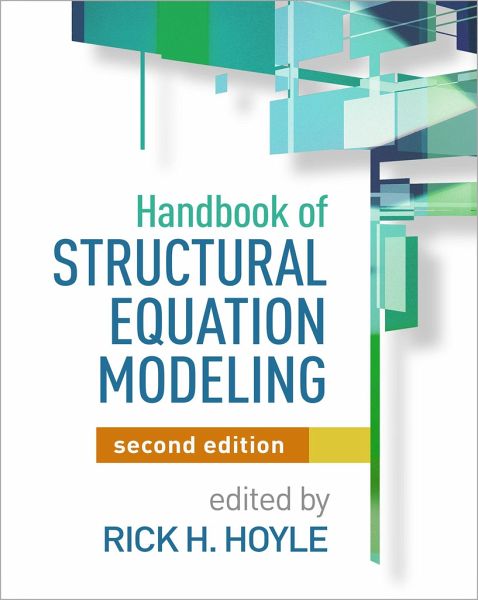
The definitive one-stop resource on structural equation modeling (SEM) from leading methodologists is now in a significantly revised second edition. Twenty-three new chapters cover model selection, bifactor models, item parceling, multitrait-multimethod models, exploratory SEM, mixture models, SEM with small samples, and more. The book moves from fundamental SEM topics (causality, visualization, assumptions, estimation, model fit, and managing missing data); to major model types focused on unobserved causes of covariance between observed variables; to more complex, specialized applications.…mehr
The definitive one-stop resource on structural equation modeling (SEM) from leading methodologists is now in a significantly revised second edition. Twenty-three new chapters cover model selection, bifactor models, item parceling, multitrait-multimethod models, exploratory SEM, mixture models, SEM with small samples, and more. The book moves from fundamental SEM topics (causality, visualization, assumptions, estimation, model fit, and managing missing data); to major model types focused on unobserved causes of covariance between observed variables; to more complex, specialized applications. Each chapter provides conceptually oriented descriptions, fully explicated analyses, and engaging examples that reveal modeling possibilities for use with the reader's data. The expanded companion website presents full data sets, code, and output for many of the chapters, as well as bonus selected chapters from the prior edition. New to This Edition *Chapters on additional topics not mentioned above: SEM-based meta-analysis, dynamic SEM, machine-learning approaches, and more. *Chapters include computer code associated with example analyses (in Mplus and/or the R package lavaan), along with written descriptions of results. *60% new material reflects a decade's worth of developments in the mechanics and application of SEM. *Many new contributors and fully rewritten chapters.
Rick H. Hoyle, PhD, is Professor of Psychology and Neuroscience and Director of the Center for the Study of Adolescent Risk and Resilience at Duke University. He is a Fellow of the Association for Psychological Science, the American Psychological Association (Divisions 1, 5, 8, and 9), and the Society for Experimental Social Psychology. Dr. Hoyle has written extensively on structural equation modeling and other statistical and methodological strategies for the study of complex social and behavioral processes.
Inhaltsangabe
I. Foundations 1. Structural Equation Modeling: An Overview Rick H. Hoyle 2. A Brief History of Structural Equation Modeling Ross L. Matsueda 3. The Causal Foundations of Structural Equation Modeling Judea Pearl 4. Visualizations for Structural Equation Modeling Jolynn Pek Erin K. Davisson & Rick H. Hoyle 5. Latent Variables in Structural Equation Modeling Kenneth A. Bollen & Rick H. Hoyle 6. Simulation Methods in Structural Equation Modeling Walter L. Leite Deborah L. Bandalos & Zuchao Shen 7. Assumptions in Structural Equation Modeling Rex B. Kline 8. On the Estimation of Structural Equation Models with Latent Variables Yunxiao Chen Irini Moustaki & Siliang Zhang 9. Power Analysis within a Structural Equation Modeling Framework Yi Feng & Gregory R. Hancock 10. Model Fit in Structural Equation Modeling Stephen G. West Wei Wu Daniel McNeish & Andrea Savord 11. Model Selection in Structural Equation Modeling Kristopher J. Preacher & Haley E. Yaremych 12. Fitting Structural Equation Models with Missing Data Craig K. Enders 13. Structural Equation Modeling with the Mplus and lavaan Programs Christian Geiser II. Basic Models and Applications 14. Confirmatory Factor Analysis Timothy A. Brown 15. Confirmatory Measurement Models for Dichotomous and Ordered Polytomous Indicators Natalie A. Koziol 16. Item Parceling in SEM: A Researcher Degree-of-Freedom Ripe for Opportunistic Use Sonya K. Sterba & Jason D. Rights 17. Using Factor Scores in Structural Equation Modeling Ines Devlieger & Yves Rosseel 18. Bifactor Measurement Models Steven P. Reise Maxwell Mansolf & Mark G. Haviland 19. Multitrait-Multimethod Models Michael Eid Tobias Koch & Christian Geiser 20. Investigating Measurement Invariance Using Confirmatory Factor Analysis Keith F. Widaman & Margarita Olivera-Aguilar 21. Flexible Structural Equation Modeling Approaches for Analyzing Means Marilyn S. Thompson Yixing Liu & Samuel B. Green 22. Mediation/Indirect Effects in Structural Equation Modeling Oscar Gonzalez Matthew J. Valente Jeewon Cheong & David P. MacKinnon 23. Latent Interaction Effects Augustin Kelava & Holger Brandt 24. Dynamic Moderation with Latent Interactions: General Cross-lagged Panel Models with Interaction Effects Over Time Michael J. Zyphur & Ozlem Ozkok 25. Psychometric Scale Evaluation Using Structural Equation Modeling and Latent Variable Modeling Tenko Raykov 26. Multilevel Structural Equation Modeling Ronald H. Heck & Tingting Reid III. Specialized and Advanced Models and Applications 27. Exploratory Structural Equation Modeling Alexandre J. S. Morin 28. Structural Equation Modeling with Small Samples and Many Variables Katerina M. Marcoulides Ke-Hai Yuan & Lifang Deng 29. Mixture Models Douglas Steinley 30. Latent Curve Modeling of Longitudinal Growth Data Kevin J. Grimm & John J. McArdle 31. Dynamic Structural Equation Modeling as a Combination of Time Series Modeling Multilevel Modeling and Structural Equation Modeling Ellen L. Hamaker Tihomir Asparouhov & Bengt Muthén 32. Continuous-Time Dynamic Models: Connections to Structural Equation Models and Other Discrete-Time Models Sy-Miin Chow Diane Losardo Jonathan Park & Peter C. M. Molenaar 33. Latent Trait-State Models David A. Cole & Qimin Liu 34. Longitudinal Models for Assessing Dynamics in Dyadic Data Meng Chen Hairong Song & Emilio Ferrer 35. Structural Equation Modeling in Genetics Susanne Bruins Sanja Frani¿ Conor V. Dolan Denny Borsboom & Dorret I. Boomsma 36. Structural Equation Modeling (SEM)-Based Meta-Analysis Mike W.-L. Cheung 37. Nonlinear Structural Equation Models: Advanced Methods and Applications Jeffrey R. Harring & Jinwang Zou 38. Foundations and Extensions of Bayesian Structural Equation Modeling Sarah Depaoli David Kaplan & Sonja D. Winter 39. Machine Learning Approaches to Structural Equation Modeling Andreas M. Brandmaier & Ross C. Jacobucci
I. Foundations 1. Structural Equation Modeling: An Overview Rick H. Hoyle 2. A Brief History of Structural Equation Modeling Ross L. Matsueda 3. The Causal Foundations of Structural Equation Modeling Judea Pearl 4. Visualizations for Structural Equation Modeling Jolynn Pek Erin K. Davisson & Rick H. Hoyle 5. Latent Variables in Structural Equation Modeling Kenneth A. Bollen & Rick H. Hoyle 6. Simulation Methods in Structural Equation Modeling Walter L. Leite Deborah L. Bandalos & Zuchao Shen 7. Assumptions in Structural Equation Modeling Rex B. Kline 8. On the Estimation of Structural Equation Models with Latent Variables Yunxiao Chen Irini Moustaki & Siliang Zhang 9. Power Analysis within a Structural Equation Modeling Framework Yi Feng & Gregory R. Hancock 10. Model Fit in Structural Equation Modeling Stephen G. West Wei Wu Daniel McNeish & Andrea Savord 11. Model Selection in Structural Equation Modeling Kristopher J. Preacher & Haley E. Yaremych 12. Fitting Structural Equation Models with Missing Data Craig K. Enders 13. Structural Equation Modeling with the Mplus and lavaan Programs Christian Geiser II. Basic Models and Applications 14. Confirmatory Factor Analysis Timothy A. Brown 15. Confirmatory Measurement Models for Dichotomous and Ordered Polytomous Indicators Natalie A. Koziol 16. Item Parceling in SEM: A Researcher Degree-of-Freedom Ripe for Opportunistic Use Sonya K. Sterba & Jason D. Rights 17. Using Factor Scores in Structural Equation Modeling Ines Devlieger & Yves Rosseel 18. Bifactor Measurement Models Steven P. Reise Maxwell Mansolf & Mark G. Haviland 19. Multitrait-Multimethod Models Michael Eid Tobias Koch & Christian Geiser 20. Investigating Measurement Invariance Using Confirmatory Factor Analysis Keith F. Widaman & Margarita Olivera-Aguilar 21. Flexible Structural Equation Modeling Approaches for Analyzing Means Marilyn S. Thompson Yixing Liu & Samuel B. Green 22. Mediation/Indirect Effects in Structural Equation Modeling Oscar Gonzalez Matthew J. Valente Jeewon Cheong & David P. MacKinnon 23. Latent Interaction Effects Augustin Kelava & Holger Brandt 24. Dynamic Moderation with Latent Interactions: General Cross-lagged Panel Models with Interaction Effects Over Time Michael J. Zyphur & Ozlem Ozkok 25. Psychometric Scale Evaluation Using Structural Equation Modeling and Latent Variable Modeling Tenko Raykov 26. Multilevel Structural Equation Modeling Ronald H. Heck & Tingting Reid III. Specialized and Advanced Models and Applications 27. Exploratory Structural Equation Modeling Alexandre J. S. Morin 28. Structural Equation Modeling with Small Samples and Many Variables Katerina M. Marcoulides Ke-Hai Yuan & Lifang Deng 29. Mixture Models Douglas Steinley 30. Latent Curve Modeling of Longitudinal Growth Data Kevin J. Grimm & John J. McArdle 31. Dynamic Structural Equation Modeling as a Combination of Time Series Modeling Multilevel Modeling and Structural Equation Modeling Ellen L. Hamaker Tihomir Asparouhov & Bengt Muthén 32. Continuous-Time Dynamic Models: Connections to Structural Equation Models and Other Discrete-Time Models Sy-Miin Chow Diane Losardo Jonathan Park & Peter C. M. Molenaar 33. Latent Trait-State Models David A. Cole & Qimin Liu 34. Longitudinal Models for Assessing Dynamics in Dyadic Data Meng Chen Hairong Song & Emilio Ferrer 35. Structural Equation Modeling in Genetics Susanne Bruins Sanja Frani¿ Conor V. Dolan Denny Borsboom & Dorret I. Boomsma 36. Structural Equation Modeling (SEM)-Based Meta-Analysis Mike W.-L. Cheung 37. Nonlinear Structural Equation Models: Advanced Methods and Applications Jeffrey R. Harring & Jinwang Zou 38. Foundations and Extensions of Bayesian Structural Equation Modeling Sarah Depaoli David Kaplan & Sonja D. Winter 39. Machine Learning Approaches to Structural Equation Modeling Andreas M. Brandmaier & Ross C. Jacobucci
Es gelten unsere Allgemeinen Geschäftsbedingungen: www.buecher.de/agb
Impressum
www.buecher.de ist ein Internetauftritt der buecher.de internetstores GmbH
Geschäftsführung: Monica Sawhney | Roland Kölbl | Günter Hilger
Sitz der Gesellschaft: Batheyer Straße 115 - 117, 58099 Hagen
Postanschrift: Bürgermeister-Wegele-Str. 12, 86167 Augsburg
Amtsgericht Hagen HRB 13257
Steuernummer: 321/5800/1497
USt-IdNr: DE450055826