
Handbook of Sustainability in Tourism and Hospitality in Indonesia
Herausgegeben:Pitanatri, Putu Diah Sastri; Hassan, Azizul
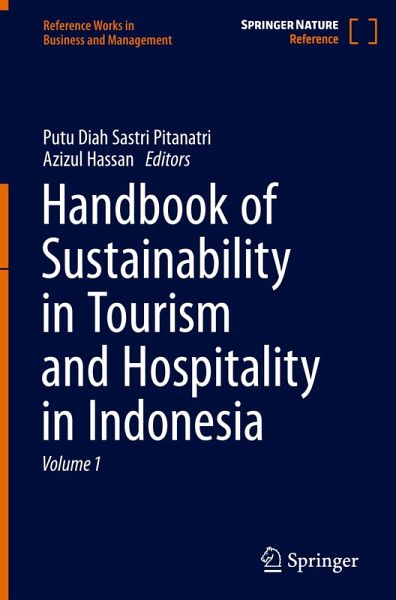
Handbook of Sustainability in Tourism and Hospitality in Indonesia
Herausgegeben:Pitanatri, Putu Diah Sastri; Hassan, Azizul
- Gebundenes Buch
- Merkliste
- Auf die Merkliste
- Bewerten Bewerten
- Teilen
- Produkt teilen
- Produkterinnerung
- Produkterinnerung
This handbook provides a comprehensive examination of sustainable tourism and hospitality practices in Indonesia, offering insights into the industry's innovative approaches. It presents a blend of in-depth research by contributors and editors, aiming to showcase sustainable practices and address challenges in Indonesia's tourism and hospitality. The handbook covers a wide range of unique topics, including eco-friendly accommodations, sustainable transportation, community-based tourism, the preservation of natural and cultural heritage etc. While global studies emphasize the importance of…mehr
Andere Kunden interessierten sich auch für
 Travel and Tourism: Sustainability, Economics, and Management Issues166,99 €
 Yasuo OheCommunity-based Rural Tourism and Entrepreneurship91,99 €
 Host Communities and Pilgrimage Tourism121,99 €
 Host Communities and Pilgrimage Tourism121,99 €
 Tourism and Hospitality for Sustainable Development129,99 €
 Innovative Approaches to Tourism and Leisure136,99 €
 Smart Tourism as a Driver for Culture and Sustainability190,99 €
-
-
-
This handbook provides a comprehensive examination of sustainable tourism and hospitality practices in Indonesia, offering insights into the industry's innovative approaches. It presents a blend of in-depth research by contributors and editors, aiming to showcase sustainable practices and address challenges in Indonesia's tourism and hospitality. The handbook covers a wide range of unique topics, including eco-friendly accommodations, sustainable transportation, community-based tourism, the preservation of natural and cultural heritage etc. While global studies emphasize the importance of sustainability in tourism and hospitality, Indonesia's specific context has received limited attention. Existing contributions are fragmented, leaving a significant gap in comprehensive research. This handbook seeks to bridge that gap by providing a thorough analysis of sustainable tourism and hospitality practices in Indonesia, making it a valuable resource for tourism and hospitality students, policymakers, industry practitioners, and researchers. It will serve as a critical reference for those interested in understanding and promoting sustainable tourism and hospitality development in Indonesia and will contribute significantly to the existing literature studies on sustainable tourism and hospitality practices in the region.
Produktdetails
- Produktdetails
- Reference Works in Business and Management
- Verlag: Springer / Springer Nature Singapore / Springer, Berlin
- Artikelnr. des Verlages: 978-981-96-3378-4
- Seitenzahl: 1408
- Erscheinungstermin: 4. Oktober 2025
- Englisch
- Abmessung: 241mm x 160mm x 81mm
- Gewicht: 2669g
- ISBN-13: 9789819633784
- ISBN-10: 9819633788
- Artikelnr.: 72769385
- Herstellerkennzeichnung
- Springer-Verlag KG
- Sachsenplatz 4-6
- 1201 Wien, AT
- ProductSafety@springernature.com
- Reference Works in Business and Management
- Verlag: Springer / Springer Nature Singapore / Springer, Berlin
- Artikelnr. des Verlages: 978-981-96-3378-4
- Seitenzahl: 1408
- Erscheinungstermin: 4. Oktober 2025
- Englisch
- Abmessung: 241mm x 160mm x 81mm
- Gewicht: 2669g
- ISBN-13: 9789819633784
- ISBN-10: 9819633788
- Artikelnr.: 72769385
- Herstellerkennzeichnung
- Springer-Verlag KG
- Sachsenplatz 4-6
- 1201 Wien, AT
- ProductSafety@springernature.com
Dr Putu Diah Sastri Pitanatri is an Associate Professor currently serving as the Head of the Research and Community Service Center at the Bali Tourism Polytechnic, under the Ministry of Tourism of the Republic of Indonesia. As an academic, Dr Pitanatri received numerous prestigious awards, including the 'Win Way Award for Best Lecturer' from the Ministry of Tourism in 2018. She was also recognized as the Best Graduate in Tourism Studies, achieving the highest GPA in her Master's (2016) and PhD (2022) programs. Dr Diah has been actively contributing to various academic organizations, both nationally and internationally and reviewing academic publications. Dr Diah was invited as a speaker at the UN Tourism Asia Pacific on Woman Empowerment in 2024. Her works include scientific articles, proceedings, as well as monographs and reference books. Dr Diah's main research areas focus on smart tourism, tourist mobility, and sustainability studies in tourism. Dr Azizul Hassan is a member of the Tourism Consultants Network of the UK Tourism Society. Dr Hassan has been working for the tourism industry as a consultant, academic, and researcher. His research interest areas are technology-supported marketing for tourism and hospitality, immersive technology applications in the tourism and hospitality industry, and technology-influenced marketing suggestions for sustainable tourism and hospitality industry in developing countries. Dr Hassan has authored articles and book chapters in leading tourism outlets. He is also part of the editorial team of book projects from Routledge, Springer, Palgrave Mcmillan, CAB International, and Emerald Group Publishing Limited. He is a regular reviewer of a number of international journals.
Introduction.- Part One: Community.- 1. Can Heritage Interpretation Support Sustainable Development in Indonesia? Community-based Tourism Case Studies.- 2. Breaking Down Thick Walls: Expat-Local Capital Conversion and Community Integration in Sustainable Tourism Development in Bali.- 3. Implementation of Community Based Tourism in Realizing Sustainable Tourism.- 4. The Role of Community Empowerment in Collaboration of Tourism Village of Sumberbulu and Dongde Valley.- 5. Management of Geocultural Heritage for Tourism Based on Local Community Participation in Kropakan Hamlet, Klaten, Central Java, Indonesia.- 6. The Missing Link: People-Centric Sustainability through Value Proposition.- 7. Development of Tour Guide Competencies for Tourists with Disabilities in Indonesia.- Part Two: Villages.- 8. A Multidimensional Approach to Study the Sustainability of Traditional Megalithic Villages in East Nusa Tenggara.- 9. Impacts of Socio-Economic Dynamics on Sustainable Tourism in Tourism Villages in Yogyakarta Special Region.- 10. Are Tourism Villages Ready to Adapt with the Post Pandemic Trends? Case Study of ''Tourism Villages in Bali".- 11. Challenges and Readiness of CHSE-Based Management in Tourism Village Development in the Post-COVID-19.- Part Three: Green Tourism and Environmental Sustainability.- 12. Taro Village in Gianyar of Bali towards a Green Tourism Village: The Model of Sustainable Tourism Village Development.- 13. Implementing Circular Economy at Jimbaran Hijau: Sustainable Tourism Approach in Developing a Neighbourhood.- 14. Circular Tourism: A "Common Good" Perspective for Creating Inclusive and Responsible Economic Sustainability.- 15. Exploring the Potential of Green Heritage Tourism in Indonesia: Balancing Conservation and Sustainability in Kota Tua Jakarta.- 16. Can We Promote Sustainable Use of Resources in Rural Tourism Destinations? Advancing Environmental Conservation through the Bricolage Approach - A Case Study of Bali.- 17. Waste Management Evaluation in Labuan Bajo as a Tourist Destination.- 18. Geoarchaeological Hazard and Tourism in a Market Place: A Case Study in West Lampung, Indonesia.- Part Four: Local Wisdom and Local Capacity.- 19. A Strategic Framework for Sustainable Tourism Village Development in Bali: The Trimurti Sustainability Approach.- 20. Deconstructing the Myths of Village Tourism in Bali: Development Constraints and Recommendations for Collaborative Models based on Local Wisdom to Enhance Existence.- 21. Arboreal Subsistence as Local Wisdom in Environmental Conservation in the Tourist Village of Negeri Huaulu, Seram Island.- 22. Local Wisdom Revitalization Concepts and Strategies in Tourism Environmental Conservation in Bali.- 23. Local Wisdom Based Potential Development in Setumpeng Rural Tourism.- 24. How Does the Brand of Local Product "Tenun Gringsing" Desa Wisata Tenganan Pegringsingan Go Global and Sustainable?.- 25. Sustaining the Quality Culture of Tourism Vocational Education: National Challenges, Global Competitiveness and Capabilities Transformation.- 26. Archaeological Literacy to Support Sustainable Tourism in Negeri Saleman, Seram Island.- 27. Territorial Ambivalence: A Place Process for Local's Sustainability within Tourism.- 28. Incorporating Cultural Preservation and Sustainability through Indigenous Tourism: A Study in Kasepuhan Ciptagelar, West Java.- 29. Sustainable Development of Cultural Tourism in Karangkamulyan Protected Area, District of Ciamis, West Java Province, Indonesia.- 30. The Tourism Transition, Tourist Mobility, and Economic Resilience of Rural Tourism Destinations on Flores Island, East Nusa Tenggara Province.- Part Five: Gastronomy and Culinary Heritage.- 31. Development of Maritime Culinary Tourism in Bangka-Belitung Province: Synergy of Blue Economy and Indonesian Gastrodiplomacy.- 32. Intellectual Property in Tourism through Traditional Food as an Indonesian Cultural Heritage: A Case Study on Maintaining the Sustainability of Traditional Food in the Riau Islands.- 33. Bali's Bounty: Exploring the Rich Variety, Culinary Artistry and Nutritional Delights of Authentic Balinese Salads.- 34. Gastronomy Tourism and Local Food Sustainability: Typology and Characteristics of Tourist Behavior.- 35. On Considering Australia: Potentials of Sate Lilit as a Culinary Icon of Bali-Indonesia Gastronomy in Supporting Gastrodiplomacy.- 36. Cirebon City as a Culinary Tourism Destination in West Java.- Part Six: Event, Campaign and Technology Influences.- 37. Diving into the Trickle-down Effects of Sustainable MICE Tourism on Local Organizing Committees.- 38. The Influence of the G20 Indonesia Dinner Event on the Decision to Revisit Garuda Wisnu Kencana, Bali.- 39. The Practice of Indonesian Gastrodiplomacy: Challenges and Opportunities behind the Indonesia Spice Up the World Campaign.- 40. Marathon Run at Buton Palace Fortress: Propelling Sustainable Tourism in Buton Island.- 41. Post-COVID-19 Green-Hybrid Conference Management Model to Support Sustainable Tourism in Bali.- 42. The Role of Information Systems in Sustainable Tourism.- 43. Measuring the User Experience towards ChatGPT for Sustainable Tourism Purposes.- Part Seven: Planning Implementation and Empowerment.- 44. Navigating Change: The Transformation of Government Institutions in Post-Pandemic Tourism Planning and Implementation.- 45. Implementation of Quality Tourism in Indonesia: Opportunities and Challenges.- 46. Empowering Women Weavers in Tourism Villages: Decoding their Roles as Cultural Protectors and Educational Catalysts.- 47. Life Experience and Future Career of Balinese Women in Hospitality Industry.
Introduction.- Part One: Community.- 1. Can Heritage Interpretation Support Sustainable Development in Indonesia? Community-based Tourism Case Studies.- 2. Breaking Down Thick Walls: Expat-Local Capital Conversion and Community Integration in Sustainable Tourism Development in Bali.- 3. Implementation of Community Based Tourism in Realizing Sustainable Tourism.- 4. The Role of Community Empowerment in Collaboration of Tourism Village of Sumberbulu and Dongde Valley.- 5. Management of Geocultural Heritage for Tourism Based on Local Community Participation in Kropakan Hamlet, Klaten, Central Java, Indonesia.- 6. The Missing Link: People-Centric Sustainability through Value Proposition.- 7. Development of Tour Guide Competencies for Tourists with Disabilities in Indonesia.- Part Two: Villages.- 8. A Multidimensional Approach to Study the Sustainability of Traditional Megalithic Villages in East Nusa Tenggara.- 9. Impacts of Socio-Economic Dynamics on Sustainable Tourism in Tourism Villages in Yogyakarta Special Region.- 10. Are Tourism Villages Ready to Adapt with the Post Pandemic Trends? Case Study of ''Tourism Villages in Bali".- 11. Challenges and Readiness of CHSE-Based Management in Tourism Village Development in the Post-COVID-19.- Part Three: Green Tourism and Environmental Sustainability.- 12. Taro Village in Gianyar of Bali towards a Green Tourism Village: The Model of Sustainable Tourism Village Development.- 13. Implementing Circular Economy at Jimbaran Hijau: Sustainable Tourism Approach in Developing a Neighbourhood.- 14. Circular Tourism: A "Common Good" Perspective for Creating Inclusive and Responsible Economic Sustainability.- 15. Exploring the Potential of Green Heritage Tourism in Indonesia: Balancing Conservation and Sustainability in Kota Tua Jakarta.- 16. Can We Promote Sustainable Use of Resources in Rural Tourism Destinations? Advancing Environmental Conservation through the Bricolage Approach - A Case Study of Bali.- 17. Waste Management Evaluation in Labuan Bajo as a Tourist Destination.- 18. Geoarchaeological Hazard and Tourism in a Market Place: A Case Study in West Lampung, Indonesia.- Part Four: Local Wisdom and Local Capacity.- 19. A Strategic Framework for Sustainable Tourism Village Development in Bali: The Trimurti Sustainability Approach.- 20. Deconstructing the Myths of Village Tourism in Bali: Development Constraints and Recommendations for Collaborative Models based on Local Wisdom to Enhance Existence.- 21. Arboreal Subsistence as Local Wisdom in Environmental Conservation in the Tourist Village of Negeri Huaulu, Seram Island.- 22. Local Wisdom Revitalization Concepts and Strategies in Tourism Environmental Conservation in Bali.- 23. Local Wisdom Based Potential Development in Setumpeng Rural Tourism.- 24. How Does the Brand of Local Product "Tenun Gringsing" Desa Wisata Tenganan Pegringsingan Go Global and Sustainable?.- 25. Sustaining the Quality Culture of Tourism Vocational Education: National Challenges, Global Competitiveness and Capabilities Transformation.- 26. Archaeological Literacy to Support Sustainable Tourism in Negeri Saleman, Seram Island.- 27. Territorial Ambivalence: A Place Process for Local's Sustainability within Tourism.- 28. Incorporating Cultural Preservation and Sustainability through Indigenous Tourism: A Study in Kasepuhan Ciptagelar, West Java.- 29. Sustainable Development of Cultural Tourism in Karangkamulyan Protected Area, District of Ciamis, West Java Province, Indonesia.- 30. The Tourism Transition, Tourist Mobility, and Economic Resilience of Rural Tourism Destinations on Flores Island, East Nusa Tenggara Province.- Part Five: Gastronomy and Culinary Heritage.- 31. Development of Maritime Culinary Tourism in Bangka-Belitung Province: Synergy of Blue Economy and Indonesian Gastrodiplomacy.- 32. Intellectual Property in Tourism through Traditional Food as an Indonesian Cultural Heritage: A Case Study on Maintaining the Sustainability of Traditional Food in the Riau Islands.- 33. Bali's Bounty: Exploring the Rich Variety, Culinary Artistry and Nutritional Delights of Authentic Balinese Salads.- 34. Gastronomy Tourism and Local Food Sustainability: Typology and Characteristics of Tourist Behavior.- 35. On Considering Australia: Potentials of Sate Lilit as a Culinary Icon of Bali-Indonesia Gastronomy in Supporting Gastrodiplomacy.- 36. Cirebon City as a Culinary Tourism Destination in West Java.- Part Six: Event, Campaign and Technology Influences.- 37. Diving into the Trickle-down Effects of Sustainable MICE Tourism on Local Organizing Committees.- 38. The Influence of the G20 Indonesia Dinner Event on the Decision to Revisit Garuda Wisnu Kencana, Bali.- 39. The Practice of Indonesian Gastrodiplomacy: Challenges and Opportunities behind the Indonesia Spice Up the World Campaign.- 40. Marathon Run at Buton Palace Fortress: Propelling Sustainable Tourism in Buton Island.- 41. Post-COVID-19 Green-Hybrid Conference Management Model to Support Sustainable Tourism in Bali.- 42. The Role of Information Systems in Sustainable Tourism.- 43. Measuring the User Experience towards ChatGPT for Sustainable Tourism Purposes.- Part Seven: Planning Implementation and Empowerment.- 44. Navigating Change: The Transformation of Government Institutions in Post-Pandemic Tourism Planning and Implementation.- 45. Implementation of Quality Tourism in Indonesia: Opportunities and Challenges.- 46. Empowering Women Weavers in Tourism Villages: Decoding their Roles as Cultural Protectors and Educational Catalysts.- 47. Life Experience and Future Career of Balinese Women in Hospitality Industry.