Andere Kunden interessierten sich auch für
 On Translating Homer18,99 €
 Memories and Studies of War and Peace23,99 €
 Spain25,99 €
 The Beginnings of the English Romantic Movement18,99 €
 Adventures in Criticism21,99 €
 Confessions and Criticisms21,99 €
 A History of Roman Literature30,99 €


This work has been selected by scholars as being culturally important, and is part of the knowledge base of civilization as we know it. This work was reproduced from the original artifact, and remains as true to the original work as possible. Therefore, you will see the original copyright references, library stamps (as most of these works have been housed in our most important libraries around the world), and other notations in the work. This work is in the public domain in the United States of America, and possibly other nations. Within the United States, you may freely copy and distribute this work, as no entity (individual or corporate) has a copyright on the body of the work. As a reproduction of a historical artifact, this work may contain missing or blurred pages, poor pictures, errant marks, etc. Scholars believe, and we concur, that this work is important enough to be preserved, reproduced, and made generally available to the public. We appreciate your support of the preservation process, and thank you for being an important part of keeping this knowledge alive and relevant.
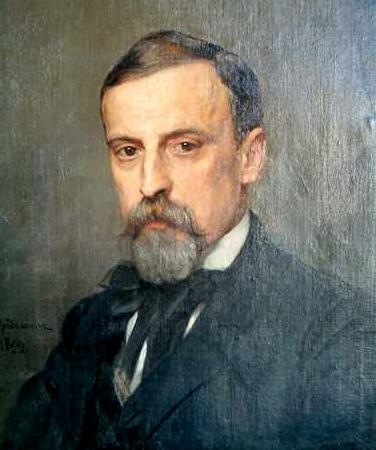
Henryk Adam Aleksander Pius Sienkiewicz was born on May 5, 1846, in Wola Okrzejska, Poland, to parents J zef Sienkiewicz and Stefania Czarnowska. He became one of Poland s most celebrated authors, known for combining national history with literary artistry. Raised in a noble but financially modest family, he was educated in Warsaw, where he studied law, history, and literature. His early work appeared in journals and newspapers, and he eventually traveled abroad, including an extended trip to the United States, where he wrote travel essays and gained insight into broader cultural and political issues. Sienkiewicz gained international acclaim with historical novels such as With Fire and Sword, The Deluge, and Fire in the Steppe, collectively known as The Trilogy. His most widely recognized work is Quo Vadis, a novel set in ancient Rome that earned him global readership and widespread translations. In 1905, he received the Nobel Prize in Literature for his outstanding merits as an epic writer. Through his works, he promoted Polish identity during a time of national partition. Sienkiewicz spent his final years in Switzerland, where he died on November 15, 1916, leaving behind a legacy of patriotism, moral conviction, and literary achievement.