
Andere Kunden interessierten sich auch für
 Rip Van Winkle's Republic24,99 €
 Romances of the Republic65,99 €
 Fictional Republic99,99 €
 The Logic of Slavery42,99 €
 Henry James and the Father Question43,99 €
 Women Writers and Journalists in the Nineteenth-Century South96,99 €
 Henry James and the Visual51,99 €





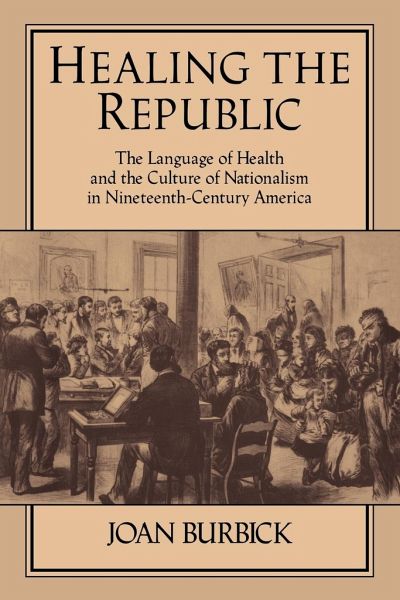
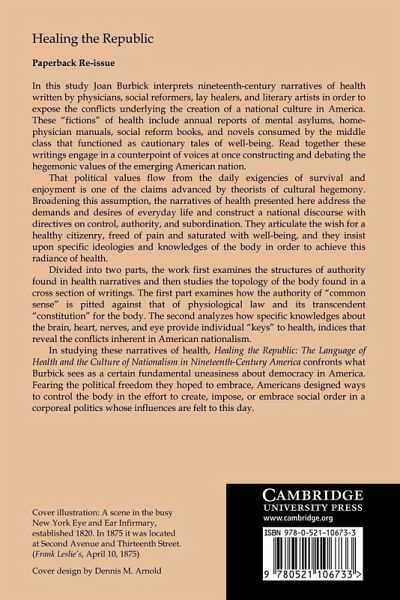
In this study Joan Burbick interprets nineteenth-century narratives of health written by physicians, social reformers, lay healers and literary artists in order to expose the conflicts underlying the creation of a national culture in America. These 'fictions' of health include annual reports of mental asylums, home-physician manuals, social reform books and novels consumed by the middle class that functioned as cautionary tales of well-being. Read together these writings engage in a counterpoint of voices at once constructing and debating the hegemonic values of the emerging American nation. In studying these narratives of health, Healing the Republic: The Language of Health and the Culture of Nationalism in Nineteenth-Century America confronts what Burbick sees as a certain fundamental uneasiness about democracy in America. Fearing the political freedom they hoped to embrace, Americans designed ways to control the body in the effort to create, impose or embrace social order in a corporeal politics whose influences are felt to this day.