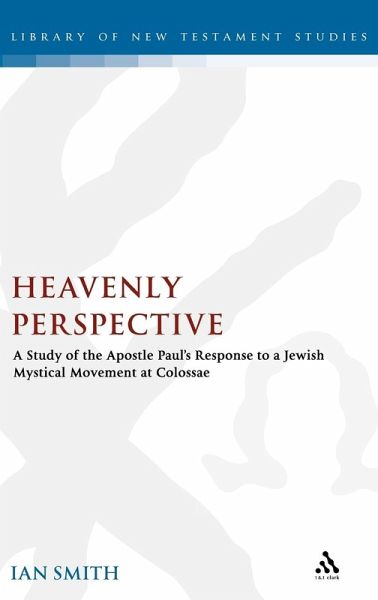
This book identifies the source of the Colossian error as from within Jewish mystical movements and shows how both the theology and practice which is taught in the epistle is to be understood from this context. The book gives a helpful overview of scholarship that has attempted to identify the nature and source of the Colossian error. The book, unlike many others on the topic, is exegetically driven, and will model thorough and careful exegetical practice. The book interacts with extra-Biblical texts which help the reader to understand the mystical contexts of first century Judaism.
This book identifies the source of the Colossian error as from within Jewish mystical movements and shows how both the theology and practice which is taught in the epistle is to be understood from this context. The book gives a helpful overview of scholarship that has attempted to identify the nature and source of the Colossian error. The book, unlike many others on the topic, is exegetically driven, and will model thorough and careful exegetical practice. The book interacts with extra-Biblical texts which help the reader to understand the mystical contexts of first century Judaism.
Ian Smith (PhD) has lectured for over ten years in Greek and New Testament at the Presbyterian Theological Centre, Sydney, Australia. He has been involved in cross-cultural theological education in the Pacific (Vanuatu) and in pastoral ministry in Australia.
Inhaltsangabe
Contents CHAPTER ONE: INTRODUCTORY ISSUES 1.1 Introduction 1.2 The recipients of the letter and the demography of the Lycus Valley 1.3 Authorship 1.4 Method of research CHAPTER TWO: AN OVERVIEW OF SCHOLARSHIP 2.1 Introduction 2.2 Was there a Colossian heresy? 2.3 The problem of categories 2.4 Essene Judaism and Gnosticism 2.5 Hellenism 2.6 Clinton Arnold - Judaism and Phrygian folk-religion 2.7 S. Lyonnet - A call for reappraisal 2.8 Jewish-Christian mystical asceticism 2.9 Conclusion CHAPTER THREE: THE LORDSHIP OF CHRIST AND THE EMPTINESS OF THE PHILOSOPHY: COLOSSIANS 2:6-8 3.1 Introduction 3.2 The lordship of Christ - the tradition received from Epaphras - vv6-7 3.3 The threat of the philosophy 3.4 An excursus - the derivation of evil cosmic beings in 1 Enoch 3.5 Conclusion CHAPTER FOUR: THE SUFFICIENCY OF CHRIST EXPRESSED THROUGH THE VICTORY OF THE CROSS: COLOSSIANS 2:9-15 4.1 Introduction 4.2 Poetic structure 4.3 Christology: the remedy to the error 4.4. The cross of Christ 4.5 Conclusion CHAPTER FIVE: THE SHADOW OF ASCETICISM AND THE REALITY OF CHRIST: COLOSSIANS 2:16-19 5.1 Introduction 5.2 Structure 5.3 The threat from the errorists - Jewish rituals - vv16-17 5.4 Heavenly visions and the worship of angels 5.5 Conclusion CHAPTER SIX: THE TRANSIENCE AND IMPOTENCE OF THE ERRORISTS' MESSAGE: COLOSSIANS 2:20-23 6.1 Introduction 6.2 Structure 6.3 The basis of liberation: the death of Christ 6.4 Conclusion CHAPTER SEVEN: WHAT WAS THE COLOSSIAN PHILOSOPHY? 7.1 Introduction 7.2 Summary of the results of the exegetical study 7.3 Conclusion CHAPTER EIGHT: THE DEVELOPMENT OF MERKABAH MYSTICISM 8.1 Introduction 8.2 The development of Merkabah mysticism 8.3 The anthropomorphous representation of God 8.4 Heavenly ascent and transformation 8.5 Jewish mysticism in Asia Minor 8.6 Paul's understanding of Jewish mysticism 8.7 Conclusion CHAPTER NINE: CORRECT CHRISTOLOGY - THE ANTIDOTE TO ERROR: COLOSSIANS 1:15-20 9.1 Introduction 9.2 Form and prehistory (?) of Colossians 1:15-20 9.3 Structure of Colossians 1:15-20 9.4 Exegesis of Colossians 1:15-20 9.5 The centrepiece 9.6 Christ's supremacy in the redeemed community - vv18b-20 9.7 Conclusion CHAPTER TEN: THE BRIDGE BETWEEN INSTRUCTION AND EXHORTATION: COLOSSIANS 3:1-4 10.1 Introduction 10.2 The relationship of Colossians 3:1-4 to Colossians 2:6-23 10:3 Spatial eschatology as motivation for ethical behaviour - vv1, 2 10:4 Temporal eschatology as motivation for ethical behaviour - vv3, 4 10.5 Conclusion CHAPTER ELEVEN: EPISTOLARY PARAENESIS 11.1 Introduction 11.2 Revelation 11.3 Victory 11.4 Reconciliation 11.5 Conclusion CHAPTER TWELVE: CONCLUSION BIBLIOGRAPHY
Contents CHAPTER ONE: INTRODUCTORY ISSUES 1.1 Introduction 1.2 The recipients of the letter and the demography of the Lycus Valley 1.3 Authorship 1.4 Method of research CHAPTER TWO: AN OVERVIEW OF SCHOLARSHIP 2.1 Introduction 2.2 Was there a Colossian heresy? 2.3 The problem of categories 2.4 Essene Judaism and Gnosticism 2.5 Hellenism 2.6 Clinton Arnold - Judaism and Phrygian folk-religion 2.7 S. Lyonnet - A call for reappraisal 2.8 Jewish-Christian mystical asceticism 2.9 Conclusion CHAPTER THREE: THE LORDSHIP OF CHRIST AND THE EMPTINESS OF THE PHILOSOPHY: COLOSSIANS 2:6-8 3.1 Introduction 3.2 The lordship of Christ - the tradition received from Epaphras - vv6-7 3.3 The threat of the philosophy 3.4 An excursus - the derivation of evil cosmic beings in 1 Enoch 3.5 Conclusion CHAPTER FOUR: THE SUFFICIENCY OF CHRIST EXPRESSED THROUGH THE VICTORY OF THE CROSS: COLOSSIANS 2:9-15 4.1 Introduction 4.2 Poetic structure 4.3 Christology: the remedy to the error 4.4. The cross of Christ 4.5 Conclusion CHAPTER FIVE: THE SHADOW OF ASCETICISM AND THE REALITY OF CHRIST: COLOSSIANS 2:16-19 5.1 Introduction 5.2 Structure 5.3 The threat from the errorists - Jewish rituals - vv16-17 5.4 Heavenly visions and the worship of angels 5.5 Conclusion CHAPTER SIX: THE TRANSIENCE AND IMPOTENCE OF THE ERRORISTS' MESSAGE: COLOSSIANS 2:20-23 6.1 Introduction 6.2 Structure 6.3 The basis of liberation: the death of Christ 6.4 Conclusion CHAPTER SEVEN: WHAT WAS THE COLOSSIAN PHILOSOPHY? 7.1 Introduction 7.2 Summary of the results of the exegetical study 7.3 Conclusion CHAPTER EIGHT: THE DEVELOPMENT OF MERKABAH MYSTICISM 8.1 Introduction 8.2 The development of Merkabah mysticism 8.3 The anthropomorphous representation of God 8.4 Heavenly ascent and transformation 8.5 Jewish mysticism in Asia Minor 8.6 Paul's understanding of Jewish mysticism 8.7 Conclusion CHAPTER NINE: CORRECT CHRISTOLOGY - THE ANTIDOTE TO ERROR: COLOSSIANS 1:15-20 9.1 Introduction 9.2 Form and prehistory (?) of Colossians 1:15-20 9.3 Structure of Colossians 1:15-20 9.4 Exegesis of Colossians 1:15-20 9.5 The centrepiece 9.6 Christ's supremacy in the redeemed community - vv18b-20 9.7 Conclusion CHAPTER TEN: THE BRIDGE BETWEEN INSTRUCTION AND EXHORTATION: COLOSSIANS 3:1-4 10.1 Introduction 10.2 The relationship of Colossians 3:1-4 to Colossians 2:6-23 10:3 Spatial eschatology as motivation for ethical behaviour - vv1, 2 10:4 Temporal eschatology as motivation for ethical behaviour - vv3, 4 10.5 Conclusion CHAPTER ELEVEN: EPISTOLARY PARAENESIS 11.1 Introduction 11.2 Revelation 11.3 Victory 11.4 Reconciliation 11.5 Conclusion CHAPTER TWELVE: CONCLUSION BIBLIOGRAPHY
Es gelten unsere Allgemeinen Geschäftsbedingungen: www.buecher.de/agb
Impressum
www.buecher.de ist ein Internetauftritt der buecher.de internetstores GmbH
Geschäftsführung: Monica Sawhney | Roland Kölbl | Günter Hilger
Sitz der Gesellschaft: Batheyer Straße 115 - 117, 58099 Hagen
Postanschrift: Bürgermeister-Wegele-Str. 12, 86167 Augsburg
Amtsgericht Hagen HRB 13257
Steuernummer: 321/5800/1497
USt-IdNr: DE450055826