
Heritage Microbiology and Science
Microbes, Monuments and Maritime Materials
Herausgeber: May, Eric; Mitchell, Julian; Jones, Mark
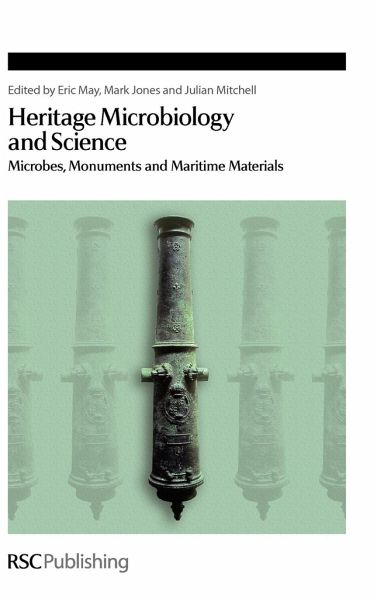

Heritage Microbiology and Science
Microbes, Monuments and Maritime Materials
Herausgeber: May, Eric; Mitchell, Julian; Jones, Mark
- Gebundenes Buch
- Merkliste
- Auf die Merkliste
- Bewerten Bewerten
- Teilen
- Produkt teilen
- Produkterinnerung
- Produkterinnerung
Heritage Science is an emerging discipline and this book forms a comprehensive volume on key topical areas of this new field and discusses the threats to a wide range of heritage materials and monuments by biological and chemical agents of decay. It provides up-to-date information on subjects covering the component field of heritage microbiology, molecular and chemical analytical techniques, and the mechanisms of degradation and deterioration of historic ships and buildings. Extensive emphasis is placed on case studies and there is a valuable section on historic ships covering the preservation…mehr
Andere Kunden interessierten sich auch für
 Cell Surface Engineering194,99 €
 Material-Based Mechanobiology223,99 €
 Ammonia Oxidizing Bacteria183,99 €
 Pathogenesis, Management and Socio-Economic Impact of Covid-19 Pandemic149,99 €
") Eulàlia Gassó MiracleCoenraad Jacob Temminck and the Emergence of Systematics (1800-1850)139,99 €
Eulàlia Gassó MiracleCoenraad Jacob Temminck and the Emergence of Systematics (1800-1850)139,99 € Microbial Biotechnology Approaches to Monuments of Cultural Heritage113,99 €
 Microbial Rejuvenation of Polluted Environment174,99 €
-
-
-

Heritage Science is an emerging discipline and this book forms a comprehensive volume on key topical areas of this new field and discusses the threats to a wide range of heritage materials and monuments by biological and chemical agents of decay. It provides up-to-date information on subjects covering the component field of heritage microbiology, molecular and chemical analytical techniques, and the mechanisms of degradation and deterioration of historic ships and buildings. Extensive emphasis is placed on case studies and there is a valuable section on historic ships covering the preservation of HMS Victory, SS Great Britain, Vasa and the Mary Rose. This book provides an indispensable guide and reference source for those working in all areas of historical conservation, biodeterioration, microbiology and materials science.
Produktdetails
- Produktdetails
- Verlag: RSC Publishing
- Seitenzahl: 320
- Erscheinungstermin: 17. September 2008
- Englisch
- Abmessung: 234mm x 155mm x 23mm
- Gewicht: 658g
- ISBN-13: 9780854041411
- ISBN-10: 0854041419
- Artikelnr.: 23837111
- Herstellerkennzeichnung
- Libri GmbH
- Europaallee 1
- 36244 Bad Hersfeld
- gpsr@libri.de
- Verlag: RSC Publishing
- Seitenzahl: 320
- Erscheinungstermin: 17. September 2008
- Englisch
- Abmessung: 234mm x 155mm x 23mm
- Gewicht: 658g
- ISBN-13: 9780854041411
- ISBN-10: 0854041419
- Artikelnr.: 23837111
- Herstellerkennzeichnung
- Libri GmbH
- Europaallee 1
- 36244 Bad Hersfeld
- gpsr@libri.de
Eric May is Reader in Microbiology at the School of Biological Sciences, University of Portsmouth. He has been known for his work on the role of bacteria in stone deterioration for 20 years but also recently coordinated an EU study to assess the value of biotechnology for remediation of altered stone in buildings (BIOBRUSH). He chaired the scientific committees and organised the international heritage meeting Heritage Microbiology and Science (HMS 2005) in Portsmouth in June 2005 along with Mark Jones at the Mary Rose Trust. He is co-editor of Conservation Science: Heritage Materials and was a participant in a recent Preserving the Past research initiative that looked at the methods used in heritage and conservation work. Mark Jones is Head of Collections at the Mary Rose Trust. A leading conservation scientist, involved with the Mary Rose Trust since 1983, Dr Jones devised the conservation methodology for the hull and wooden artefacts at the Mary Rose Trust and is now responsible for all conservation matters. His principle research interests lie in the structure and degradation of archaeological wood, acid problem in treated and untreated archaeological wood and his conservation interests include the stabilisation of large waterlogged wooden objects. He is also responsible for the conservation of the Dover Bronze-Age Boat, a third century Gallo-Celtic Boat from Guernsey, the tenth century Graveney Boat for the National Maritime Museum and numerous pre-historic logboats. Dr Jones also leads a team of textile conservators working to conserve the fore-top sail of HMS Victory for display to the general public. Julian Mitchell is a Senior Lecturer in Microbial Genetics at the School of Biological Sciences, University of Portsmouth. He is a molecular biologist with an interest in the application of molecular techniques to the study of microbes in the environment.
Introduction: Heritage Microbiology, Science And the Mary Rose: What are we trying to achieve? Introduction
Background
Conference Themes and the Mary Rose
What are we trying to achieve? Conclusion
Part 1: Heritage Monuments and Materials
Heritage Research and Practice: Towards a better understanding? Introduction
Evaluation of Biodeterioration Processes
Biodeterioration Mechanisms
Exogenic Parameters
Biofilm - A Stabilising Microniche
Environmental Conditions for Biodeterioration Processes
Microbiological Assessment of Biodeterioration Impacts
Microbiology and Archaeology - Case Studies
Terracotta Army in Xian / China (Polychrome Coatings)
Nydam Mose / Denmark (Metals)
Temple of Angkor Wat, Cambodia (Natural Stone)
Archaeological Site of Milet in Turkey (Waterlogged Marble)
Prospective Needs for an Interdisciplinary Approach in Conservation Microbiology
Mapping Decay: GIS, Microbes and Stone Degradation across Scales
Introduction
Geographical Information Systems
Use of Images for Classifying Degradation
Illustrations of Mapping Degradation in a GIS
Conclusions
Microbial Colonisation of Historic Buildings in Latin America
Introduction
Methods
Sites and Sampling
Detection and Identification
Results and Discussion Analysis of Bacterial Communities on an Antique Stained Glass Window
Introduction
Methods and Results
Deterioration on the window "NativitÓ"
Sampling, Growth Conditions and Phenotypical Characterization
Molecular Characterization
Conclusions
Assessing the Suitability of Novel Biocides for use on Historic Surfaces
Introduction
Methods and Results
Compatibility of Novel Treatments with Conservation Products
Tests on Sandstone
Accelerated Weathering
Tests on Traditional Painted Plaster
Field Studies
Test Surfaces
Test Rigs
Treatments
Effectiveness Measurements
Fluorescence and Colour Measurements after Treatment Application
Post-Treatment Assessment
The Occurrence of Heterotrophic Microorganisms on Heritage Surfaces
Discussion
Conclusion
Biocalcification: The Context for Bioremediation
Introduction
Biomineralization
Calcium Carbonate Biomineralization
Monumental Stone Decay and Conservation
Bioremediation for Conservation
Methods and Results
On-site Application
Bio-inducing Macromolecules Solutions (BIMSs)
Methodology of Application
BMT Evaluation
On-site results
Conclusions
The Biobrush Project for Bioremediation of Heritage Stone
A Need for Stone Conservation
Rationale for Biobrush Research
Collection and Analysis of Encrusted Stone from Historic Buildings
Selection and Screening of Bacterial Cultures for use in Bioremediation
Evaluation of Delivery Systems to carry Biological Agents onto the Stone
Mineral Changes in Stones during Bioremediation Treatment
Field Trials of Bioremediation on Buildings and Monuments
Recommended Methodologies
Implications of Biobrush Research
Part 2: Molecular Methods for Heritage Artefacts and Monuments
Molecular Studies for Cultural Heritage: State of the Art
Introduction
Previous Methods for the Detection of Microorganisms
Culture-Independent Methods to Detect Microorganisms
Recent Advancements for Detecting Microorganisms
MDA-PCR Amplifications
DNA Library Screening
Detection and Analysis of Chimeras
Analysis Based on DNA and RNA
Further Perspectives
Bacteria in Archaeological and Waterlogged Wood: Molecular Protocols for Diversity and Community Studies
Introduction
Waterlogged Wood and its Microbiology
Extraction of Nucleic Acids from Wood
Overcoming Low Quantities of Impure Nucleic Acids
PCR and the Separation of Mixed-Origin PCR Products
Fluorescent In Situ Hybridisation and Waterlogged Wood
Conclusions
Synchrotron Radiation for the Investigation of Objects of Cultural Heritage Value
Introduction
Synchrotron Radiation
Examples of Synchrotron Science as Applied to Heritage Materials
Archaeological Iron
Erosion of Carbonate Building Materials
Textile Fibres from the Qumran Caves
Corinthian Style Helmet from Ancient Greece
Conclusions
Summary
Fluorescent In Situ Hybridization (FISH) as Molecular Tool to Study Bacteria causing Biodeterioration
Introduction
FISH Applied to the Study of Biodeterioration of Works of Art
Limits and Advantages of FISH to Study Microbial Communities associated with Biodeterioration
Methods that Enhance the Signal
Identification of Bacteria from Waterlogged Archaeological Wood
Introduction
Method and Results
Sampling
Cultivation
DNA-Based Identification
DNA Extraction
PCR Amplification and Construction of 16S rDNA Clone Libraries and T-RFLP Community Fingerprinting
Sequencing of 16S rDNA Inserts and Phylogenetic Analysis
Conclusions
Summary
Novel Combined Approach Based on Phospholipid Fatty Acids and 16S-rDNA PCR-SSCP Analyses to Characterise Fouling Biofilms on Historic Monuments
Introduction
Culture-Independent Approaches to Characterise Microbial Communities
Materials and Methods
Site Description
Sample Collection
Biomarker Analysis
DNA Extraction, PCR-SSCP and Sequencing of DNA
Digital Image Analysis
Nucleic Acid and Phylogenetic Analyses Results
Biofilm Biomass and PLFA Profiles
Discussion
Biomass and Diversity of Epilithic Biofilms
Conclusions
On the Use of 23S rRNA Gene Sequences to Assess a High Diversity of Acidobacteria in Altamira Cave
Introduction
Materials and Methods
Sampling and DNA Extraction
Amplification of Acidobacterial rDNA and Construction of Clone Libraries
Phylogenetic Analyses and Tree Reconstruction based on rDNA Sequences
Results and Discussion
Conclusions
Part 3: Historic Ships and their Preservation
The In-Situ Preservation of Archaeological Sites Underwater: An Evaluation of some Techniques
Introduction
Why In-Situ Preservation? Threats to Underwater Archaeological Heritage
Measuring the Extent of Deterioration
Examples of Techniques used for In-Situ Protection
The "Polders", The Netherlands
Red Bay, Canada
The Bzn Wrecks, The Netherlands
The Darsser Cog, Germany
The Avondster, Sri Lanka
Roman Quay, The Netherlands
Thirteenth Century Wreck, Denmark
William Salthouse, Australia
The Zakynthos Wreck, Greece
Colossus, United Kingdom
James Matthews, Australia
Fredericus (Raar-Project), Sweden
Conclusions and Future Directions
Molecular Bacterial Diversity in the Timbers of the Tudor Warship the Mary Rose
Introduction
Role of Bacteria in the Sulfur and Iron Cycles
Molecular Diversity of Bacteria associated with Buried and Raised Ship Timbers
Conclusions
Timber Conservation on Nelson's Flagship HMS Victory
Introduction
Original Construction
The Early Years
Into Drydock 1922
Restoration and Repair in the 1920s
The 1955-64 Great Repair
Completion of the Great Repair 1964 - 2000
Timber Supply
Concluding Comments
Summary
Informing the Conservation, Display and Long-Term Preservation of the HMS Victory Trafalgar Sail
Introduction
The Performance of the Canvas
Conservation and Display
Condition Monitoring
Nuclear Magnetic Relaxometry
Near Infrared Spectroscopy (NIR)
Conclusions
Extraction of Iron Compounds from Waterlogged Pine Wood from the Vasa
Introduction
Materials and Methods
Chemicals
Extraction Procedures
Analyses
Results and Discussion
Co-Extraction of other Compounds
Effects on the Wood
Conclusions
Summary
Electrolysis in the Conservation of Large Artefacts: The M33 and the s.v.Cutty Sark
Introduction
Soak Treatment
Electrolytic Treatment
Electrolysis in Conservation
Electrolysis of the M33
Electrolysis of the s.v. Cutty Sark
Conclusions
Summary
Desiccated Storage of Chloride-Contaminated Iron: A Study of the Effects of Loss of Environmental Control
Introduction
Corrosion and Electrolytes
ss Great Britain: A big Corrosion Problem
Implementation of Environmental Control
Chloride-Infested Iron: Corrosion and Corrosion Products
Chloride on the Iron Hull of the ss Great Britain
Modelling Iron Corrosion during Drying of Chloride-Infested Iron
Environmentally-Controlled Storage in Practice
Experimental
Results
Fecl2. 4h2o/ Iron Powder Mix: 15%-22% Relative Humidity (Figure 4)
Fecl2.4h2o/ Iron Powder Mix: 15%-30% Relative Humidity (Figure 5)
-Feooh/Iron Powder Mix: 15%-22% Relative Humidity (Figure 6)
Feooh/Iron Powder Mix: 15%-30% Relative Humidity (Figure 7)
Fecl2. 4h2o/Iron Powder Mix: 22%- 65% Relative Humidity (Figure 8)
Discussion
Endnote
Microbiology and Art: An Education Opportunity
Introduction
Applied Microbiology
Microbiology and Art
Deterioration of Art
Beauty of Microorganisms
Microorganisms in Art
Combining Microbiology and Art
Microbiology And...
Concluding Remarks
Background
Conference Themes and the Mary Rose
What are we trying to achieve? Conclusion
Part 1: Heritage Monuments and Materials
Heritage Research and Practice: Towards a better understanding? Introduction
Evaluation of Biodeterioration Processes
Biodeterioration Mechanisms
Exogenic Parameters
Biofilm - A Stabilising Microniche
Environmental Conditions for Biodeterioration Processes
Microbiological Assessment of Biodeterioration Impacts
Microbiology and Archaeology - Case Studies
Terracotta Army in Xian / China (Polychrome Coatings)
Nydam Mose / Denmark (Metals)
Temple of Angkor Wat, Cambodia (Natural Stone)
Archaeological Site of Milet in Turkey (Waterlogged Marble)
Prospective Needs for an Interdisciplinary Approach in Conservation Microbiology
Mapping Decay: GIS, Microbes and Stone Degradation across Scales
Introduction
Geographical Information Systems
Use of Images for Classifying Degradation
Illustrations of Mapping Degradation in a GIS
Conclusions
Microbial Colonisation of Historic Buildings in Latin America
Introduction
Methods
Sites and Sampling
Detection and Identification
Results and Discussion Analysis of Bacterial Communities on an Antique Stained Glass Window
Introduction
Methods and Results
Deterioration on the window "NativitÓ"
Sampling, Growth Conditions and Phenotypical Characterization
Molecular Characterization
Conclusions
Assessing the Suitability of Novel Biocides for use on Historic Surfaces
Introduction
Methods and Results
Compatibility of Novel Treatments with Conservation Products
Tests on Sandstone
Accelerated Weathering
Tests on Traditional Painted Plaster
Field Studies
Test Surfaces
Test Rigs
Treatments
Effectiveness Measurements
Fluorescence and Colour Measurements after Treatment Application
Post-Treatment Assessment
The Occurrence of Heterotrophic Microorganisms on Heritage Surfaces
Discussion
Conclusion
Biocalcification: The Context for Bioremediation
Introduction
Biomineralization
Calcium Carbonate Biomineralization
Monumental Stone Decay and Conservation
Bioremediation for Conservation
Methods and Results
On-site Application
Bio-inducing Macromolecules Solutions (BIMSs)
Methodology of Application
BMT Evaluation
On-site results
Conclusions
The Biobrush Project for Bioremediation of Heritage Stone
A Need for Stone Conservation
Rationale for Biobrush Research
Collection and Analysis of Encrusted Stone from Historic Buildings
Selection and Screening of Bacterial Cultures for use in Bioremediation
Evaluation of Delivery Systems to carry Biological Agents onto the Stone
Mineral Changes in Stones during Bioremediation Treatment
Field Trials of Bioremediation on Buildings and Monuments
Recommended Methodologies
Implications of Biobrush Research
Part 2: Molecular Methods for Heritage Artefacts and Monuments
Molecular Studies for Cultural Heritage: State of the Art
Introduction
Previous Methods for the Detection of Microorganisms
Culture-Independent Methods to Detect Microorganisms
Recent Advancements for Detecting Microorganisms
MDA-PCR Amplifications
DNA Library Screening
Detection and Analysis of Chimeras
Analysis Based on DNA and RNA
Further Perspectives
Bacteria in Archaeological and Waterlogged Wood: Molecular Protocols for Diversity and Community Studies
Introduction
Waterlogged Wood and its Microbiology
Extraction of Nucleic Acids from Wood
Overcoming Low Quantities of Impure Nucleic Acids
PCR and the Separation of Mixed-Origin PCR Products
Fluorescent In Situ Hybridisation and Waterlogged Wood
Conclusions
Synchrotron Radiation for the Investigation of Objects of Cultural Heritage Value
Introduction
Synchrotron Radiation
Examples of Synchrotron Science as Applied to Heritage Materials
Archaeological Iron
Erosion of Carbonate Building Materials
Textile Fibres from the Qumran Caves
Corinthian Style Helmet from Ancient Greece
Conclusions
Summary
Fluorescent In Situ Hybridization (FISH) as Molecular Tool to Study Bacteria causing Biodeterioration
Introduction
FISH Applied to the Study of Biodeterioration of Works of Art
Limits and Advantages of FISH to Study Microbial Communities associated with Biodeterioration
Methods that Enhance the Signal
Identification of Bacteria from Waterlogged Archaeological Wood
Introduction
Method and Results
Sampling
Cultivation
DNA-Based Identification
DNA Extraction
PCR Amplification and Construction of 16S rDNA Clone Libraries and T-RFLP Community Fingerprinting
Sequencing of 16S rDNA Inserts and Phylogenetic Analysis
Conclusions
Summary
Novel Combined Approach Based on Phospholipid Fatty Acids and 16S-rDNA PCR-SSCP Analyses to Characterise Fouling Biofilms on Historic Monuments
Introduction
Culture-Independent Approaches to Characterise Microbial Communities
Materials and Methods
Site Description
Sample Collection
Biomarker Analysis
DNA Extraction, PCR-SSCP and Sequencing of DNA
Digital Image Analysis
Nucleic Acid and Phylogenetic Analyses Results
Biofilm Biomass and PLFA Profiles
Discussion
Biomass and Diversity of Epilithic Biofilms
Conclusions
On the Use of 23S rRNA Gene Sequences to Assess a High Diversity of Acidobacteria in Altamira Cave
Introduction
Materials and Methods
Sampling and DNA Extraction
Amplification of Acidobacterial rDNA and Construction of Clone Libraries
Phylogenetic Analyses and Tree Reconstruction based on rDNA Sequences
Results and Discussion
Conclusions
Part 3: Historic Ships and their Preservation
The In-Situ Preservation of Archaeological Sites Underwater: An Evaluation of some Techniques
Introduction
Why In-Situ Preservation? Threats to Underwater Archaeological Heritage
Measuring the Extent of Deterioration
Examples of Techniques used for In-Situ Protection
The "Polders", The Netherlands
Red Bay, Canada
The Bzn Wrecks, The Netherlands
The Darsser Cog, Germany
The Avondster, Sri Lanka
Roman Quay, The Netherlands
Thirteenth Century Wreck, Denmark
William Salthouse, Australia
The Zakynthos Wreck, Greece
Colossus, United Kingdom
James Matthews, Australia
Fredericus (Raar-Project), Sweden
Conclusions and Future Directions
Molecular Bacterial Diversity in the Timbers of the Tudor Warship the Mary Rose
Introduction
Role of Bacteria in the Sulfur and Iron Cycles
Molecular Diversity of Bacteria associated with Buried and Raised Ship Timbers
Conclusions
Timber Conservation on Nelson's Flagship HMS Victory
Introduction
Original Construction
The Early Years
Into Drydock 1922
Restoration and Repair in the 1920s
The 1955-64 Great Repair
Completion of the Great Repair 1964 - 2000
Timber Supply
Concluding Comments
Summary
Informing the Conservation, Display and Long-Term Preservation of the HMS Victory Trafalgar Sail
Introduction
The Performance of the Canvas
Conservation and Display
Condition Monitoring
Nuclear Magnetic Relaxometry
Near Infrared Spectroscopy (NIR)
Conclusions
Extraction of Iron Compounds from Waterlogged Pine Wood from the Vasa
Introduction
Materials and Methods
Chemicals
Extraction Procedures
Analyses
Results and Discussion
Co-Extraction of other Compounds
Effects on the Wood
Conclusions
Summary
Electrolysis in the Conservation of Large Artefacts: The M33 and the s.v.Cutty Sark
Introduction
Soak Treatment
Electrolytic Treatment
Electrolysis in Conservation
Electrolysis of the M33
Electrolysis of the s.v. Cutty Sark
Conclusions
Summary
Desiccated Storage of Chloride-Contaminated Iron: A Study of the Effects of Loss of Environmental Control
Introduction
Corrosion and Electrolytes
ss Great Britain: A big Corrosion Problem
Implementation of Environmental Control
Chloride-Infested Iron: Corrosion and Corrosion Products
Chloride on the Iron Hull of the ss Great Britain
Modelling Iron Corrosion during Drying of Chloride-Infested Iron
Environmentally-Controlled Storage in Practice
Experimental
Results
Fecl2. 4h2o/ Iron Powder Mix: 15%-22% Relative Humidity (Figure 4)
Fecl2.4h2o/ Iron Powder Mix: 15%-30% Relative Humidity (Figure 5)
-Feooh/Iron Powder Mix: 15%-22% Relative Humidity (Figure 6)
Feooh/Iron Powder Mix: 15%-30% Relative Humidity (Figure 7)
Fecl2. 4h2o/Iron Powder Mix: 22%- 65% Relative Humidity (Figure 8)
Discussion
Endnote
Microbiology and Art: An Education Opportunity
Introduction
Applied Microbiology
Microbiology and Art
Deterioration of Art
Beauty of Microorganisms
Microorganisms in Art
Combining Microbiology and Art
Microbiology And...
Concluding Remarks
Introduction: Heritage Microbiology, Science And the Mary Rose: What are we trying to achieve? Introduction
Background
Conference Themes and the Mary Rose
What are we trying to achieve? Conclusion
Part 1: Heritage Monuments and Materials
Heritage Research and Practice: Towards a better understanding? Introduction
Evaluation of Biodeterioration Processes
Biodeterioration Mechanisms
Exogenic Parameters
Biofilm - A Stabilising Microniche
Environmental Conditions for Biodeterioration Processes
Microbiological Assessment of Biodeterioration Impacts
Microbiology and Archaeology - Case Studies
Terracotta Army in Xian / China (Polychrome Coatings)
Nydam Mose / Denmark (Metals)
Temple of Angkor Wat, Cambodia (Natural Stone)
Archaeological Site of Milet in Turkey (Waterlogged Marble)
Prospective Needs for an Interdisciplinary Approach in Conservation Microbiology
Mapping Decay: GIS, Microbes and Stone Degradation across Scales
Introduction
Geographical Information Systems
Use of Images for Classifying Degradation
Illustrations of Mapping Degradation in a GIS
Conclusions
Microbial Colonisation of Historic Buildings in Latin America
Introduction
Methods
Sites and Sampling
Detection and Identification
Results and Discussion Analysis of Bacterial Communities on an Antique Stained Glass Window
Introduction
Methods and Results
Deterioration on the window "NativitÓ"
Sampling, Growth Conditions and Phenotypical Characterization
Molecular Characterization
Conclusions
Assessing the Suitability of Novel Biocides for use on Historic Surfaces
Introduction
Methods and Results
Compatibility of Novel Treatments with Conservation Products
Tests on Sandstone
Accelerated Weathering
Tests on Traditional Painted Plaster
Field Studies
Test Surfaces
Test Rigs
Treatments
Effectiveness Measurements
Fluorescence and Colour Measurements after Treatment Application
Post-Treatment Assessment
The Occurrence of Heterotrophic Microorganisms on Heritage Surfaces
Discussion
Conclusion
Biocalcification: The Context for Bioremediation
Introduction
Biomineralization
Calcium Carbonate Biomineralization
Monumental Stone Decay and Conservation
Bioremediation for Conservation
Methods and Results
On-site Application
Bio-inducing Macromolecules Solutions (BIMSs)
Methodology of Application
BMT Evaluation
On-site results
Conclusions
The Biobrush Project for Bioremediation of Heritage Stone
A Need for Stone Conservation
Rationale for Biobrush Research
Collection and Analysis of Encrusted Stone from Historic Buildings
Selection and Screening of Bacterial Cultures for use in Bioremediation
Evaluation of Delivery Systems to carry Biological Agents onto the Stone
Mineral Changes in Stones during Bioremediation Treatment
Field Trials of Bioremediation on Buildings and Monuments
Recommended Methodologies
Implications of Biobrush Research
Part 2: Molecular Methods for Heritage Artefacts and Monuments
Molecular Studies for Cultural Heritage: State of the Art
Introduction
Previous Methods for the Detection of Microorganisms
Culture-Independent Methods to Detect Microorganisms
Recent Advancements for Detecting Microorganisms
MDA-PCR Amplifications
DNA Library Screening
Detection and Analysis of Chimeras
Analysis Based on DNA and RNA
Further Perspectives
Bacteria in Archaeological and Waterlogged Wood: Molecular Protocols for Diversity and Community Studies
Introduction
Waterlogged Wood and its Microbiology
Extraction of Nucleic Acids from Wood
Overcoming Low Quantities of Impure Nucleic Acids
PCR and the Separation of Mixed-Origin PCR Products
Fluorescent In Situ Hybridisation and Waterlogged Wood
Conclusions
Synchrotron Radiation for the Investigation of Objects of Cultural Heritage Value
Introduction
Synchrotron Radiation
Examples of Synchrotron Science as Applied to Heritage Materials
Archaeological Iron
Erosion of Carbonate Building Materials
Textile Fibres from the Qumran Caves
Corinthian Style Helmet from Ancient Greece
Conclusions
Summary
Fluorescent In Situ Hybridization (FISH) as Molecular Tool to Study Bacteria causing Biodeterioration
Introduction
FISH Applied to the Study of Biodeterioration of Works of Art
Limits and Advantages of FISH to Study Microbial Communities associated with Biodeterioration
Methods that Enhance the Signal
Identification of Bacteria from Waterlogged Archaeological Wood
Introduction
Method and Results
Sampling
Cultivation
DNA-Based Identification
DNA Extraction
PCR Amplification and Construction of 16S rDNA Clone Libraries and T-RFLP Community Fingerprinting
Sequencing of 16S rDNA Inserts and Phylogenetic Analysis
Conclusions
Summary
Novel Combined Approach Based on Phospholipid Fatty Acids and 16S-rDNA PCR-SSCP Analyses to Characterise Fouling Biofilms on Historic Monuments
Introduction
Culture-Independent Approaches to Characterise Microbial Communities
Materials and Methods
Site Description
Sample Collection
Biomarker Analysis
DNA Extraction, PCR-SSCP and Sequencing of DNA
Digital Image Analysis
Nucleic Acid and Phylogenetic Analyses Results
Biofilm Biomass and PLFA Profiles
Discussion
Biomass and Diversity of Epilithic Biofilms
Conclusions
On the Use of 23S rRNA Gene Sequences to Assess a High Diversity of Acidobacteria in Altamira Cave
Introduction
Materials and Methods
Sampling and DNA Extraction
Amplification of Acidobacterial rDNA and Construction of Clone Libraries
Phylogenetic Analyses and Tree Reconstruction based on rDNA Sequences
Results and Discussion
Conclusions
Part 3: Historic Ships and their Preservation
The In-Situ Preservation of Archaeological Sites Underwater: An Evaluation of some Techniques
Introduction
Why In-Situ Preservation? Threats to Underwater Archaeological Heritage
Measuring the Extent of Deterioration
Examples of Techniques used for In-Situ Protection
The "Polders", The Netherlands
Red Bay, Canada
The Bzn Wrecks, The Netherlands
The Darsser Cog, Germany
The Avondster, Sri Lanka
Roman Quay, The Netherlands
Thirteenth Century Wreck, Denmark
William Salthouse, Australia
The Zakynthos Wreck, Greece
Colossus, United Kingdom
James Matthews, Australia
Fredericus (Raar-Project), Sweden
Conclusions and Future Directions
Molecular Bacterial Diversity in the Timbers of the Tudor Warship the Mary Rose
Introduction
Role of Bacteria in the Sulfur and Iron Cycles
Molecular Diversity of Bacteria associated with Buried and Raised Ship Timbers
Conclusions
Timber Conservation on Nelson's Flagship HMS Victory
Introduction
Original Construction
The Early Years
Into Drydock 1922
Restoration and Repair in the 1920s
The 1955-64 Great Repair
Completion of the Great Repair 1964 - 2000
Timber Supply
Concluding Comments
Summary
Informing the Conservation, Display and Long-Term Preservation of the HMS Victory Trafalgar Sail
Introduction
The Performance of the Canvas
Conservation and Display
Condition Monitoring
Nuclear Magnetic Relaxometry
Near Infrared Spectroscopy (NIR)
Conclusions
Extraction of Iron Compounds from Waterlogged Pine Wood from the Vasa
Introduction
Materials and Methods
Chemicals
Extraction Procedures
Analyses
Results and Discussion
Co-Extraction of other Compounds
Effects on the Wood
Conclusions
Summary
Electrolysis in the Conservation of Large Artefacts: The M33 and the s.v.Cutty Sark
Introduction
Soak Treatment
Electrolytic Treatment
Electrolysis in Conservation
Electrolysis of the M33
Electrolysis of the s.v. Cutty Sark
Conclusions
Summary
Desiccated Storage of Chloride-Contaminated Iron: A Study of the Effects of Loss of Environmental Control
Introduction
Corrosion and Electrolytes
ss Great Britain: A big Corrosion Problem
Implementation of Environmental Control
Chloride-Infested Iron: Corrosion and Corrosion Products
Chloride on the Iron Hull of the ss Great Britain
Modelling Iron Corrosion during Drying of Chloride-Infested Iron
Environmentally-Controlled Storage in Practice
Experimental
Results
Fecl2. 4h2o/ Iron Powder Mix: 15%-22% Relative Humidity (Figure 4)
Fecl2.4h2o/ Iron Powder Mix: 15%-30% Relative Humidity (Figure 5)
-Feooh/Iron Powder Mix: 15%-22% Relative Humidity (Figure 6)
Feooh/Iron Powder Mix: 15%-30% Relative Humidity (Figure 7)
Fecl2. 4h2o/Iron Powder Mix: 22%- 65% Relative Humidity (Figure 8)
Discussion
Endnote
Microbiology and Art: An Education Opportunity
Introduction
Applied Microbiology
Microbiology and Art
Deterioration of Art
Beauty of Microorganisms
Microorganisms in Art
Combining Microbiology and Art
Microbiology And...
Concluding Remarks
Background
Conference Themes and the Mary Rose
What are we trying to achieve? Conclusion
Part 1: Heritage Monuments and Materials
Heritage Research and Practice: Towards a better understanding? Introduction
Evaluation of Biodeterioration Processes
Biodeterioration Mechanisms
Exogenic Parameters
Biofilm - A Stabilising Microniche
Environmental Conditions for Biodeterioration Processes
Microbiological Assessment of Biodeterioration Impacts
Microbiology and Archaeology - Case Studies
Terracotta Army in Xian / China (Polychrome Coatings)
Nydam Mose / Denmark (Metals)
Temple of Angkor Wat, Cambodia (Natural Stone)
Archaeological Site of Milet in Turkey (Waterlogged Marble)
Prospective Needs for an Interdisciplinary Approach in Conservation Microbiology
Mapping Decay: GIS, Microbes and Stone Degradation across Scales
Introduction
Geographical Information Systems
Use of Images for Classifying Degradation
Illustrations of Mapping Degradation in a GIS
Conclusions
Microbial Colonisation of Historic Buildings in Latin America
Introduction
Methods
Sites and Sampling
Detection and Identification
Results and Discussion Analysis of Bacterial Communities on an Antique Stained Glass Window
Introduction
Methods and Results
Deterioration on the window "NativitÓ"
Sampling, Growth Conditions and Phenotypical Characterization
Molecular Characterization
Conclusions
Assessing the Suitability of Novel Biocides for use on Historic Surfaces
Introduction
Methods and Results
Compatibility of Novel Treatments with Conservation Products
Tests on Sandstone
Accelerated Weathering
Tests on Traditional Painted Plaster
Field Studies
Test Surfaces
Test Rigs
Treatments
Effectiveness Measurements
Fluorescence and Colour Measurements after Treatment Application
Post-Treatment Assessment
The Occurrence of Heterotrophic Microorganisms on Heritage Surfaces
Discussion
Conclusion
Biocalcification: The Context for Bioremediation
Introduction
Biomineralization
Calcium Carbonate Biomineralization
Monumental Stone Decay and Conservation
Bioremediation for Conservation
Methods and Results
On-site Application
Bio-inducing Macromolecules Solutions (BIMSs)
Methodology of Application
BMT Evaluation
On-site results
Conclusions
The Biobrush Project for Bioremediation of Heritage Stone
A Need for Stone Conservation
Rationale for Biobrush Research
Collection and Analysis of Encrusted Stone from Historic Buildings
Selection and Screening of Bacterial Cultures for use in Bioremediation
Evaluation of Delivery Systems to carry Biological Agents onto the Stone
Mineral Changes in Stones during Bioremediation Treatment
Field Trials of Bioremediation on Buildings and Monuments
Recommended Methodologies
Implications of Biobrush Research
Part 2: Molecular Methods for Heritage Artefacts and Monuments
Molecular Studies for Cultural Heritage: State of the Art
Introduction
Previous Methods for the Detection of Microorganisms
Culture-Independent Methods to Detect Microorganisms
Recent Advancements for Detecting Microorganisms
MDA-PCR Amplifications
DNA Library Screening
Detection and Analysis of Chimeras
Analysis Based on DNA and RNA
Further Perspectives
Bacteria in Archaeological and Waterlogged Wood: Molecular Protocols for Diversity and Community Studies
Introduction
Waterlogged Wood and its Microbiology
Extraction of Nucleic Acids from Wood
Overcoming Low Quantities of Impure Nucleic Acids
PCR and the Separation of Mixed-Origin PCR Products
Fluorescent In Situ Hybridisation and Waterlogged Wood
Conclusions
Synchrotron Radiation for the Investigation of Objects of Cultural Heritage Value
Introduction
Synchrotron Radiation
Examples of Synchrotron Science as Applied to Heritage Materials
Archaeological Iron
Erosion of Carbonate Building Materials
Textile Fibres from the Qumran Caves
Corinthian Style Helmet from Ancient Greece
Conclusions
Summary
Fluorescent In Situ Hybridization (FISH) as Molecular Tool to Study Bacteria causing Biodeterioration
Introduction
FISH Applied to the Study of Biodeterioration of Works of Art
Limits and Advantages of FISH to Study Microbial Communities associated with Biodeterioration
Methods that Enhance the Signal
Identification of Bacteria from Waterlogged Archaeological Wood
Introduction
Method and Results
Sampling
Cultivation
DNA-Based Identification
DNA Extraction
PCR Amplification and Construction of 16S rDNA Clone Libraries and T-RFLP Community Fingerprinting
Sequencing of 16S rDNA Inserts and Phylogenetic Analysis
Conclusions
Summary
Novel Combined Approach Based on Phospholipid Fatty Acids and 16S-rDNA PCR-SSCP Analyses to Characterise Fouling Biofilms on Historic Monuments
Introduction
Culture-Independent Approaches to Characterise Microbial Communities
Materials and Methods
Site Description
Sample Collection
Biomarker Analysis
DNA Extraction, PCR-SSCP and Sequencing of DNA
Digital Image Analysis
Nucleic Acid and Phylogenetic Analyses Results
Biofilm Biomass and PLFA Profiles
Discussion
Biomass and Diversity of Epilithic Biofilms
Conclusions
On the Use of 23S rRNA Gene Sequences to Assess a High Diversity of Acidobacteria in Altamira Cave
Introduction
Materials and Methods
Sampling and DNA Extraction
Amplification of Acidobacterial rDNA and Construction of Clone Libraries
Phylogenetic Analyses and Tree Reconstruction based on rDNA Sequences
Results and Discussion
Conclusions
Part 3: Historic Ships and their Preservation
The In-Situ Preservation of Archaeological Sites Underwater: An Evaluation of some Techniques
Introduction
Why In-Situ Preservation? Threats to Underwater Archaeological Heritage
Measuring the Extent of Deterioration
Examples of Techniques used for In-Situ Protection
The "Polders", The Netherlands
Red Bay, Canada
The Bzn Wrecks, The Netherlands
The Darsser Cog, Germany
The Avondster, Sri Lanka
Roman Quay, The Netherlands
Thirteenth Century Wreck, Denmark
William Salthouse, Australia
The Zakynthos Wreck, Greece
Colossus, United Kingdom
James Matthews, Australia
Fredericus (Raar-Project), Sweden
Conclusions and Future Directions
Molecular Bacterial Diversity in the Timbers of the Tudor Warship the Mary Rose
Introduction
Role of Bacteria in the Sulfur and Iron Cycles
Molecular Diversity of Bacteria associated with Buried and Raised Ship Timbers
Conclusions
Timber Conservation on Nelson's Flagship HMS Victory
Introduction
Original Construction
The Early Years
Into Drydock 1922
Restoration and Repair in the 1920s
The 1955-64 Great Repair
Completion of the Great Repair 1964 - 2000
Timber Supply
Concluding Comments
Summary
Informing the Conservation, Display and Long-Term Preservation of the HMS Victory Trafalgar Sail
Introduction
The Performance of the Canvas
Conservation and Display
Condition Monitoring
Nuclear Magnetic Relaxometry
Near Infrared Spectroscopy (NIR)
Conclusions
Extraction of Iron Compounds from Waterlogged Pine Wood from the Vasa
Introduction
Materials and Methods
Chemicals
Extraction Procedures
Analyses
Results and Discussion
Co-Extraction of other Compounds
Effects on the Wood
Conclusions
Summary
Electrolysis in the Conservation of Large Artefacts: The M33 and the s.v.Cutty Sark
Introduction
Soak Treatment
Electrolytic Treatment
Electrolysis in Conservation
Electrolysis of the M33
Electrolysis of the s.v. Cutty Sark
Conclusions
Summary
Desiccated Storage of Chloride-Contaminated Iron: A Study of the Effects of Loss of Environmental Control
Introduction
Corrosion and Electrolytes
ss Great Britain: A big Corrosion Problem
Implementation of Environmental Control
Chloride-Infested Iron: Corrosion and Corrosion Products
Chloride on the Iron Hull of the ss Great Britain
Modelling Iron Corrosion during Drying of Chloride-Infested Iron
Environmentally-Controlled Storage in Practice
Experimental
Results
Fecl2. 4h2o/ Iron Powder Mix: 15%-22% Relative Humidity (Figure 4)
Fecl2.4h2o/ Iron Powder Mix: 15%-30% Relative Humidity (Figure 5)
-Feooh/Iron Powder Mix: 15%-22% Relative Humidity (Figure 6)
Feooh/Iron Powder Mix: 15%-30% Relative Humidity (Figure 7)
Fecl2. 4h2o/Iron Powder Mix: 22%- 65% Relative Humidity (Figure 8)
Discussion
Endnote
Microbiology and Art: An Education Opportunity
Introduction
Applied Microbiology
Microbiology and Art
Deterioration of Art
Beauty of Microorganisms
Microorganisms in Art
Combining Microbiology and Art
Microbiology And...
Concluding Remarks