
Andere Kunden interessierten sich auch für
 Feasible Management of Archaeological Heritage Sites Open to Tourism98,99 €
 Competing Values in Archaeological Heritage83,99 €
 Aspects of Management Planning for Cultural World Heritage Sites106,99 €
 Exploring Ancient Chinese Cultural System83,99 €
 A Study of the Replication and Restoration of Chinese Musical Relics and Artefacts83,99 €
 Reshaping Urban Conservation137,99 €
 World Archaeo-Geophysics31,99 €



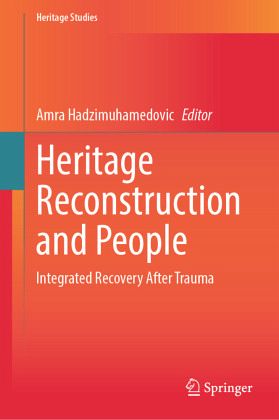
This book examines heritage reconstruction and its relationship to community recovery after cultural trauma. Its content and structure situate it within a new body of theory concerned to shift focus from physical buildings and ensembles to people, from the material to the social. The contributions integrate the social meaning of heritage with the subjective feelings and needs of individuals engaged in processing cultural trauma. The collection of studies touches upon sociological, psychological, healing, and anthropological dimensions of heritage recovery.
The new question that this book brings to the heritage discourse is: Can cultural heritage serve as a medium for healing societal trauma? The volume is divided into five thematic sections: 1. Coming to terms with the past; 2. Inclusiveness; 3. Building Resilience; 4. People in Focus; 5. Crossing borders. The nexus between people and heritage is explored through case studies on diverse recovery contexts - Bosnia, Gazza, Syria, Iraq, Uganda, Albania, Nepal, Zanzibar, Lebanon - different practices of international organisations, and formative documents of contemporary international doctrine. Difficult issues of justice, ethics, human rights, sustainable development, and the lengthy process of coming to terms with life after trauma are brought into contact with technical challenges and cultural, historical, and economic contexts. The book establishes the theory of inclusive heritage discourse, which reconciles informal heritage practices and authorised heritage discourse, and will be relevant for academic researchers, students and professionals in the field of heritage studies but also in conflict, human rights, and humanitarian studies.
The new question that this book brings to the heritage discourse is: Can cultural heritage serve as a medium for healing societal trauma? The volume is divided into five thematic sections: 1. Coming to terms with the past; 2. Inclusiveness; 3. Building Resilience; 4. People in Focus; 5. Crossing borders. The nexus between people and heritage is explored through case studies on diverse recovery contexts - Bosnia, Gazza, Syria, Iraq, Uganda, Albania, Nepal, Zanzibar, Lebanon - different practices of international organisations, and formative documents of contemporary international doctrine. Difficult issues of justice, ethics, human rights, sustainable development, and the lengthy process of coming to terms with life after trauma are brought into contact with technical challenges and cultural, historical, and economic contexts. The book establishes the theory of inclusive heritage discourse, which reconciles informal heritage practices and authorised heritage discourse, and will be relevant for academic researchers, students and professionals in the field of heritage studies but also in conflict, human rights, and humanitarian studies.