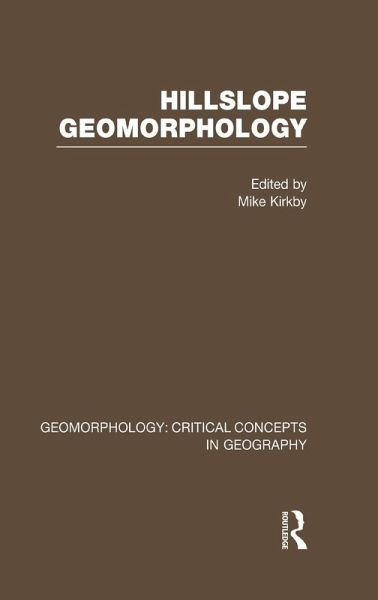
Hill Geom
Geom Crit Conc Vol 2
Herausgeber: Kirkby, Mike
Hill Geom
Geom Crit Conc Vol 2
Herausgeber: Kirkby, Mike
- Gebundenes Buch
- Merkliste
- Auf die Merkliste
- Bewerten Bewerten
- Teilen
- Produkt teilen
- Produkterinnerung
- Produkterinnerung
First published in 2004. Routledge is an imprint of Taylor & Francis, an informa company.
Andere Kunden interessierten sich auch für
Peri Geom373,99 €
Coas Geom349,99 €
Arid Land Geom372,99 €
AnonymousLeith Hill and Wotton House11,90 €
Shiba Ry?tar?Clouds above the Hill23,99 €
William J. CherryA Hand-Book of the City of Rock Hill13,90 €
J. Y. SmithMatheran Hill17,90 €-
-
-
First published in 2004. Routledge is an imprint of Taylor & Francis, an informa company.
Produktdetails
- Produktdetails
- Verlag: Routledge
- Seitenzahl: 648
- Erscheinungstermin: 15. Juli 2004
- Englisch
- Abmessung: 240mm x 161mm x 39mm
- Gewicht: 1127g
- ISBN-13: 9780415276108
- ISBN-10: 0415276101
- Artikelnr.: 21905728
- Herstellerkennzeichnung
- Libri GmbH
- Europaallee 1
- 36244 Bad Hersfeld
- gpsr@libri.de
- Verlag: Routledge
- Seitenzahl: 648
- Erscheinungstermin: 15. Juli 2004
- Englisch
- Abmessung: 240mm x 161mm x 39mm
- Gewicht: 1127g
- ISBN-13: 9780415276108
- ISBN-10: 0415276101
- Artikelnr.: 21905728
- Herstellerkennzeichnung
- Libri GmbH
- Europaallee 1
- 36244 Bad Hersfeld
- gpsr@libri.de
Acknowledgements
Chronological table of reprinted articles and chapters
General Editor's preface
Introduction
1 The convexity of hilltops
2 A remarkable new geomorphological law (the law of the denudation slope with rectilinear cross-profile)
3 Hypsometric (area-altitude) analysis of erosional topography
4 The role of creep and rainwash on the retreat of badland slopes
5 Stability of natural slopes in London clay
6 Geomorphology and forest ecology of a mountain region in the Central Appalachians
7 Stability of steep slopes on hard unweathered rock
8 Soil creep and the development of hillside slopes
9 Debris-covered hillslopes of the southern Arizona desert -consideration of their stability and sediment contribution
10 Stability and the conservation of mass in drainage basin evolution
11 Brief description of a comprehensive three-dimensional process-response model of landform development
12 Evaluation of Horton's theory of sheetwash and rill erosion on the basis of field experiments
13 Results from a new model of river basin evolution
14 A detachment-limited model of drainage basin evolution
15 Hydrologic response of a steep
unchanneled valley to natural and applied rainfall
16 Hillslope evolution by nonlinear
slope-dependent transport: steady state morphology and equilibrium adjustment timescales
17 The Channel-Hillslope Integrated Landscape Development model (CHILD)
Chronological table of reprinted articles and chapters
General Editor's preface
Introduction
1 The convexity of hilltops
2 A remarkable new geomorphological law (the law of the denudation slope with rectilinear cross-profile)
3 Hypsometric (area-altitude) analysis of erosional topography
4 The role of creep and rainwash on the retreat of badland slopes
5 Stability of natural slopes in London clay
6 Geomorphology and forest ecology of a mountain region in the Central Appalachians
7 Stability of steep slopes on hard unweathered rock
8 Soil creep and the development of hillside slopes
9 Debris-covered hillslopes of the southern Arizona desert -consideration of their stability and sediment contribution
10 Stability and the conservation of mass in drainage basin evolution
11 Brief description of a comprehensive three-dimensional process-response model of landform development
12 Evaluation of Horton's theory of sheetwash and rill erosion on the basis of field experiments
13 Results from a new model of river basin evolution
14 A detachment-limited model of drainage basin evolution
15 Hydrologic response of a steep
unchanneled valley to natural and applied rainfall
16 Hillslope evolution by nonlinear
slope-dependent transport: steady state morphology and equilibrium adjustment timescales
17 The Channel-Hillslope Integrated Landscape Development model (CHILD)
Acknowledgements
Chronological table of reprinted articles and chapters
General Editor's preface
Introduction
1 The convexity of hilltops
2 A remarkable new geomorphological law (the law of the denudation slope with rectilinear cross-profile)
3 Hypsometric (area-altitude) analysis of erosional topography
4 The role of creep and rainwash on the retreat of badland slopes
5 Stability of natural slopes in London clay
6 Geomorphology and forest ecology of a mountain region in the Central Appalachians
7 Stability of steep slopes on hard unweathered rock
8 Soil creep and the development of hillside slopes
9 Debris-covered hillslopes of the southern Arizona desert -consideration of their stability and sediment contribution
10 Stability and the conservation of mass in drainage basin evolution
11 Brief description of a comprehensive three-dimensional process-response model of landform development
12 Evaluation of Horton's theory of sheetwash and rill erosion on the basis of field experiments
13 Results from a new model of river basin evolution
14 A detachment-limited model of drainage basin evolution
15 Hydrologic response of a steep
unchanneled valley to natural and applied rainfall
16 Hillslope evolution by nonlinear
slope-dependent transport: steady state morphology and equilibrium adjustment timescales
17 The Channel-Hillslope Integrated Landscape Development model (CHILD)
Chronological table of reprinted articles and chapters
General Editor's preface
Introduction
1 The convexity of hilltops
2 A remarkable new geomorphological law (the law of the denudation slope with rectilinear cross-profile)
3 Hypsometric (area-altitude) analysis of erosional topography
4 The role of creep and rainwash on the retreat of badland slopes
5 Stability of natural slopes in London clay
6 Geomorphology and forest ecology of a mountain region in the Central Appalachians
7 Stability of steep slopes on hard unweathered rock
8 Soil creep and the development of hillside slopes
9 Debris-covered hillslopes of the southern Arizona desert -consideration of their stability and sediment contribution
10 Stability and the conservation of mass in drainage basin evolution
11 Brief description of a comprehensive three-dimensional process-response model of landform development
12 Evaluation of Horton's theory of sheetwash and rill erosion on the basis of field experiments
13 Results from a new model of river basin evolution
14 A detachment-limited model of drainage basin evolution
15 Hydrologic response of a steep
unchanneled valley to natural and applied rainfall
16 Hillslope evolution by nonlinear
slope-dependent transport: steady state morphology and equilibrium adjustment timescales
17 The Channel-Hillslope Integrated Landscape Development model (CHILD)