
Andere Kunden interessierten sich auch für
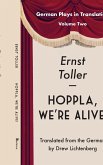
 Hoppla, We're Alive! Drama.14,99 €
 Goethes Werke298,00 €
 Comedy in the Weimar Republic53,99 €
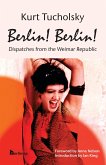
 Berlin! Berlin!14,00 €
 Hoppla, We're Alive!14,99 €
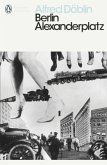
 Berlin Alexanderplatz9,99 €
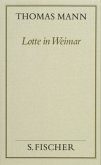
 Lotte in Weimar39,00 €
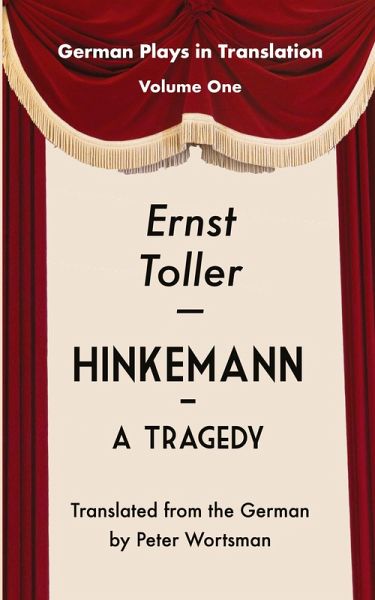
Ernst¿Toller was a revolutionary, poet and playwright engagé, president for six days of the short-lived Bavarian Soviet Republic, best known for his Expressionist plays Hoppla! We're Alive, Man of the Masses and Machine Breakers. In his day Ernst Toller (1893-1939) was as renowned as the young Bertolt Brecht. High profile persona non grata in 1933 when the Nazis came to power, Toller fled to London, went on a lecture tour to the U.S. in 1936, and tried to make a go of it as a screenwriter in Los Angeles. Dispirited, despondent upon learning that his brother and sister had been sent to a concentration camp, and convinced that the world as he knew it had succumbed to the forces of darkness, Toller was found dead by hanging, a presumed suicide, in his room at the Hotel Mayflower on May 22, 1939. Conceived in the German theatrical tradition of Jakob Michael Reinhold Lenz's The Soldiers and Georg Büchner's Woyzeck, Toller's devastating tragedy Hinkemann is a painfully poetic plaidoyer for the overlooked vision and voice of the victim. Berlinica Publishing LLC offers English-language books from Berlin, German; fiction, non-fiction, travel guides, history about the Wall and the Third Reich, Jewish life, art, architecture and photography, as well as travel guides and cookbook. It also offers documentaries and feature films on DVD, as well as music CDs. Berlinica caters to history buffs, Americans of German heritage, travelers, and artists and young people who love the cutting-edge city in the heart of Europe. Berlinica cooperates with Berlin-based publishing houses. Berlinica's current and upcoming titles include "Our West Berlin," by various authors, also five translated books by famed Weimar author Kurt Tucholsky as well as Harold Poor's landmark biography of Tucholsky, two translated plays by Ernst Toller, and two American travel stories by Alfred Kerr and Roda Roda, soon to be followed by Egon Erwin Kisch's "Paradise America". In the non-fiction department, we have "Rocking the Wall," the Bruce-Springsteen-book and "Burning Beethoven," about German Americans in World War I, both by Erik Kirschbaum, also "Mark Twain in Berlin," by Andreas Austilat, "Berlin 1945: World War II: Photos of the Aftermath," by Michael Brettin, "The Berlin Wall Today," a full-color guide to the remnants of the Wall, by Michael Cramer, "Berlin in the Cold War," about post-World War II history, and "A Place they Called Home," edited by Donna Swarthout about Jews returning to Germany. We also offer "The Berlin Cookbook," a full-color collection of traditional German recipes by Rose Marie Donhauser, the picture book "Wings of Desire," by Lothar Heinke, "Martin Luther's Travel Guide," by Cornelia Dömer, "Leipzig! The City of Books und Music," by Sebastian Ringel, and "Berlin For Free," a guide for the frugal traveler by Monica Maertens.