
Andere Kunden interessierten sich auch für
 Linguistics and Translation120,99 €
 Linguistics Analysis109,99 €
 Linguistics Research105,99 €
 XXXII Ballades in Blue China16,90 €
 A Common-School Grammar of the English Language59,90 €
 A Common-School Grammar of the English Language79,90 €
 An Introduction to the Study of the Chaldee Language34,90 €



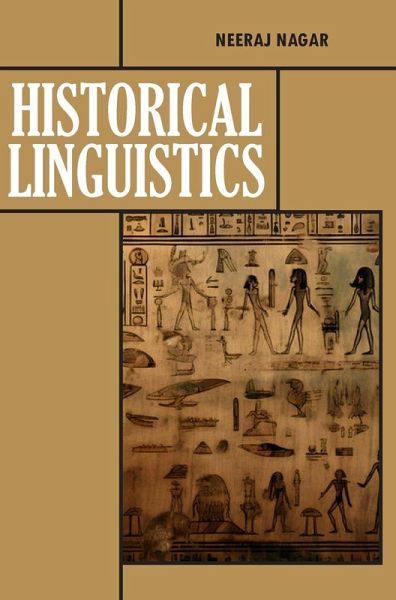
Historical linguistics is the branch of linguistics that studies how languages change over time. It examines the evolution of languages, tracing their development from ancient forms to their present-day variations. Historical linguistics seeks to understand the processes and mechanisms behind language change, including sound changes, grammatical changes, and changes in vocabulary. This field of study is also deeply concerned with the study of specific forms of language and how they have evolved and transformed over time. Furthermore, it examines the linguistic facets of language evolution and its internal structure, wherein phonetic, morphological, lexical, syntactic, and semantic evolution all hold pivotal roles. The theoretical underpinnings and methodological approaches to the study of language evolution are expounded upon in this work. It aims to aid readers in comprehending the models of synchronic or diachronic linguistics (historical linguistics) by reviewing the state of language at specific periods and evaluating their significance through the lens of evolutionary linguistics. Thus, ""Historical Linguistics"" offers a comprehensive and in-depth exploration of the evolution of language. From its origins to its future, this textbook provides valuable insights into the dynamic nature of language and the role of historical linguistics in understanding its evolution.