This work brings together a new generation of drug historians and new historical sources to uncover the history of the drug trade and its regulations. While the US and Mexican governments developed anti-drug discourses and policies, which criminalized both high-profile traffickers and small-time addicts, these authorities also employed the criminals and cash connected to the drug trade to pursue more pressing political concerns. The politics, socioeconomic relations, and criminal justice system of modern Mexico have been shaped by these public and covert policies as well as by subnational…mehr
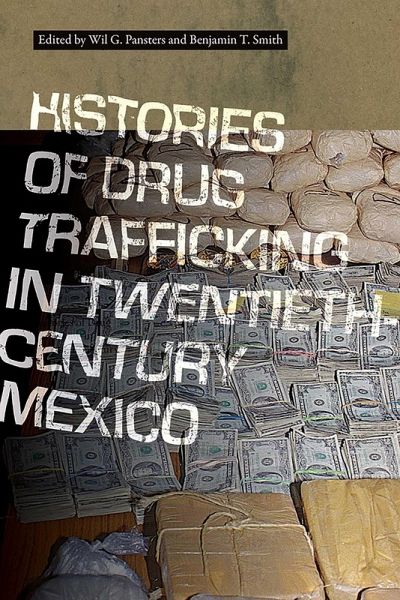
This work brings together a new generation of drug historians and new historical sources to uncover the history of the drug trade and its regulations. While the US and Mexican governments developed anti-drug discourses and policies, which criminalized both high-profile traffickers and small-time addicts, these authorities also employed the criminals and cash connected to the drug trade to pursue more pressing political concerns. The politics, socioeconomic relations, and criminal justice system of modern Mexico have been shaped by these public and covert policies as well as by subnational histories of drug production and trafficking. The essays in this study explore this complicated narrative and provide insight into Mexico's history and the wider contemporary global drug trade.
Wil G. Pansters is a professor of social and political anthropology of Latin America at Utrecht University. He is the editor of Violence, Coercion and State-Making in Twentieth-Century Mexico: The Other Half of the Centaur and La Santa Muerte in Mexico: History, Devotion, and Society (UNM Press . Benjamin T. Smith is a professor of Latin American history at the University of Warwick. His works include The Dope: The Real History of the Mexican Drug Trade; The Mexican Press and Civil Society, 1940-1976: Stories from the Newsroom, Stories from the Street; and The Roots of Conservatism in Mexico: Catholicism, Society, and Politics in the Mixteca Baja, 1750-1962 (UNM Press .
Inhaltsangabe
List of Illustrations Chapter One. Writing Twentieth-Century Mexico’s Drug Histories Wil G. Pansters and Benjamin T. Smith Part I. The Emerging Prohibition Regime: Policies, Policing, and Popular Vices Chapter Two. “Pressure-Response” and the Origins of Mexican Drug Prohibition, 1912–1920: A Reassessment Isaac Campos Chapter Three. Popular Vices and Revolutionary Restrictions: Drugs and Mexican Society, 1910–1920 Ricardo Pérez Montfort Chapter Four. Drugs, Control, and Corruption: The Antinarcotics Police in Mexico City, 1920–1947 Nidia A. Olvera Hernández Part II. Drug Trafficking, Social Relations, Political Protection, and Law Enforcement during the Mexican Miracle Chapter Five. La Nacha, the Godmother of Border Trafficking: Transnational Drugs and Gendered Power in Ciudad Juárez, 1920–1960 Elaine Carey Chapter Six. Highs and Lows: Drug Trafficking in Baja California, 1930–1960 Benjamin T. Smith and Wil G. Pansters Chapter Seven. Policing the Drug Trade: U.S. Narcotic Agents in Mexico (1936–1963 Carlos Pérez Ricart Chapter Eight. “Rayando la bola, cortando la rama”: The Production of Opium and Marijuana in Sinaloa (1940–ca. 1975 Juan Antonio Fernández Velázquez Chapter Nine. With a Little Help from His Friends: Juan N. Guerra, Smuggling, and Drug Trafficking in Tamaulipas and Nuevo León, 1940s–1960s Carlos Antonio Flores Pérez Part III. Drug Trafficking, the Drug War, the Dirty War, and the Unintended Consequences Chapter Ten. Caciques, Traffickers, and Soldiers: Drug Trafficking in the Cardenista Territory of Michoacán (1960–1970 Salvador Maldonado Aranda Chapter Eleven. The War on Drugs, Counterinsurgency, and the State of Siege in the Golden Triangle (1977–1982 Adela Cedillo Chapter Twelve. Grupo Sangre: Drugs, Death Squads, and the Dirty War Origins of Mexico’s Drug Wars Alexander Aviña Chapter Thirteen. Heroin, the Herreras, and the “Chicago Connection”: The Drug Trade in Durango, 1950–1985 Nathaniel Morris Part IV. Conclusions Chapter Fourteen. Drugs, Crime, and Violence in Modern Mexico Alan Knight List of Contributors Index
List of Illustrations Chapter One. Writing Twentieth-Century Mexico’s Drug Histories Wil G. Pansters and Benjamin T. Smith Part I. The Emerging Prohibition Regime: Policies, Policing, and Popular Vices Chapter Two. “Pressure-Response” and the Origins of Mexican Drug Prohibition, 1912–1920: A Reassessment Isaac Campos Chapter Three. Popular Vices and Revolutionary Restrictions: Drugs and Mexican Society, 1910–1920 Ricardo Pérez Montfort Chapter Four. Drugs, Control, and Corruption: The Antinarcotics Police in Mexico City, 1920–1947 Nidia A. Olvera Hernández Part II. Drug Trafficking, Social Relations, Political Protection, and Law Enforcement during the Mexican Miracle Chapter Five. La Nacha, the Godmother of Border Trafficking: Transnational Drugs and Gendered Power in Ciudad Juárez, 1920–1960 Elaine Carey Chapter Six. Highs and Lows: Drug Trafficking in Baja California, 1930–1960 Benjamin T. Smith and Wil G. Pansters Chapter Seven. Policing the Drug Trade: U.S. Narcotic Agents in Mexico (1936–1963 Carlos Pérez Ricart Chapter Eight. “Rayando la bola, cortando la rama”: The Production of Opium and Marijuana in Sinaloa (1940–ca. 1975 Juan Antonio Fernández Velázquez Chapter Nine. With a Little Help from His Friends: Juan N. Guerra, Smuggling, and Drug Trafficking in Tamaulipas and Nuevo León, 1940s–1960s Carlos Antonio Flores Pérez Part III. Drug Trafficking, the Drug War, the Dirty War, and the Unintended Consequences Chapter Ten. Caciques, Traffickers, and Soldiers: Drug Trafficking in the Cardenista Territory of Michoacán (1960–1970 Salvador Maldonado Aranda Chapter Eleven. The War on Drugs, Counterinsurgency, and the State of Siege in the Golden Triangle (1977–1982 Adela Cedillo Chapter Twelve. Grupo Sangre: Drugs, Death Squads, and the Dirty War Origins of Mexico’s Drug Wars Alexander Aviña Chapter Thirteen. Heroin, the Herreras, and the “Chicago Connection”: The Drug Trade in Durango, 1950–1985 Nathaniel Morris Part IV. Conclusions Chapter Fourteen. Drugs, Crime, and Violence in Modern Mexico Alan Knight List of Contributors Index
Es gelten unsere Allgemeinen Geschäftsbedingungen: www.buecher.de/agb
Impressum
www.buecher.de ist ein Internetauftritt der buecher.de internetstores GmbH
Geschäftsführung: Monica Sawhney | Roland Kölbl | Günter Hilger
Sitz der Gesellschaft: Batheyer Straße 115 - 117, 58099 Hagen
Postanschrift: Bürgermeister-Wegele-Str. 12, 86167 Augsburg
Amtsgericht Hagen HRB 13257
Steuernummer: 321/5800/1497
USt-IdNr: DE450055826