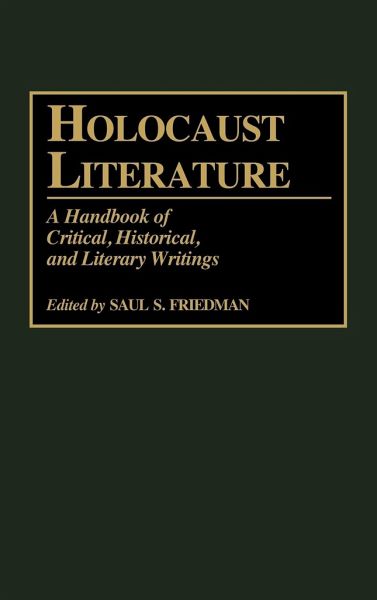
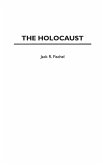
Over the past forty years, the term Holocaust has come to represent the deliberate campaign of extermination of Jews by the Nazis of Germany's Third Reich preceding and during World War II. Masses of edited documents and analytical material have been generated by Holocaust scholars, and some bibliographical and encyclopedic guides to the field are available. However, a student or researcher may be confounded by the abundance of publications and may lack the necessary background and endurance to sift the wheat from the chaff. The present volume has a two-fold purpose: to offer substantial…mehr
Over the past forty years, the term Holocaust has come to represent the deliberate campaign of extermination of Jews by the Nazis of Germany's Third Reich preceding and during World War II. Masses of edited documents and analytical material have been generated by Holocaust scholars, and some bibliographical and encyclopedic guides to the field are available. However, a student or researcher may be confounded by the abundance of publications and may lack the necessary background and endurance to sift the wheat from the chaff. The present volume has a two-fold purpose: to offer substantial analysis in intrinsic areas of study and to assess the relevant literature in each case. Major scholars and brilliant, less established historians from Israel, Canada, and the United States have contributed more than thirty essays complete with extensive reference lists in three broad divisions. The section on conceptual approaches to the Holocaust is composed of such topics as the rise of national socialism, biographies and interpretations of Hitler, concentration camps, post-Holocaust Jewish philosophies, and the righteous gentiles. Area studies deal with aspects of the Holocaust in Poland, Hungary, Czechoslovakia, Ukraine, the Balkans, France, Holland, Italy, and Spain, and with effects and reactions in Switzerland and Britain. Arab-German collaboration and American responses are also addressed. A third section takes up Holocaust subjects in education, belles lettres, and the arts, including diaries and memoirs, fiction, poetry, books for children, art, music, and films. Although the scholars all provide evaluative surveys of their subjects and related literature, each enjoyed considerable latitude in coverage and each presents his or her own views and selections, not all of which are shared by other contributors or the volume editor. The editor also provides an introduction and a final survey of major institutions and resources for Holocaust study. A significant reference tool, this volume will be consulted by researchers at all levels in university, public, secondary, and parochial school libraries and at religious institutions.
SAUL S. FRIEDMAN is Professor of History at Youngstown State University, where he specializes in ancient and modern Middle Eastern studies, Jewish history, and the Holocaust. His books include No Haven for the Oppressed, Incident at Massena, Amcha: An Oral Testament of the Holocaust, Oberammergau Passion Play, Without Future: The Plight of Syrian Jewry (Praeger, 1989), and The Terezin Diary of Gonda Redlich (1992). He has also published numerous essays and book chapters and reviews in such journals as Midstream, Jewish Frontier, American Historical Review, National Review, Jewish Spectator, Chronicle Review, and Congress Monthly.
Inhaltsangabe
Foreword: The Fate of Holocaust Literature by Dennis Klein Preface Conceptual Approaches to the Holocaust The Major Texts of the Holocaust by Annette el-Hayek The Rise and Development of National Socialism in Germany by Reynold Koppel Selected Biographies and Interpretations of Hitler by Robert H. Whealey The Concentration Camps and Killing Centers of the Third Reich by Charles W. Sydnor Asking Unanswerable Questions: A Biliographic Study of Post-Holocaust Jewish Philosophies by Rabbi Steven H. Adams The Church and the Holocaust by David A. Rausch The Righteous Gentiles by Leon W. Wells Understanding Motivations in the Holocaust by Eva Fogelman Jewish Women in the Holocaust Resistance by Bea Stadtler The Relationship of Genocide to Holocaust Studies by Nora Levin Holocaust Studies in Specific Regions Relations between Jews and Poles During the Holocaust: New and Old Approaches in Polish Historiography by Shmuel Krakowski The Last Tragedy of the Shoah: The Jews of Hungary by Asher Cohen The Holocaust in Czechoslovakia: A Survey of the Literature by Saul S. Friedman The Ukrainian Halychyna Division: A Case History in Historical Revisionism by Sol Littman Approaches to the Study of the Holocaust in the Balkans by Alexander Kitroeff The Holocaust in France by Sanford Gutman Holland and the Holocaust by Earl M. Friedman Italy and the Holocaust by Alan Cassels The Holocaust in Spain by John Axe Switzerland and the Holocaust by Hebert Hochhauser Great Britain and the Holocaust by Monty Noam Penkower The Politics of Collaboration: A Historiography of Arab-German Relations, 1933-1945 by Jonathan Friedman American Response to the Holocaust, 1933-1945 by Jack Fischel The Holocaust in Education and the Arts The Holocaust in the School Textbooks of the Federal Republic of Germany by Walter Renn Holocaust Diaries and Memoirs by Laurence Kutler The Holocaust in Fiction by Harry James Cargas The Poetry of the Holocaust by Gloria Young Juvenile and Youth Books about the Holocaust by Bea Stadtler The Holocaust in Art by Nelly Toll Music of the Holocaust by Irene Heskes The Holocaust as Seen in the Movies by Morris Zyrl and Saul S. Friedman Resources for Holocaust Study by Saul S. Friedman Index About the Contributors
Foreword: The Fate of Holocaust Literature by Dennis Klein Preface Conceptual Approaches to the Holocaust The Major Texts of the Holocaust by Annette el-Hayek The Rise and Development of National Socialism in Germany by Reynold Koppel Selected Biographies and Interpretations of Hitler by Robert H. Whealey The Concentration Camps and Killing Centers of the Third Reich by Charles W. Sydnor Asking Unanswerable Questions: A Biliographic Study of Post-Holocaust Jewish Philosophies by Rabbi Steven H. Adams The Church and the Holocaust by David A. Rausch The Righteous Gentiles by Leon W. Wells Understanding Motivations in the Holocaust by Eva Fogelman Jewish Women in the Holocaust Resistance by Bea Stadtler The Relationship of Genocide to Holocaust Studies by Nora Levin Holocaust Studies in Specific Regions Relations between Jews and Poles During the Holocaust: New and Old Approaches in Polish Historiography by Shmuel Krakowski The Last Tragedy of the Shoah: The Jews of Hungary by Asher Cohen The Holocaust in Czechoslovakia: A Survey of the Literature by Saul S. Friedman The Ukrainian Halychyna Division: A Case History in Historical Revisionism by Sol Littman Approaches to the Study of the Holocaust in the Balkans by Alexander Kitroeff The Holocaust in France by Sanford Gutman Holland and the Holocaust by Earl M. Friedman Italy and the Holocaust by Alan Cassels The Holocaust in Spain by John Axe Switzerland and the Holocaust by Hebert Hochhauser Great Britain and the Holocaust by Monty Noam Penkower The Politics of Collaboration: A Historiography of Arab-German Relations, 1933-1945 by Jonathan Friedman American Response to the Holocaust, 1933-1945 by Jack Fischel The Holocaust in Education and the Arts The Holocaust in the School Textbooks of the Federal Republic of Germany by Walter Renn Holocaust Diaries and Memoirs by Laurence Kutler The Holocaust in Fiction by Harry James Cargas The Poetry of the Holocaust by Gloria Young Juvenile and Youth Books about the Holocaust by Bea Stadtler The Holocaust in Art by Nelly Toll Music of the Holocaust by Irene Heskes The Holocaust as Seen in the Movies by Morris Zyrl and Saul S. Friedman Resources for Holocaust Study by Saul S. Friedman Index About the Contributors
Es gelten unsere Allgemeinen Geschäftsbedingungen: www.buecher.de/agb
Impressum
www.buecher.de ist ein Internetauftritt der buecher.de internetstores GmbH
Geschäftsführung: Monica Sawhney | Roland Kölbl | Günter Hilger
Sitz der Gesellschaft: Batheyer Straße 115 - 117, 58099 Hagen
Postanschrift: Bürgermeister-Wegele-Str. 12, 86167 Augsburg
Amtsgericht Hagen HRB 13257
Steuernummer: 321/5800/1497
USt-IdNr: DE450055826