
Andere Kunden interessierten sich auch für
 A Handy Book for Guardians of the Poor38,99 €
 The English Poor44,99 €
 Domestic Economy, and Cookery, for Rich and Poor78,99 €
 Rich and Poor in the New Testament: a Study of the Primitive-Christian Doctrine of Earthly Possessions21,99 €
 Canada West, the Last Best West, Homes for Millions14,99 €
![An Earnest Appeal For Mercy To The Children Of The Poor [&c.]]( "An Earnest Appeal For Mercy To The Children Of The Poor [&c.]") An Earnest Appeal For Mercy To The Children Of The Poor [&c.]18,99 €
An Earnest Appeal For Mercy To The Children Of The Poor [&c.]18,99 € Poor Laws And Paupers Illustrated23,99 €
![An Earnest Appeal For Mercy To The Children Of The Poor [&c.]](https://bilder.buecher.de/produkte/68/68842/68842637m.jpg "An Earnest Appeal For Mercy To The Children Of The Poor [&c.]")
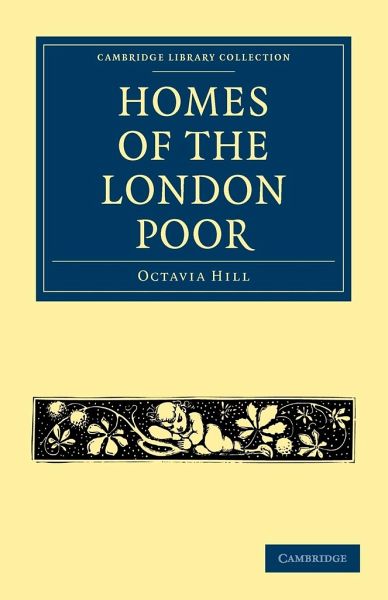
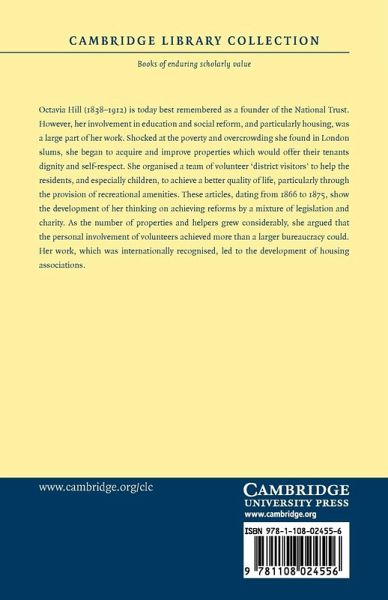
Octavia Hill (1838-1912) is today best remembered as one of the founders of the National Trust. However, her involvement in education and social reform, and particularly housing, was a large part of her work. Shocked at the poverty and overcrowding she found in London slums, she began to acquire and improve properties which would restore the tenants' dignity and self-respect. She organised a team of volunteer 'district visitors' to help the residents, and especially children, to achieve a better quality of life, including recreational amenities. These articles, dating from 1866 to 1875, show the development of her thinking on how to achieve reforms by a mixture of legislation and charity. As the number of properties and helpers grew considerably, she argued that the personal involvement of volunteers achieved more than a larger bureaucracy could. Her work, which was internationally recognised, led to the development of housing associations.