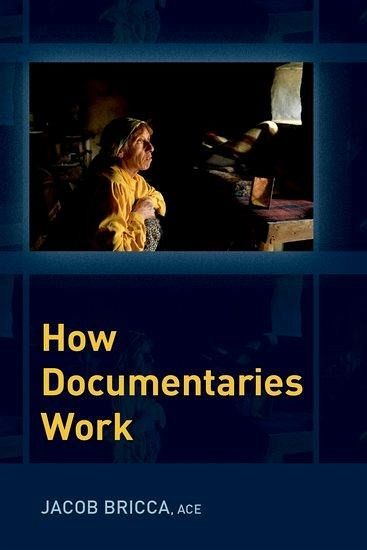
How Documentaries Work breaks down the hidden conventions of documentaries in clear and accessible language for film students and documentary enthusiasts alike. Jacob Bricca, ACE, an award-winning documentary director, producer, and editor, provides a behind-the-scenes, under-the-hood view of what's really going on in the construction of nonfiction films and television shows. This book presents examples from contemporary documentaries and docuseries and delivers insights from some of the most exciting nonfiction filmmakers and craftspeople working today, including director Steve James (City So…mehr
How Documentaries Work breaks down the hidden conventions of documentaries in clear and accessible language for film students and documentary enthusiasts alike. Jacob Bricca, ACE, an award-winning documentary director, producer, and editor, provides a behind-the-scenes, under-the-hood view of what's really going on in the construction of nonfiction films and television shows. This book presents examples from contemporary documentaries and docuseries and delivers insights from some of the most exciting nonfiction filmmakers and craftspeople working today, including director Steve James (City So Real, Hoop Dreams), producer Amy Ziering (Allen v. Farrow, The Hunting Ground), editor Aaron Wickenden, ACE (Roadrunner: A Film About Anthony Bourdain, 20 Feet from Stardom), and composer Miriam Cutler (RBG, Lost in La Mancha). Chapters such as "Flow," "Narrative," and "Time" offer a new way of looking at documentary film language, while others like "Titles," "Music," and "Sound" deliver extraordinary insights on seemingly ordinary topics. A compact volume written in plain, easy-to-understand language, this book promises to change the way you think about nonfiction films and television shows forever.
Jacob Bricca, ACE, is Associate Professor at the University of Arizona's School of Theatre, Film and Television. He is an award-winning documentary editor, producer, director, and scholar whose films have screened worldwide from Sundance to the Berlinale. His is the author of Documentary Editing: Principles and Practice (2018), a definitive textbook on documentary editing that is used by film schools around the world, including the USC School of Cinematic Arts, UCLA, and the MET Film School in London.
Inhaltsangabe
INTRODUCTION CHAPTER 1: RAW MATERIALS Verité Interviews Archival Reenactments and Animation Voiceover Narration Title Cards CHAPTER 2: MEANING Creating Meaning Within the Interview Frame Creating Visual Uniformity with Interviews Creating Meaning with Objects in the Frame Creating Meaning with Words Interview-As-Narration Creating Meaning with Verité Open vs. Closed Meanings CHAPTER 3: NARRATIVE The Setup Position The Crisis Moment Producing the Narrative Turn Producing the Narrative Turn with Juxtaposition Micro-Narratives Callbacks Non-Narrative Documentaries CHAPTER 4: PRESENCE FRAMING Observational Framing The Semi-Staged Scene The Participatory Frame Narration and the Participatory Frame Voice of God Narration Altering the Outcome The Reflexive Frame CHAPTER 5: FLOW Unifying with Sound Pivots and Pauses Juxtaposition Collective Memory CHAPTER 6: TIME The Experience of Time in Verité The Interleaving of Scenes Use of the Present Tense CHAPTER 7: TITLES Naming Characters Conferring Legitimacy Look and Feel Subtitles CHAPTER 8: ARCHIVAL Archival Treatments Manipulation of Newspaper Assets Historical Shorthand CHAPTER 9: SOUND Sweetening Foley Time and Space Framing Presence with Sound: The Cave and For Sama CHAPTER 10: MUSIC Fear of Music Film vs. Television Verité vs. Expository, Interviews vs. Archival Tone Procedural Music CONCLUSION The Brave New World of Hybridity in Documentary Acknowledgements Appendix: List of Films and Television Shows Cited
INTRODUCTION CHAPTER 1: RAW MATERIALS Verité Interviews Archival Reenactments and Animation Voiceover Narration Title Cards CHAPTER 2: MEANING Creating Meaning Within the Interview Frame Creating Visual Uniformity with Interviews Creating Meaning with Objects in the Frame Creating Meaning with Words Interview-As-Narration Creating Meaning with Verité Open vs. Closed Meanings CHAPTER 3: NARRATIVE The Setup Position The Crisis Moment Producing the Narrative Turn Producing the Narrative Turn with Juxtaposition Micro-Narratives Callbacks Non-Narrative Documentaries CHAPTER 4: PRESENCE FRAMING Observational Framing The Semi-Staged Scene The Participatory Frame Narration and the Participatory Frame Voice of God Narration Altering the Outcome The Reflexive Frame CHAPTER 5: FLOW Unifying with Sound Pivots and Pauses Juxtaposition Collective Memory CHAPTER 6: TIME The Experience of Time in Verité The Interleaving of Scenes Use of the Present Tense CHAPTER 7: TITLES Naming Characters Conferring Legitimacy Look and Feel Subtitles CHAPTER 8: ARCHIVAL Archival Treatments Manipulation of Newspaper Assets Historical Shorthand CHAPTER 9: SOUND Sweetening Foley Time and Space Framing Presence with Sound: The Cave and For Sama CHAPTER 10: MUSIC Fear of Music Film vs. Television Verité vs. Expository, Interviews vs. Archival Tone Procedural Music CONCLUSION The Brave New World of Hybridity in Documentary Acknowledgements Appendix: List of Films and Television Shows Cited
Es gelten unsere Allgemeinen Geschäftsbedingungen: www.buecher.de/agb
Impressum
www.buecher.de ist ein Internetauftritt der buecher.de internetstores GmbH
Geschäftsführung: Monica Sawhney | Roland Kölbl | Günter Hilger
Sitz der Gesellschaft: Batheyer Straße 115 - 117, 58099 Hagen
Postanschrift: Bürgermeister-Wegele-Str. 12, 86167 Augsburg
Amtsgericht Hagen HRB 13257
Steuernummer: 321/5800/1497
USt-IdNr: DE450055826