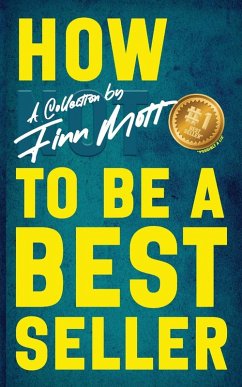
How Not to Be a Bestseller is a genre-defying poetry collection that fractures the self into archetypes-the poet, the comic, and the survivor-each navigating a body and mind shaped by chronic illness and emotional trauma. Finn Mott weaves a raw, unflinching tapestry of identity, displacement, and defiance, blending memoir, verse, and stand-up. Vulnerable, raunchy, and unapologetically twisted, How Not to Be a Bestseller is part personal exorcism, part cultural reckoning. It spirals through three looping narratives of grief, slipping between forms and voices in a language that disintegrates as…mehr
How Not to Be a Bestseller is a genre-defying poetry collection that fractures the self into archetypes-the poet, the comic, and the survivor-each navigating a body and mind shaped by chronic illness and emotional trauma. Finn Mott weaves a raw, unflinching tapestry of identity, displacement, and defiance, blending memoir, verse, and stand-up. Vulnerable, raunchy, and unapologetically twisted, How Not to Be a Bestseller is part personal exorcism, part cultural reckoning. It spirals through three looping narratives of grief, slipping between forms and voices in a language that disintegrates as it tries to contain pain. This is the kitchen sink approach reimagined-chaotic, desperate, deeply human. Mott doesn't just tell a story-he commodifies the self to critique the very systems demanding that commodification. What's left is a brutal, beautiful exploration of what it means to live in a body, perform survival, and sell one's pain.
Born and raised in the Vail Valley Colorado, Finn Mott's inspiration as a poet began when he was diagnosed with metastatic intercranial germinoma, which is just another way of saying brain and spinal cancer. Illness is a central theme in his writing, specifically acknowledging vulnerability as a strength instead of a stigmatized weakness. Another central theme to his work comes from identifying as bisexual, noting the bi-erasure, homophobia, and isolation often associated with existing beyond the heteronormative. Finn Mott is eloquent in his extraction of the disregarded, meanwhile interweaving personal anecdotes, sentience, and the inner turmoils of the mind. Finn plants seeds in the modern reluctance of acceptance for a future of equality. Finn writes with more than love but a responsibility to offer a voice of support, agency, and sentiment for those undergoing adversity.
Es gelten unsere Allgemeinen Geschäftsbedingungen: www.buecher.de/agb
Impressum
www.buecher.de ist ein Internetauftritt der buecher.de internetstores GmbH
Geschäftsführung: Monica Sawhney | Roland Kölbl | Günter Hilger
Sitz der Gesellschaft: Batheyer Straße 115 - 117, 58099 Hagen
Postanschrift: Bürgermeister-Wegele-Str. 12, 86167 Augsburg
Amtsgericht Hagen HRB 13257
Steuernummer: 321/5800/1497
USt-IdNr: DE450055826