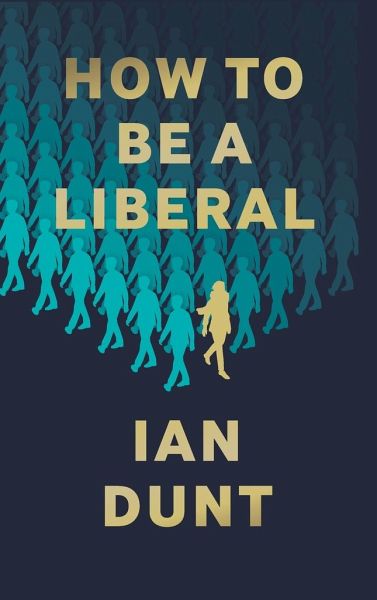
As nationalism seeks to crush liberal democracy around the world, a journalist reveals the origins, values and value of liberalism in this epic work.Hinweis: Dieser Artikel kann nur an eine deutsche Lieferadresse ausgeliefert werden.
IAN DUNT is a columnist with the i newspaper. He specialises in issues around immigration, civil liberties and social justice and appears as a pundit on BBC TV, Sky News and Al-Jazeera. With Dorian Lynskey, he presents the Origin Story podcast and is a regular contributor to the Oh God, What Now? podcast. Unlike other titles which look back at the EU referendum campaign, Brexit: What the Hell Happens Now? grapples with the consequences of actually leaving the EU.Ian's most recent book, How To Be A Liberal (Canbury, 2020), is an epic history of the spread of the ideas underpinning personal freedom.
Inhaltsangabe
TODAY. Reveals the six lies behind the rise of nationalism in the Republican Party in the USA, the Conservative Party in Great Britain, the Bharatiya Janata Party in India, Likud in Israel, the Alliance for Brazil in Brazil, PDP–Laban in the Philippines, Fidesz in Hungary and the Lega in Italy 1. BIRTH. The origin of independent thought in the mind of philosopher René Descartes, who realised Cogito, ergo sum: 'I think therefore I am'. Mentions Meditations on First Philosophy and Discourse on the Method, and Nicolaus Copernicus' On the Revolutions of the Celestial Spheres. 2. AWAKENING. In the English Civil War period, radicals started to outline three political thoughts that challenged the established order. They were freedom of religious conscience, the notion of the individual, and the notion of doubt. These three ideas would become central to liberalism 3. THE THREE REVOLUTIONS. Liberalism was moulded in the furnace of three revolutions in the 18th century: The Glorious Revolution in England, the American Revolution and the French Revolution THE GLORIOUS REVOLUTION THE AMERICAN REVOLUTION THE FRENCH REVOLUTION 4. CONSTANT. The womanising dissolute 18th Century Swiss philosopher Benjamin Constant established the political rights of the individual and warned of the tyranny of an over-mighty government in Napoleonic France 5. HARRIET AND JOHN. Harriet Taylor and John Stuart Mill had a deep love affair and laid the groundwork for the development of modern liberalism, including championing a minority cause in 19th Century Victorian England: the right of women to vote. They wrote The Enfranchisement of Women and On Liberty 6. DEATH. The Dreyfuss Affair in France, the extermination of peasants in Ukraine's Holodomor, and the genocide against Jews in Nazi Germany showed what happened when nationalism when tyrants could channel the 'will of the people' over the rights of the individual protected by liberalism 7. NEW WORLD ORDER. After the catastrophe of the Second World War, liberal democracies in the West built a new post-war, rights-based liberal world order designed to guarantee peace and individual rights. Economically John Maynard Keynes triumphed over Friedrich Hayek 8. BELONGING. One flaw in liberalism was the lack of recognition of the identity felt by individuals, whether nationality or religion. The English writer George Orwell and philosopher Isaiah Berlin averred the importance of this sense of belonging in their writings and ultimately in liberalism 9. CRASH. The post-war liberal world order crashed with oil crisis stagflation in the 1970s when Hayek's small state philosophy took root in US governments, leading to bank deregulation on Wall Street (and likewise in the UK under Margaret Thatcher) - leading eventually to 2008 global financial crash 10. IDENTITY WAR. Liberalism had largely been devised by white men, and women and ethnic groups carved out a separate identity that put the group ahead of the individual. 'This was no longer the politics of how to change the world. It was the politics of who you were.' 11. ANTI-TRUTH. Just as liberalism faced multiple threats from the resurgence of nationalism, the rise of identity politics and the financial crash, people’s ability to use reason diminished with the rise of social media. Now everyone was the arbiter of their own truth. Facts became opinions. 12. THE NEW NATIONALISM. 1. Hungary, where Victor Urban used fear of foreigners to dismantle the free media and democratic institutions of Hungary. 2. The rise of Donald Trump who degraded the idea of independent facts. 3 Brexit Britain where nationalist propaganda trumped a nation's interests 13. THE OTHER. How nationalists in Italy, Britain, the US and elsewhere have seized on a supposed threat to their countries from other people to whip up dissent and to crack down on immigration and the rights of individuals, harming democracy and liberal values TOMORROW. The big problem with liberalism has been complacency that it would eventually triumph around the world. The answer is for liberals to fight for their democratic values. Joe Biden's election as US President offers hope for a kinder, better future SORRY & THANK YOU. Acknowledgements and apologies. Mentions Ronald Dworkin, TH Green, François Guizot, Leonard Hobhouse, Wilhelm von Humboldt, Immanuel Kant, Robert Nozick, Martha Nussbaum, Karl Popper, John Rawls, Friedrich Schiller and Alexis de Tocqueville. FURTHER READING. An extensive list of books that hold the keys to liberalism, including Liberalism: The Life of an Idea by Edmund Fawcett and Stanford Encyclopedia of Philosophy. Also recommended is Toby Buckle’s Political Philosophy podcast. 'You owe it to yourself to read On Liberty' INDEX. The As start: Act of Union, Acxiom, Adam, adaptive preference, advertising, African Americans, aggregate demand, agitators, Agreement of the People, Akhmatova, Aktion T-4 programme, algorithms, alternative facts...
CONTENTS
Today
1. Birth
2. Awakening
3. The Three Revolutions
4. Constant
5. Harriet and John
6. Death
7. New World Order
8. Belonging
9. Crash
10. Identity War
11. Anti-Truth
12. The New Nationalism
13. The Other
Tomorrow
Sorry & Thank You
Further Reading
Index
Rezensionen
'A tour de force; a mighty trumpet blast for the forces of liberalism and enlightenment in the face of a global tide of ignorance and populism.'
- THE SECRET BARRISTER
How to be a Liberal is a non-exhaustive (by Dunt's own admission) but thorough exploration of liberalism's journey from early thinkers such as Rene Descartes and Benjamin Constant all the way through to 21st century liberalism and the urgent crisis it now faces in its battle with nationalism and populism. The beauty of this book not only stems from the intrinsic beauty of the ideals of liberalism, but from Dunt's presentation of the logical progression of the history of ideas in a way that makes this book accessible to anyone who wishes to apply liberal principles to the rather mad world in which we currently live... As one moves through the book, Dunt's political philosophy becomes increasingly clear. His ability to write on issues of the day was clear before this book, but when this is combined with the intellectual force of the previous chapters, the final chapters become a devastating polemic of the current success of nationalism across Europe and America. Targets of this polemic include Viktor Orban, Boris Johnson and the pushers of identity politics. His criticism of both nationalists and those who play the game of identity politics is fundamentally the same – they reject the importance of the individual and instead rely on homogenous and rigid assumptions about the nature of particular groups (in spite of the good intentions of those on the left). These assumptions fail to consider the complexity of human relationships and thus, according to Dunt, ultimately fail. There is also pointed, and perhaps surprising given Dunt's political history, criticism of the EU. One gets the sense that this criticism stems from Dunt's disappointment at the EU in failing to stand up to nationalism (Libyan refugee crisis and Hungary) and the institutionally liberal principles upon which it was created (Eurozone Crisis). This book is an urgent restatement of principles that have been missing from political discourse in the UK, Europe and the USA over the last few decades. At the heart of these principles is the importance of individual liberty and how all rights flow from this. Although the picture may not currently be overly bright, Dunt strikes a fundamentally optimistic tone about the strength of institutional politics (particularly in the UK) and the ability to push back against the dark wave of nationalism currently flooding through Europe. Essential reading.…mehr
Es gelten unsere Allgemeinen Geschäftsbedingungen: www.buecher.de/agb
Impressum
www.buecher.de ist ein Internetauftritt der buecher.de internetstores GmbH
Geschäftsführung: Monica Sawhney | Roland Kölbl | Günter Hilger
Sitz der Gesellschaft: Batheyer Straße 115 - 117, 58099 Hagen
Postanschrift: Bürgermeister-Wegele-Str. 12, 86167 Augsburg
Amtsgericht Hagen HRB 13257
Steuernummer: 321/5800/1497
USt-IdNr: DE450055826