
Andere Kunden interessierten sich auch für
 Reclaiming Unlived Life203,99 €
 Authenticity in the Psychoanalytic Encounter158,99 €
 Psychoanalytic Concepts and Technique in Development160,99 €
 Psychoanalytic Thinking159,99 €
 Psychoanalysis, History, and Radical Ethics149,99 €
 Love's Labour13,99 €
 Internationale Psychoanalyse Band 17: Staying alive - Einbrüche der Realität39,90 €
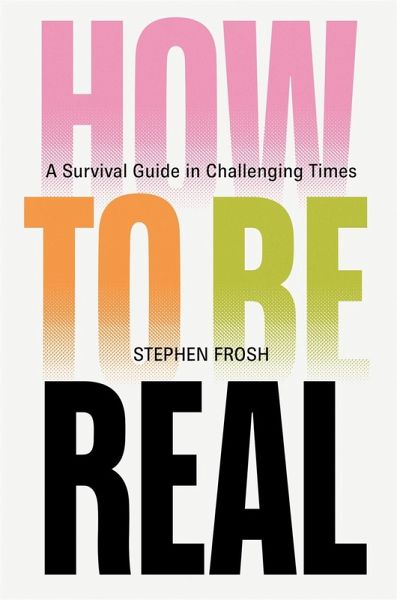
How to be Real tackles one of the most urgent questions: how can we thrive in a world that is so troubling and confusing? We are constantly being told that we must be 'authentic' and 'real' whilst our sense of reality is being undermined, fragmenting our experiences and dividing people from each other. In the face of such dilemmas Frosh argues that gaining a sense of reality requires us to face the complexity of modern life. We must learn to think more clearly and bravely about it, and to allow ourselves to develop a depth of feeling that may often be uncomfortable or even distressing to live with.
By working alongside thinkers such as Freud, Winnicott and Klein, Frosh argues that we must look to what connects us and appreciate how authenticity depends on the quality of relationships we form with each other. Consequently, 'how to be real' has political as well as psychological and ethical implications. It is out of such disruptive complexity that human depth and relational integrity arise. Frosh pursues this through an exploration of childhood and the development of the self, of why and how we put up defences against reality, and of what hate means. The book describes how we might turn the ghosts that trouble us into ancestors that enrich our lives. It asks us to be brave enough to seek solidarity with others and, finally, to find the humanity in death.
By working alongside thinkers such as Freud, Winnicott and Klein, Frosh argues that we must look to what connects us and appreciate how authenticity depends on the quality of relationships we form with each other. Consequently, 'how to be real' has political as well as psychological and ethical implications. It is out of such disruptive complexity that human depth and relational integrity arise. Frosh pursues this through an exploration of childhood and the development of the self, of why and how we put up defences against reality, and of what hate means. The book describes how we might turn the ghosts that trouble us into ancestors that enrich our lives. It asks us to be brave enough to seek solidarity with others and, finally, to find the humanity in death.
With far-reaching expertise and crystal clarity, Stephen Frosh tackles what we all want to grasp, "how to be real", knowing that the messiness of life means we can never be fully sure of our own sense of authenticity. In these pages, Frosh addresses the necessary illusions that daily sustain us as we try to confront, or more often work to camouflage, our inevitably dependent, insecure and vulnerable lives. A crucial text for all of us. Lynne Segal, author of Lean on Me: A Radical Politics of Care