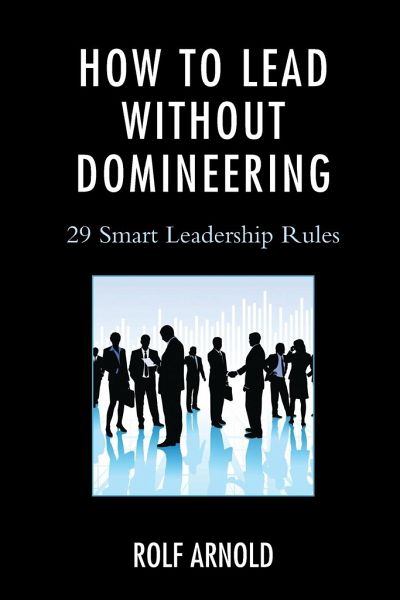
How to Lead without Domineering: 29 Smart Leadership Rules is a tool book that contains valuable suggestions for self-reflection by leaders in a variety of roles — on the job, in a honorary post, or in any other context.
How to Lead without Domineering: 29 Smart Leadership Rules is a tool book that contains valuable suggestions for self-reflection by leaders in a variety of roles — on the job, in a honorary post, or in any other context.
Preface Introduction Rule 1: Demonstrate how you became certain, but instill confidence Rule 2: Practice forming the vision Rule 3: Identify and reinforce talent and potential Rule 4: Use time-outs to reflect, focus, visualize, and formulate your organization's strategic guidance Rule 5: Question the beliefs that shape your decisions and actions Rule 6: Stimulate creativity when performing tasks and requirements Rule 7: Ensure a systematic external audit and specify criteria or key measures to provide information to evaluate success Rule 8: Develop an understanding of the social environment Rule 9: Conduct regular exploratory conversations with employees Rule 10: Practice employee counseling sessions Rule 11: Practice the art of "eloquent silence" in meetings Rule 12: Attempt to orchestrate conflict with new ideas Rule 13: Practice skills development with your employees Rule 14: Promote team development Rule 15: Create a learning organization Rule 16: Practice capacity building, support individual and organizational networking Rule 17: Be a friend to the unexpected Rule 18: Avoid elaborate PowerPoint presentations Rule 19: The more confident and decisive your actions, the more you should distrust your choices Rule 20: Acknowledge your inner images of leadership and loyalty Rule 21: Analyze your attitudes and your motives Rule 22: Make an attempt at more elegant communication Rule 23: Reinvent "difficult" colleagues and practice the "emergence" view Rule 24: Exercise change management through self-transformation Rule 25: Banish the "ice-cold manager" in you - become a more humane leader Rule 26: Accept the limits of leadership and learn to manage dissent Rule 27: Work with synergy markers. Avoid the trap of individualizing and personalizing! Rule 28: Learn to lead knowing that you can be replaced and ensure the system you are, temporarily, responsible for will live on Rule 29: Mistrust in rules and explore your own relationship to rules Afterword Bibliography
Preface Introduction Rule 1: Demonstrate how you became certain, but instill confidence Rule 2: Practice forming the vision Rule 3: Identify and reinforce talent and potential Rule 4: Use time-outs to reflect, focus, visualize, and formulate your organization's strategic guidance Rule 5: Question the beliefs that shape your decisions and actions Rule 6: Stimulate creativity when performing tasks and requirements Rule 7: Ensure a systematic external audit and specify criteria or key measures to provide information to evaluate success Rule 8: Develop an understanding of the social environment Rule 9: Conduct regular exploratory conversations with employees Rule 10: Practice employee counseling sessions Rule 11: Practice the art of "eloquent silence" in meetings Rule 12: Attempt to orchestrate conflict with new ideas Rule 13: Practice skills development with your employees Rule 14: Promote team development Rule 15: Create a learning organization Rule 16: Practice capacity building, support individual and organizational networking Rule 17: Be a friend to the unexpected Rule 18: Avoid elaborate PowerPoint presentations Rule 19: The more confident and decisive your actions, the more you should distrust your choices Rule 20: Acknowledge your inner images of leadership and loyalty Rule 21: Analyze your attitudes and your motives Rule 22: Make an attempt at more elegant communication Rule 23: Reinvent "difficult" colleagues and practice the "emergence" view Rule 24: Exercise change management through self-transformation Rule 25: Banish the "ice-cold manager" in you - become a more humane leader Rule 26: Accept the limits of leadership and learn to manage dissent Rule 27: Work with synergy markers. Avoid the trap of individualizing and personalizing! Rule 28: Learn to lead knowing that you can be replaced and ensure the system you are, temporarily, responsible for will live on Rule 29: Mistrust in rules and explore your own relationship to rules Afterword Bibliography
Es gelten unsere Allgemeinen Geschäftsbedingungen: www.buecher.de/agb
Impressum
www.buecher.de ist ein Internetauftritt der buecher.de internetstores GmbH
Geschäftsführung: Monica Sawhney | Roland Kölbl | Günter Hilger
Sitz der Gesellschaft: Batheyer Straße 115 - 117, 58099 Hagen
Postanschrift: Bürgermeister-Wegele-Str. 12, 86167 Augsburg
Amtsgericht Hagen HRB 13257
Steuernummer: 321/5800/1497
USt-IdNr: DE450055826