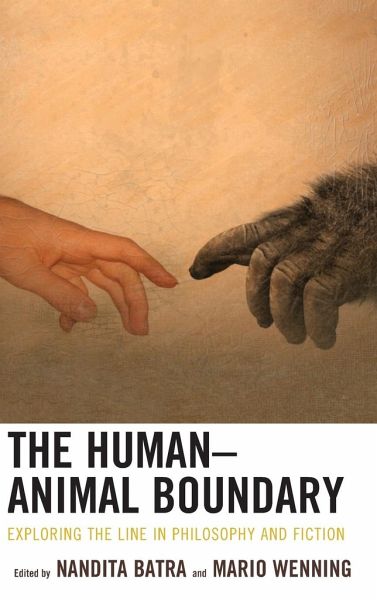
The Human–Animal Boundary shifts the traditional anthropocentric focus of philosophy and literature by combining the question "what is human?" with the question "what is animal?" The objective is to expand the imaginative scope of human–animal relationships by combining perspectives from different disciplines, traditions, and cultural backgrounds.
The Human–Animal Boundary shifts the traditional anthropocentric focus of philosophy and literature by combining the question "what is human?" with the question "what is animal?" The objective is to expand the imaginative scope of human–animal relationships by combining perspectives from different disciplines, traditions, and cultural backgrounds.
Nandita Batra is currently Professor of English at the University of Puerto Rico-Mayagüez. She is the editor of Of Mice and Men: Animals and Human Culture and This Watery World: Humans and the Sea. Mario Wenning is currently Associate Professor of Philosophy at the University of Macau. He is the editor of Comparative Perspectives on the Philosophy of Nature and Contemporary Perspectives on Critical Theory and Systems Theory.
Inhaltsangabe
Introduction Nandita Batra and Mario Wenning I. Contesting Exceptionalism 1. Bridging the Abyss: Re-interpreting Heidegger's Animals as a Basis for inter-species Understanding Joshua A. Bergamin 2. Ramayana's Hanuman-Animal, Human or Divine Sukanya B. Senapati 3. Aesop: Figuring the Human/Animal Boundary John Hartigan II. Representing the Human-Animal Boundary 4. 'Zones of Non-Knowledge': Facing The Open with R. M. Rilke, Martin Heidegger, and Giorgio Agamben Sabine Lenore Müller 5. The Avoidance of Moral Responsibility towards Animals: Coleridge's 'The Rime of the Ancient Mariner' and the Human Animal Boundary Tomaz Grusovnik 6. The Cattle in the Long Cedar Springs Draw Gary Comstock 7. Re-writing the Human-Animal Divide: Humanism and Octavia Butler's "Amborg" Aparajita Nanda 8. Milton's Elephant James P. Conlan III. Re-Situating the Human/Animal Boundary 9. The Moral Duties of Dolphins Sara Gavrell Ortiz 10. Great Apes and Lesser Humans: Goodall and the Geographic Entangled in Uhuru Kristian Bjørkdahl 11. The Empress and the Beast: Finding a Philosophical Voice in Fiction Alison Suen 12. A Bestiary for the Anthropocene: The End of Nature and the Future of Animal Life on Planet Earth Eduardo Mendieta
Introduction Nandita Batra and Mario Wenning I. Contesting Exceptionalism 1. Bridging the Abyss: Re-interpreting Heidegger's Animals as a Basis for inter-species Understanding Joshua A. Bergamin 2. Ramayana's Hanuman-Animal, Human or Divine Sukanya B. Senapati 3. Aesop: Figuring the Human/Animal Boundary John Hartigan II. Representing the Human-Animal Boundary 4. 'Zones of Non-Knowledge': Facing The Open with R. M. Rilke, Martin Heidegger, and Giorgio Agamben Sabine Lenore Müller 5. The Avoidance of Moral Responsibility towards Animals: Coleridge's 'The Rime of the Ancient Mariner' and the Human Animal Boundary Tomaz Grusovnik 6. The Cattle in the Long Cedar Springs Draw Gary Comstock 7. Re-writing the Human-Animal Divide: Humanism and Octavia Butler's "Amborg" Aparajita Nanda 8. Milton's Elephant James P. Conlan III. Re-Situating the Human/Animal Boundary 9. The Moral Duties of Dolphins Sara Gavrell Ortiz 10. Great Apes and Lesser Humans: Goodall and the Geographic Entangled in Uhuru Kristian Bjørkdahl 11. The Empress and the Beast: Finding a Philosophical Voice in Fiction Alison Suen 12. A Bestiary for the Anthropocene: The End of Nature and the Future of Animal Life on Planet Earth Eduardo Mendieta
Es gelten unsere Allgemeinen Geschäftsbedingungen: www.buecher.de/agb
Impressum
www.buecher.de ist ein Internetauftritt der buecher.de internetstores GmbH
Geschäftsführung: Monica Sawhney | Roland Kölbl | Günter Hilger
Sitz der Gesellschaft: Batheyer Straße 115 - 117, 58099 Hagen
Postanschrift: Bürgermeister-Wegele-Str. 12, 86167 Augsburg
Amtsgericht Hagen HRB 13257
Steuernummer: 321/5800/1497
USt-IdNr: DE450055826