
Andere Kunden interessierten sich auch für
 Human Cloning38,99 €
 Emotions and Risky Technologies76,99 €
 Human Cloning39,99 €
 Perspectives on Human Dignity: A Conversation76,99 €
 Emotions and Risky Technologies76,99 €
 Human Dignity in African Philosophy49,99 €
 Modern Biotechnology in Postmodern Times?39,99 €



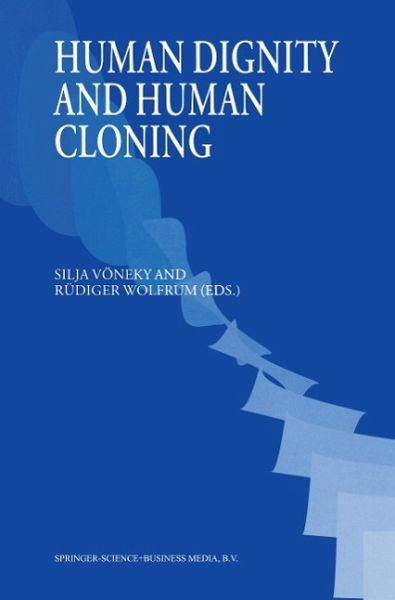
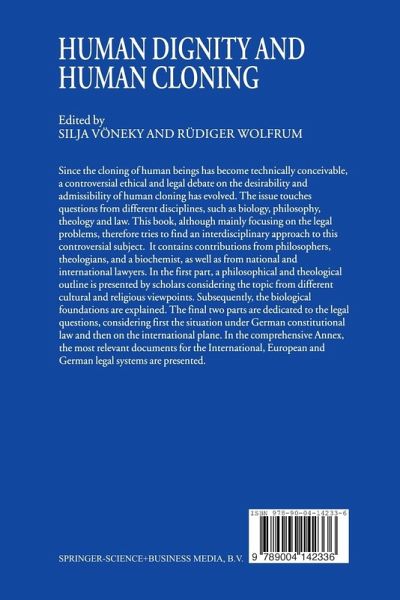
Since the cloning of human beings has become technically conceivable, a controversial ethical and legal debate on the desirability and admissibility of human cloning has evolved. The issue touches questions from different disciplines, such as biology, philosophy, theology and law. This book, although mainly focusing on the legal problems, therefore tries to find an interdisciplinary approach to this controversial subject. It contains contributions from philosophers, theologians, and a biochemist, as well as from national and international lawyers. In the first part, a philosophical and theological outline is presented by scholars considering the topic from different cultural and religious (Christian, Muslim, Buddhist and Jewish)viewpoints. Subsequently, the biological foundations are explained by leading scholars in this field. The final two parts are dedicated to the legal questions, considering first the situation under German constitutional law and then on the international plane. In the comprehensive Annex, the most relevant documents for the International (in particular from the UN), European and German legal systems are presented.