
Andere Kunden interessierten sich auch für
 Status of Human-Elephant Conflict in Gudalur, Tamilnadu, India27,99 €
 Human-Elephant Conflict in Shimba Hills, Kenya: What Drives Intensity33,99 €
 Human-Giraffe Conflict in Niger36,99 €
 Cheetahs: Biology and Conservation77,99 €
 Ecology and Biodiversity of Sloth Bear27,99 €
 Lessons learned in elephant management40,99 €
 Which factor preventing the mouse from reaching to size of an elephant24,99 €

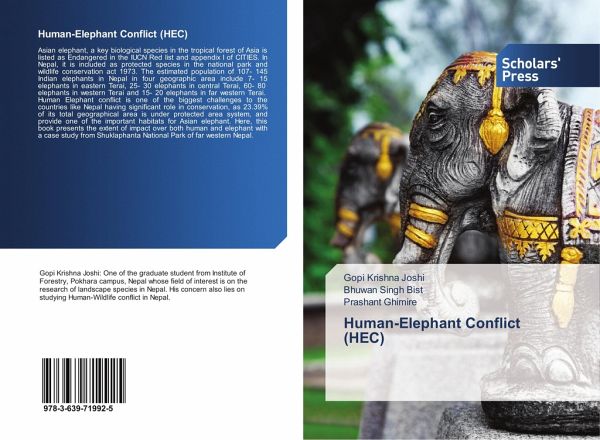
Asian elephant, a key biological species in the tropical forest of Asia is listed as Endangered in the IUCN Red list and appendix I of CITIES. In Nepal, it is included as protected species in the national park and wildlife conservation act 1973. The estimated population of 107- 145 Indian elephants in Nepal in four geographic area include 7- 15 elephants in eastern Terai, 25- 30 elephants in central Terai, 60- 80 elephants in western Terai and 15- 20 elephants in far western Terai. Human Elephant conflict is one of the biggest challenges to the countries like Nepal having significant role in conservation, as 23.39% of its total geographical area is under protected area system, and provide one of the important habitats for Asian elephant. Here, this book presents the extent of impact over both human and elephant with a case study from Shuklaphanta National Park of far western Nepal.