For several decades after the UN Charter insisted that the promotion of development and human rights were central to post-World War II conceptions of world order, the two fields remained in virtual isolation from one another. Only in the past 15 years or so, with the fall of the Berlin Wall and the realization that freedom and economic well-being are empirically linked, have the professional communities dealing with development and human rights issues really begun to communicate effectively. But too much of the dialogue has been confined to an abstract or theoretical level. This volume…mehr
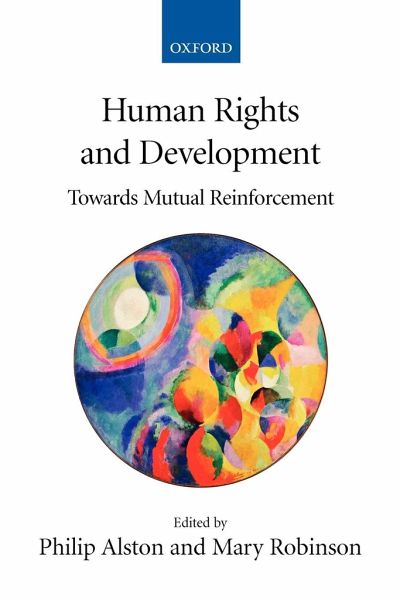
For several decades after the UN Charter insisted that the promotion of development and human rights were central to post-World War II conceptions of world order, the two fields remained in virtual isolation from one another. Only in the past 15 years or so, with the fall of the Berlin Wall and the realization that freedom and economic well-being are empirically linked, have the professional communities dealing with development and human rights issues really begun to communicate effectively. But too much of the dialogue has been confined to an abstract or theoretical level. This volume addresses highly specific but crucial aspects of the human rights and development interface, including the economics of social rights; land rights and women's empowerment; child labour and access to education; reform of legal and judicial systems; the human rights role of the private sector; and building human rights into development planning, especially the Poverty Reduction Strategy process. Contributors include lawyers, economists, and both scholarly and practitioner perspectives are presented. Several chapters are written by Senior World Bank officials, including the Bank's President and the head of the International Finance Corporation.
Philip Alston is Professor of Law at New York University Law School and Faculty Director of its Center for Human Rights and Global Justice. Since 2002 he has been Special Adviser to the UN High Commissioner for Human Rights on the Millennium Development Goals. Professor Mary Robinson founded Realizing Rights: The Ethical Globalization Initiative in 2002. Previously she was President of the Republic of Ireland (1990-97), and UN High Commissioner for Human Rights (1997-2002).
Inhaltsangabe
* Preface * Notes on Contributors * List of Tables * List of Figures * Abbreviations * 1: Philip Alston and Mary Robinson: The Challenges of Ensuring the Mutuality of Human Rights and Development Endeavours * 2: James D. Wolfensohn: Some Reflections on Human Rights and Development * 3: Mary Robinson: What Rights Can Add to Good Development Practice * A. The Economics of Social Rights * 4: Jean Drÿze: Democracy and the Right to Food * 5: Varun Gauri: Social Rights and Economics: Claims to Health Care and Education in Developing Countries * B. Land Rights and Women's Empowerment * 6: Kerry Rittich: The Properties of Gender Equality * 7: Karen O. Mason and Helene M. Carlsson: The Development Impact of Gender Equality in Land Rights * 8: Janet Walsh: Women's Property Rights Violations in Kenya * C. Child Labour and Access to Education * 9: Gordon Betcherman, Jean Fares, Amy Luinstra, and Robert Prouty: Child Labour, Education, and Children's Rights * 10: Elizabeth D. Gibbons, Friedrich Huebler and Edilberto Loaiza: Child Labour, Education, and the Principle of Non-Discrimination * 11: Philip Alston and Nehal Bhuta: Human Rights and Public Goods: Education as a Fundamental Right in India * D. Reform of Legal and Judicial Systems * 12: Christina Biebesheimer: The Impact of Human Rights Principles on Justice Reform in the Inter-American Development Bank * 13: Stephen Golub: Less Law and Reform, More Politics and Enforcement: A Civil Society Approach to Integrating Rights and Development * E. The Role of the Private Sector in Promoting Human Rights * 14: Peter Woicke: Putting Human Rights Principles into Development Practice through Finance: The Experience of the International Finance Corporation * 15: Daniel Kaufmann: Human Rights and Governance: The Empirical Challenge * 16: Olivier de Schutter: Transnational Corporations as Instruments of Human Development * F. Building Human Rights into Development Planning Processes: The PRSP Exercise * 17: Frances Stewart and Michael Wang: Poverty Restriction Strategy Papers within the Human Rights Perspective * 18: Gobind Nankani, John Page, and Lindsay Judge: Human Rights and Poverty Restriction Strategies: Moving Towards Convergence? * 19: Mark W. Plant: Human Rights, Poverty Restriction Strategies, and the Role of the International Monetary Fund * 20: Roberto Danino: The Legal Aspects of the World Bank's Work on Human Rights: Some Preliminary Thoughts
* Preface * Notes on Contributors * List of Tables * List of Figures * Abbreviations * 1: Philip Alston and Mary Robinson: The Challenges of Ensuring the Mutuality of Human Rights and Development Endeavours * 2: James D. Wolfensohn: Some Reflections on Human Rights and Development * 3: Mary Robinson: What Rights Can Add to Good Development Practice * A. The Economics of Social Rights * 4: Jean Drÿze: Democracy and the Right to Food * 5: Varun Gauri: Social Rights and Economics: Claims to Health Care and Education in Developing Countries * B. Land Rights and Women's Empowerment * 6: Kerry Rittich: The Properties of Gender Equality * 7: Karen O. Mason and Helene M. Carlsson: The Development Impact of Gender Equality in Land Rights * 8: Janet Walsh: Women's Property Rights Violations in Kenya * C. Child Labour and Access to Education * 9: Gordon Betcherman, Jean Fares, Amy Luinstra, and Robert Prouty: Child Labour, Education, and Children's Rights * 10: Elizabeth D. Gibbons, Friedrich Huebler and Edilberto Loaiza: Child Labour, Education, and the Principle of Non-Discrimination * 11: Philip Alston and Nehal Bhuta: Human Rights and Public Goods: Education as a Fundamental Right in India * D. Reform of Legal and Judicial Systems * 12: Christina Biebesheimer: The Impact of Human Rights Principles on Justice Reform in the Inter-American Development Bank * 13: Stephen Golub: Less Law and Reform, More Politics and Enforcement: A Civil Society Approach to Integrating Rights and Development * E. The Role of the Private Sector in Promoting Human Rights * 14: Peter Woicke: Putting Human Rights Principles into Development Practice through Finance: The Experience of the International Finance Corporation * 15: Daniel Kaufmann: Human Rights and Governance: The Empirical Challenge * 16: Olivier de Schutter: Transnational Corporations as Instruments of Human Development * F. Building Human Rights into Development Planning Processes: The PRSP Exercise * 17: Frances Stewart and Michael Wang: Poverty Restriction Strategy Papers within the Human Rights Perspective * 18: Gobind Nankani, John Page, and Lindsay Judge: Human Rights and Poverty Restriction Strategies: Moving Towards Convergence? * 19: Mark W. Plant: Human Rights, Poverty Restriction Strategies, and the Role of the International Monetary Fund * 20: Roberto Danino: The Legal Aspects of the World Bank's Work on Human Rights: Some Preliminary Thoughts
Es gelten unsere Allgemeinen Geschäftsbedingungen: www.buecher.de/agb
Impressum
www.buecher.de ist ein Internetauftritt der buecher.de internetstores GmbH
Geschäftsführung: Monica Sawhney | Roland Kölbl | Günter Hilger
Sitz der Gesellschaft: Batheyer Straße 115 - 117, 58099 Hagen
Postanschrift: Bürgermeister-Wegele-Str. 12, 86167 Augsburg
Amtsgericht Hagen HRB 13257
Steuernummer: 321/5800/1497
USt-IdNr: DE450055826