
Andere Kunden interessierten sich auch für
 True Believers and the Great Replacement51,99 €
 The Society of the Spectacle15,99 €
 The Social Philosophers24,99 €
 Concepts in Action30,99 €
 The Friend of Women20,99 €
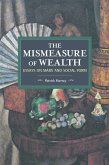
 The Mismeasure of Wealth49,99 €
 All Bullshit and Lies?41,99 €



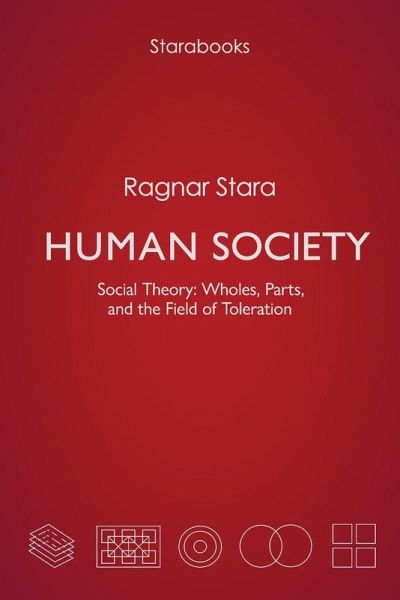
What is a society? According to sociologists and philosophers, the concept is a self-evident one. They describe society as an aggregate of people, as a society divided into classes or as a community - but also as an impossible object. Why is the answer so vague? There is a conceptual wall that stands in the way of a definition of society, at the same time as society must be defined inorder for the social sciences to be possible. The book shows how society can be defined based on philosopher Uuno Saarnio's logical categories of the whole and the field of toleration, Leibniz's tolerantia ecclesiastica.Through this, it is also possible to describe the structure of society and man's action within society. This volume argues in favor of a reshaping of the social sciences. The key issue is to elaborate the set theory of the phrase "the whole is more than the sum of its parts" in connection with the nation, the society and the social group concepts.