
Andere Kunden interessierten sich auch für
 Anthropological Perspectives on Tooth Morphology97,99 €
 The Evolution of the Primate Hand167,99 €
 Dental Morphology for Anthropology197,99 €
 New commission of the governor of Quebec and other instruments of authority derived from the crown relative to America13,90 €
 Hierarchy in Natural and Social Sciences76,99 €
 The Crown and its Advisers21,90 €
 A GIS-based Analysis of Hillfort Location and Morphology123,99 €



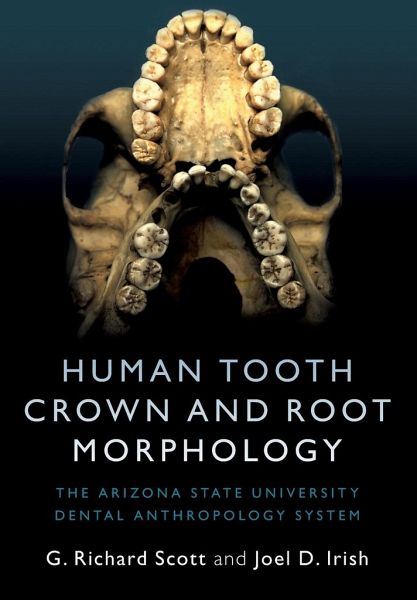
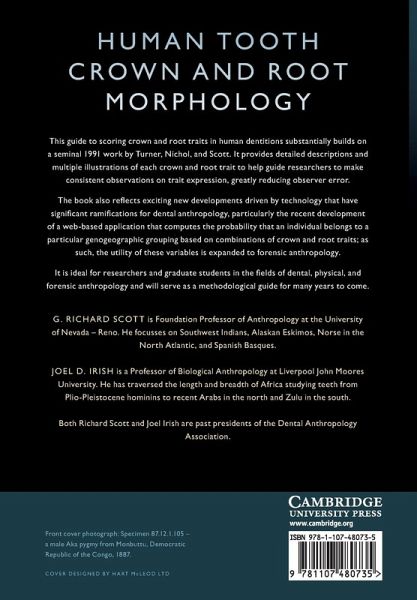
This guide to scoring crown and root traits in human dentitions substantially builds on a seminal 1991 work by Turner, Nichol, and Scott. It provides detailed descriptions and multiple illustrations of each crown and root trait to help guide researchers to make consistent observations on trait expression, greatly reducing observer error. The book also reflects exciting new developments driven by technology that have significant ramifications for dental anthropology, particularly the recent development of a web-based application that computes the probability that an individual belongs to a particular genogeographic grouping based on combinations of crown and root traits; as such, the utility of these variables is expanded to forensic anthropology. This book is ideal for researchers and graduate students in the fields of dental, physical, and forensic anthropology and will serve as a methodological guide for many years to come.