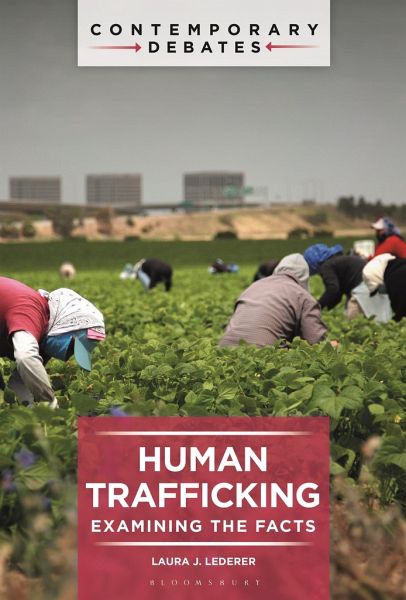
An authoritative, fact-based survey examining the true extent and severity of human trafficking around the world, written by an internationally recognized expert on the issue.
An authoritative, fact-based survey examining the true extent and severity of human trafficking around the world, written by an internationally recognized expert on the issue.
Laura J. Lederer, JD, is President of Global Centurion, a nonprofit organization fighting trafficking. She is a Subject Matter Expert on Human Trafficking to the U.S. Department of Defense and the U.S. Department of Health and Human Services.
Inhaltsangabe
How to Use This Book Acknowledgements Chapter 1. Numbers Never Lie? Estimating the Nature and Scope of Human Trafficking Q 1. How many people are trafficked in the United States and around the world? Q 2. How widespread is sex and labor trafficking in the United States? Q 3. Does labor trafficking occur in the United States? Q 4. Is there one internationally recognized method used for estimating human trafficking? Q 5. Why do campaigns to end human trafficking feature stories of former trafficking victims? Chapter 2. The "3P" Framework: Prosecution, Prevention, Protection and Assistance Q 6. What is the Trafficking Victims Protection Act and the 3P Framework? Q 7. Partnership: What is the so-called "Fourth P" in the Trafficking Victims Protection Act? Q 8. Prosecution: Is law enforcement an important aspect of combating human trafficking? Q 9. Protection: Is victim assistance an important part of combating human trafficking? Q10. Prevention: Is "moving upstream" the most essential part of stopping human trafficking? Chapter 3. Survivors: Language, Image, Life Q 11. Victim vs. Survivor: Does the language used in discussions of trafficking matter? Q 12. Is survivor-informed, survivor-centered engagement important to anti-trafficking work? Q 13. Can images subliminally reinforce misconceptions about human trafficking? Q 14. - What barriers do trafficking survivors face to escape and obtain care? Q 15. Can trafficking be reduced by targeting buyers? Q 16. Has production of electric vehicles been linked to forced labor? Chapter 4. Countering Traffic in Persons Q 17. Have some anti-trafficking and law enforcement entities been rocked by trafficking scandals? Q 18. Is the National Human Trafficking Hotline an effective tool for combating human trafficking? Q 19. Are the experiences of trafficking survivors being incorporated into anti-trafficking work? Chapter 5. Learning from Lived Experience: What Survivors Are Telling Us Q 20. Have researchers found links between trafficking, homelessness, and drug addiction? Q 21. What negative health impacts are associated with human trafficking? Q 22. Do other forms of human trafficking exist? Chapter 6. The Long Arc of Slavery Q 23. How long has slavery been in existence? Q 24. How did the modern anti-slavery movement develop? Bibliography Subject Index About the Author
How to Use This Book Acknowledgements Chapter 1. Numbers Never Lie? Estimating the Nature and Scope of Human Trafficking Q 1. How many people are trafficked in the United States and around the world? Q 2. How widespread is sex and labor trafficking in the United States? Q 3. Does labor trafficking occur in the United States? Q 4. Is there one internationally recognized method used for estimating human trafficking? Q 5. Why do campaigns to end human trafficking feature stories of former trafficking victims? Chapter 2. The "3P" Framework: Prosecution, Prevention, Protection and Assistance Q 6. What is the Trafficking Victims Protection Act and the 3P Framework? Q 7. Partnership: What is the so-called "Fourth P" in the Trafficking Victims Protection Act? Q 8. Prosecution: Is law enforcement an important aspect of combating human trafficking? Q 9. Protection: Is victim assistance an important part of combating human trafficking? Q10. Prevention: Is "moving upstream" the most essential part of stopping human trafficking? Chapter 3. Survivors: Language, Image, Life Q 11. Victim vs. Survivor: Does the language used in discussions of trafficking matter? Q 12. Is survivor-informed, survivor-centered engagement important to anti-trafficking work? Q 13. Can images subliminally reinforce misconceptions about human trafficking? Q 14. - What barriers do trafficking survivors face to escape and obtain care? Q 15. Can trafficking be reduced by targeting buyers? Q 16. Has production of electric vehicles been linked to forced labor? Chapter 4. Countering Traffic in Persons Q 17. Have some anti-trafficking and law enforcement entities been rocked by trafficking scandals? Q 18. Is the National Human Trafficking Hotline an effective tool for combating human trafficking? Q 19. Are the experiences of trafficking survivors being incorporated into anti-trafficking work? Chapter 5. Learning from Lived Experience: What Survivors Are Telling Us Q 20. Have researchers found links between trafficking, homelessness, and drug addiction? Q 21. What negative health impacts are associated with human trafficking? Q 22. Do other forms of human trafficking exist? Chapter 6. The Long Arc of Slavery Q 23. How long has slavery been in existence? Q 24. How did the modern anti-slavery movement develop? Bibliography Subject Index About the Author
Es gelten unsere Allgemeinen Geschäftsbedingungen: www.buecher.de/agb
Impressum
www.buecher.de ist ein Internetauftritt der buecher.de internetstores GmbH
Geschäftsführung: Monica Sawhney | Roland Kölbl | Günter Hilger
Sitz der Gesellschaft: Batheyer Straße 115 - 117, 58099 Hagen
Postanschrift: Bürgermeister-Wegele-Str. 12, 86167 Augsburg
Amtsgericht Hagen HRB 13257
Steuernummer: 321/5800/1497
USt-IdNr: DE450055826