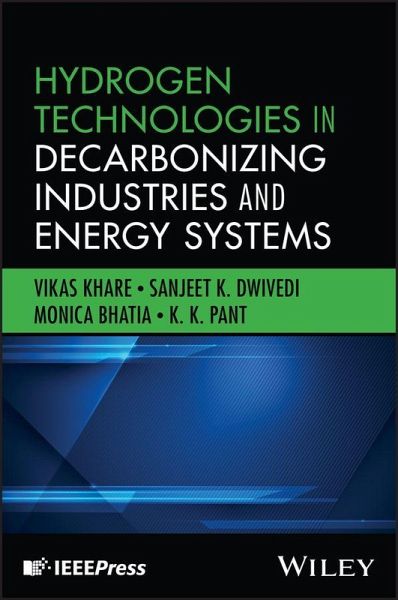
Comprehensive examination of green hydrogen's transformative potential in reducing carbon emissions across various sectors Hydrogen Technologies in Decarbonizing Industries and Energy Systems is a thorough discussion of green hydrogen's transformative potential in reducing carbon emissions across various sectors, covering technological, managerial, and policy aspects. Practical insights are provided through detailed case studies and real-world examples to ensure concepts are relatable and practicable. The book begins by introducing the fundamentals of green hydrogen, tracing its historical…mehr
Comprehensive examination of green hydrogen's transformative potential in reducing carbon emissions across various sectors Hydrogen Technologies in Decarbonizing Industries and Energy Systems is a thorough discussion of green hydrogen's transformative potential in reducing carbon emissions across various sectors, covering technological, managerial, and policy aspects. Practical insights are provided through detailed case studies and real-world examples to ensure concepts are relatable and practicable. The book begins by introducing the fundamentals of green hydrogen, tracing its historical development, and explaining its critical role in global decarbonization efforts. It then delves into the latest technological innovations, such as advancements in electrolysis, storage, transportation, and integration with renewable energy sources. Discussion on industrial applications highlights how green hydrogen can decarbonize heavy industries like steel, cement, and chemicals, and explains its use in transportation and power generation. From a management perspective, the book explores strategic planning for adopting green hydrogen, operational changes, supply chain management, workforce development, and risk management. The book also includes information on: * The current policy and regulatory landscape, identifying challenges and offering recommendations to promote green hydrogen adoption * Cost-benefit aspects of green hydrogen projects, investment trends, and the global economic impact of this technology * Environmental and social impacts of green hydrogen, including job creation and community effects * Energy conservation and demand response, covering smart thermostats and peak load management * Thermochemical water splitting, covering splitting cycles, reaction materials and catalysts, process engineering and reactor design and energy input and efficiency Hydrogen Technologies in Decarbonizing Industries and Energy Systems empowers industry professionals, policymakers, and researchers and academics to contribute to the decarbonization of industries and energy systems, fostering a sustainable future for all.
Vikas Khare, PhD, is an Associate Dean, School of Technology, Management and Engineering, NMIMS, Indore, India. He is also Certified Energy Manager under the Bureau of Energy Efficiency India. Sanjeet K. Dwivedi, PhD from IIT Delhi and M.E. from IIT Roorkee (Gold Medal), is a seasoned power electronics expert with over a decade of experience at Danfoss Global R&D and Everfuel A/S as a Technology Manager. He is currently serving as a Senior Consultant at Siemens Gamesa Renewable Energy A/S, Denmark. Monica Bhatia, PhD, is a faculty member at the School of Business Management, NMIMS, India. She is also consultant and Motivational Speaker. K. K. Pant, received his PhD (Chemical Engineering) degree from the Indian Institute of Technology Kanpur in 1997. He took over as the Director of the Indian Institute of Technology Roorkee on October 12, 2022.
Inhaltsangabe
CHAPTER 1 Introduction to Techno-Management Revolution of Energy 1.1 Energy Landscape Before the Revolution 1.2 Transformation of Energy Distribution 1.3 Policy and Regulatory Frameworks 1.4 Technological Innovations 1.5 Energy Conservation and Demand Response 1.6 Conclusion 1.7 Case Study 1.8 Exercise 1.9 Objective Type Questions 1.10 Glossary References CHAPTER 2 Understanding Green Hydrogen: Production Methods and Technologies 2.1 Introduction 2.2 Green Hydrogen Production Methods 2.3 Electrolysis Technologies 2.4 Materials Selection for Electrodes and Membranes 2.5 Thermochemical Water Splitting 2.6 Cost Analysis and Energy Efficiency Comparisons for Green Hydrogen 2.7 Lifecycle Assessment (LCA) of Hydrogen Production Pathways 2.8 Environmental Footprint 2.9 Applications of Green Hydrogen 2.10 Conclusion 2.11 Case Study 2.12 Exercise 2.13 Objective Type Questions 2.14 Glossary References CHAPTER 3 The Role of Hydrogen in Energy Transition 3.1 Introduction to Energy Transition 3.2 Fundamental of Hydrogen Storage 3.3 Hydrogen as a Clean Energy Source 3.4 Hydrogen Infrastructure Development 3.5 Conclusion 3.6 Case Study 3.7 Exercise 3.8 Objective Type Questions 3.9 Glossary References CHAPTER 4 The Urgency of Decarbonization: Environmental and Climate Imperatives 4.1 Introduction to Decarbonisation 4.2 Environmental Impacts of Carbon Emissions 4.3 Economic Costs Assessment of Carbon Emissions with Risk and Uncertainty 4.4 Technological Innovations for Decarbonisation 4.5 Corporate Sustainability and Industrial Strategies for Decarbonization 4.6 Conclusion 4.7 Case Study 4.8 Exercise 4.9 Objective Type Questions 4.10 Glossary References CHAPTER 5 Operations and Supply Chain Management of Green Hydrogen 5.1 Introduction 5.2 Input Material Sourcing 5.3 Infrastructure Development 5.4 Logistics, Transportation, Distribution and Delivery of Green Hydrogen 5.5 Lifecycle Assessment of Green Hydrogen Production, Distribution, and Utilization 5.6 Market Dynamics and Demand Forecasting 5.7 Partnerships between Renewable Energy Developers and Hydrogen Producers 5.8 Conclusion 5.9 Case Study 5.10 Exercise 5.11 Objective Type Questions 5.12 Glossary References CHAPTER 6 Inventory Control and Total Quality Management 6.1 Introduction 6.2 Inventory Management for Green Hydrogen 6.3 Quality Control Measures and Testing & Inspection of Green Hydrogen 6.4 Risk Management in Inventory Control of Green Hydrogen 6.5 Total Quality Management (TQM) Principles of Green Hydrogen 6.6 Quality Tools and Techniques of Green Hydrogen 6.7 Integration of Quality Management Systems of Green Hydrogen 6.8 Conclusion 6.9 Case Study 6.10 Exercise 6.11 Objective Type Questions 6.12 Glossary References
CHAPTER 1 Introduction to Techno-Management Revolution of Energy 1.1 Energy Landscape Before the Revolution 1.2 Transformation of Energy Distribution 1.3 Policy and Regulatory Frameworks 1.4 Technological Innovations 1.5 Energy Conservation and Demand Response 1.6 Conclusion 1.7 Case Study 1.8 Exercise 1.9 Objective Type Questions 1.10 Glossary References CHAPTER 2 Understanding Green Hydrogen: Production Methods and Technologies 2.1 Introduction 2.2 Green Hydrogen Production Methods 2.3 Electrolysis Technologies 2.4 Materials Selection for Electrodes and Membranes 2.5 Thermochemical Water Splitting 2.6 Cost Analysis and Energy Efficiency Comparisons for Green Hydrogen 2.7 Lifecycle Assessment (LCA) of Hydrogen Production Pathways 2.8 Environmental Footprint 2.9 Applications of Green Hydrogen 2.10 Conclusion 2.11 Case Study 2.12 Exercise 2.13 Objective Type Questions 2.14 Glossary References CHAPTER 3 The Role of Hydrogen in Energy Transition 3.1 Introduction to Energy Transition 3.2 Fundamental of Hydrogen Storage 3.3 Hydrogen as a Clean Energy Source 3.4 Hydrogen Infrastructure Development 3.5 Conclusion 3.6 Case Study 3.7 Exercise 3.8 Objective Type Questions 3.9 Glossary References CHAPTER 4 The Urgency of Decarbonization: Environmental and Climate Imperatives 4.1 Introduction to Decarbonisation 4.2 Environmental Impacts of Carbon Emissions 4.3 Economic Costs Assessment of Carbon Emissions with Risk and Uncertainty 4.4 Technological Innovations for Decarbonisation 4.5 Corporate Sustainability and Industrial Strategies for Decarbonization 4.6 Conclusion 4.7 Case Study 4.8 Exercise 4.9 Objective Type Questions 4.10 Glossary References CHAPTER 5 Operations and Supply Chain Management of Green Hydrogen 5.1 Introduction 5.2 Input Material Sourcing 5.3 Infrastructure Development 5.4 Logistics, Transportation, Distribution and Delivery of Green Hydrogen 5.5 Lifecycle Assessment of Green Hydrogen Production, Distribution, and Utilization 5.6 Market Dynamics and Demand Forecasting 5.7 Partnerships between Renewable Energy Developers and Hydrogen Producers 5.8 Conclusion 5.9 Case Study 5.10 Exercise 5.11 Objective Type Questions 5.12 Glossary References CHAPTER 6 Inventory Control and Total Quality Management 6.1 Introduction 6.2 Inventory Management for Green Hydrogen 6.3 Quality Control Measures and Testing & Inspection of Green Hydrogen 6.4 Risk Management in Inventory Control of Green Hydrogen 6.5 Total Quality Management (TQM) Principles of Green Hydrogen 6.6 Quality Tools and Techniques of Green Hydrogen 6.7 Integration of Quality Management Systems of Green Hydrogen 6.8 Conclusion 6.9 Case Study 6.10 Exercise 6.11 Objective Type Questions 6.12 Glossary References
Es gelten unsere Allgemeinen Geschäftsbedingungen: www.buecher.de/agb
Impressum
www.buecher.de ist ein Internetauftritt der buecher.de internetstores GmbH
Geschäftsführung: Monica Sawhney | Roland Kölbl | Günter Hilger
Sitz der Gesellschaft: Batheyer Straße 115 - 117, 58099 Hagen
Postanschrift: Bürgermeister-Wegele-Str. 12, 86167 Augsburg
Amtsgericht Hagen HRB 13257
Steuernummer: 321/5800/1497
USt-IdNr: DE450055826