
Andere Kunden interessierten sich auch für
 Ich existiere unter dem Namen, den ich dir gegeben habe69,90 €
 J'existe par le nom que je t'ai donné45,99 €
 Istniej¿ pod imieniem, które ci nada¿em45,99 €
 Esisto con il nome che ti ho dato45,99 €
 Eu existo pelo nome que te dei45,99 €
 You can't catch a lizard by the tail!45,99 €
 Hyperrealist aesthetics in Patrick Deville's work45,99 €




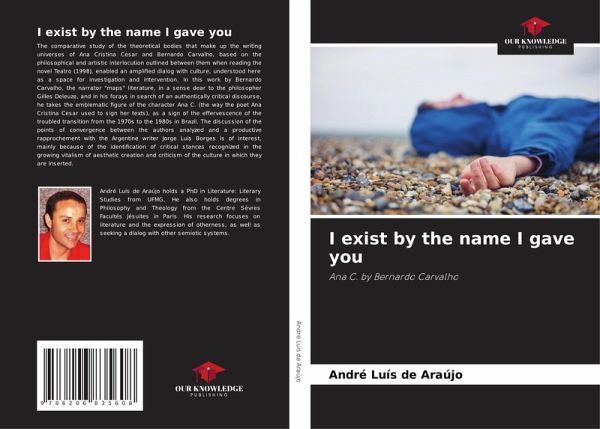
The comparative study of the theoretical bodies that make up the writing universes of Ana Cristina Cesar and Bernardo Carvalho, based on the philosophical and artistic interlocution outlined between them when reading the novel Teatro (1998), enabled an amplified dialog with culture, understood here as a space for investigation and intervention. In this work by Bernardo Carvalho, the narrator "maps" literature, in a sense dear to the philosopher Gilles Deleuze, and in his forays in search of an authentically critical discourse, he takes the emblematic figure of the character Ana C. (the way the poet Ana Cristina Cesar used to sign her texts), as a sign of the effervescence of the troubled transition from the 1970s to the 1980s in Brazil. The discussion of the points of convergence between the authors analyzed and a productive rapprochement with the Argentine writer Jorge Luis Borges is of interest, mainly because of the identification of critical stances recognized in the growing vitalism of aesthetic creation and criticism of the culture in which they are inserted.