
Andere Kunden interessierten sich auch für
 Scanning Electron Microscopy249,99 €
 Transmission Electron Microscopy136,99 €
 Scanning Electron Microscopy in BIOLOGY77,99 €
 Scanning Tunneling Microscopy I39,99 €
 Thermodynamic Basis of Crystal Growth76,99 €
 Sub-Kelvin scanning tunneling microscopy on magnetic molecules40,00 €
 Scanning Tunneling Spectroscopy on Electron-Boson Interactions in Superconductors44,00 €





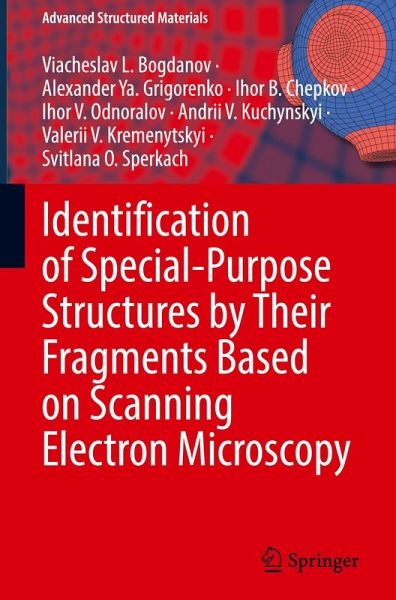
This book contains previously classified information on the physical and chemical characteristics of metallic and composite materials used in the production of elements of special-purpose structures, and reveals the set of techniques and tools through which this information was obtained. It sets the foundations for the methodology of systematic automated identification of the special-purpose structures by their fragments.
The main topics are theoretical foundations and practical results of scanning electron microscopy in determining chemical composition, structure, surface topography and frequency characteristics (reflection and absorption coefficients of electromagnetic waves) of fragments of the structures made of both metal alloys and composite materials.
Applied aspects such as the parameters of electromagnetic radiation recommended for effective identification of special-purpose structures made of composite radiation absorbent materials and coatings; development of a scientifically based system for automated identification of the structures by their fragments.
The book is aimed at solving the problem to prevent uncontrolled or "gray" transfer of special-purpose products, technologies and materials of military or dual use by forming a scientifically based automatic identification system (by class and country of origin) of special-purpose products by their fragments, using scanning electron microscopy to determine their chemical composition, structure, surface topography, and frequency characteristics.
The book is useful to a wide range of specialists in the field of materials science, as well as specialists in the defense sector of industry.
The main topics are theoretical foundations and practical results of scanning electron microscopy in determining chemical composition, structure, surface topography and frequency characteristics (reflection and absorption coefficients of electromagnetic waves) of fragments of the structures made of both metal alloys and composite materials.
Applied aspects such as the parameters of electromagnetic radiation recommended for effective identification of special-purpose structures made of composite radiation absorbent materials and coatings; development of a scientifically based system for automated identification of the structures by their fragments.
The book is aimed at solving the problem to prevent uncontrolled or "gray" transfer of special-purpose products, technologies and materials of military or dual use by forming a scientifically based automatic identification system (by class and country of origin) of special-purpose products by their fragments, using scanning electron microscopy to determine their chemical composition, structure, surface topography, and frequency characteristics.
The book is useful to a wide range of specialists in the field of materials science, as well as specialists in the defense sector of industry.