
Andere Kunden interessierten sich auch für
 Ankle involvement in adult juvenile idiopathic arthritis29,99 €
 Cataract surgery for adults at Saint Joseph Hospital36,99 €
 Langerhans histiocytosis45,99 €
 Serum zinc in febrile seizures, idiopathic epilepsy and CNS infections32,99 €
 Idiopathic gastric perforation in newborns29,99 €
 Idiopathic Scoliosis Screening25,99 €
 Acute generalized exanthematous pustulosis29,99 €


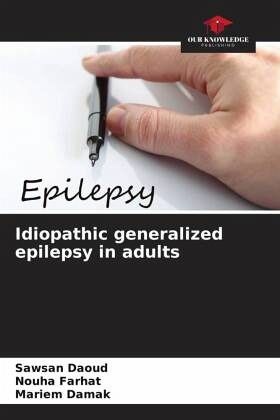
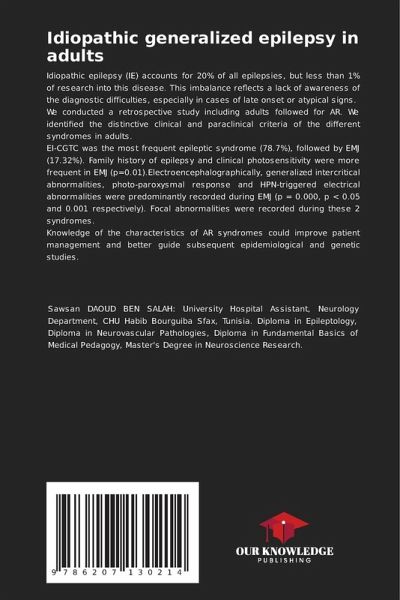
Idiopathic epilepsy (IE) accounts for 20% of all epilepsies, but less than 1% of research into this disease. This imbalance reflects a lack of awareness of the diagnostic difficulties, especially in cases of late onset or atypical signs.We conducted a retrospective study including adults followed for AR. We identified the distinctive clinical and paraclinical criteria of the different syndromes in adults.EI-CGTC was the most frequent epileptic syndrome (78.7%), followed by EMJ (17.32%). Family history of epilepsy and clinical photosensitivity were more frequent in EMJ (p=0.01).Electroencephalographically, generalized intercritical abnormalities, photo-paroxysmal response and HPN-triggered electrical abnormalities were predominantly recorded during EMJ (p = 0.000, p < 0.05 and 0.001 respectively). Focal abnormalities were recorded during these 2 syndromes. Knowledge of the characteristics of AR syndromes could improve patient management and better guide subsequent epidemiological and genetic studies.