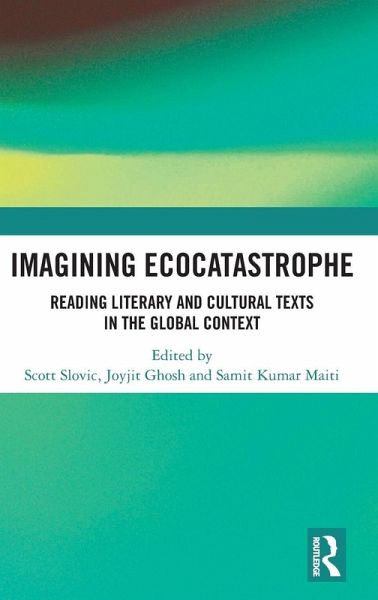
This volume examines scholarly perspectives on eco-imaginaries, focusing in particular on how eco-catastrophes have been represented in literature and different visual forms, including film, television and cartoons, among other cultural media. It draws on literary genres such as science fiction, climate fiction, speculative fiction, petrofiction, post-apocalyptic narratives and nuclear fiction to examine the role that literature plays in the dissemination of information about environmental crisis in the Anthropocene and in preparing mankind for a better and sustainable future. Deeply embedded…mehr
This volume examines scholarly perspectives on eco-imaginaries, focusing in particular on how eco-catastrophes have been represented in literature and different visual forms, including film, television and cartoons, among other cultural media. It draws on literary genres such as science fiction, climate fiction, speculative fiction, petrofiction, post-apocalyptic narratives and nuclear fiction to examine the role that literature plays in the dissemination of information about environmental crisis in the Anthropocene and in preparing mankind for a better and sustainable future. Deeply embedded in theoretical conceptualisations, the essays in this volume address issues of natural disasters, deforestation, nuclear disasters and pandemics, among others, which constitute the core subjects of environmental humanities.
A seminal study on the literary and cultural representations of ecodisaster in the global context, and with contributions from across the world, this book, truly interdisciplinary in nature, will be an invaluable read for students, academicians and researchers in literature, film studies, climate change studies, disaster studies, gender studies and cultural studies.
Scott Slovic is a senior scientist at the Oregon Research Institute and a distinguished professor of environmental humanities emeritus at the University of Idaho, USA. Joyjit Ghosh is Professor in the Department of English Literature, Language and Cultural Studies, Vidyasagar University, Midnapore, West Bengal, India. Samit Kumar Maiti is Assistant Professor in the Department of English, Seva Bharati Mahavidyalaya, Kapgari, Jhargram, West Bengal, India.
Inhaltsangabe
List of Contributors viii Acknowledgements xv Introduction 1 PART I Anthropocene, Ecocatastrophe and Apocalypse 23 1 "We Have So Little Time Left": Portrayal of Environmental Catastrophe in Selected Poems from Reckoning 25 JOYJIT GHOSH 2 Unmasking the Risks of Climate Change in Liz Jensen's The Rapture 38 MAHINUR GOZDE KASURKA 3 Maja Lunde's The End of the Ocean: A Narrative of Climate Change and Environmental Crisis 53 SAUMYA PRIYA 4 Subverting Anthropocentrism: A Critical Study of J. G. Ballard's The Wind from Nowhere 64 BAPIN MALLICK AND NIKHILESH DHAR 5 Kim Stanley Robinson's The Ministry for The Future: A Tale of Transcending Climate "Catastrophism" 72 TUSHAR KANTI KARMAKAR PART II Vulnerability, Precarity and Resilience 85 6 "Climate Plague", Precarious Lives and Resilience in a Post-Apocalyptic World: Vignettes of Vulnerability in Sequoia Nagamatsu's How High We Go in the Dark 87 SK TARIK ALI 7 Precarious Selves, (Dis)abled Bodies and Post-Apocalyptic Narratives 101 ELWIN SUSAN JOHN 8 Ecocatastrophe in the Literary Imagination: Confronting the Anthropocene through Narratives of Ecoprecarity from North-East India 111 PADDAJA ROY PART III Resource Extraction, Eco-Injustice and Resistance 123 9 Eco-Anxiety, Trauma and Resilience of the Dongria Kond Tribe of India: Locating the Literary and Cultural Responses of the Niyamgiri Movement in the Global Scenario 125 MIR AHAMMAD ALI 10 "We Should Have Known Our Land Would Soon Be Dead": Resource Curse, Petro-Capital Extractivism and Survival Environmentalism in Imbolo Mbue's How Beautiful We Were 140 SHANKHA SHUBHRA MANDAL PART IV Disaster(s) and Dystopian Imaginaries 153 11 The Literary Dimensions of Pagan Spirituality in Fictionalising the Nuclear Tierratraumatic Experience 155 INNA SUKHENKO 12 Some Things Are More Equal Than Others: Or, How to Read On the Beach 170 ANNA FRIEDA KUHN 13 Gender, Famine and Masculinities: An Ecofeminist Insight into the Irish Great Hunger 178 ASMAE OURKIYA 14 The Ecology of Reading Lithuanian Dystopia: The Cases of Dorandobongas by Jurgis Volandas and ko by Valdas Papievis 192 INDR AKEVI IEN PART V Climate Change and Environmental Disaster in Cinema 209 15 Don't Look Up: Political Satire Crashes into the Contemporary Disaster Film 211 GEORGIOS DIMOGLOU 16 The City hat (Never) Dies: Film Noir Imagines the Urban Disorder, Disease and Disaster 221 DIMITRIS PAPACHARALAMPOUS 17 "Toward an Otherwise": Decolonising Epistemology and Ecology in The Last Wave 232 WILL UNDERLAND AND MATTHEW SPENCER 18 Scorched Earth and Precarious Existence: Representation of the Anthropocene in Bollywood Films Kadvi Hawa and Jal 242 AMIT MANDAL PART VI Climate Change and Critical Thinking in Other Cultural Media 255 19 From One World to Another: Immersion in Digital Games and its Relevance for Climate Change 257 LAURA AKERS 20 Geopolitics of Climate Change Cartoons: Exploring Everyday Resistance through Visual Discourse 271 SHIFANA P. A. AND ASHA SUSAN JACOB Index 284
List of Contributors viii Acknowledgements xv Introduction 1 PART I Anthropocene, Ecocatastrophe and Apocalypse 23 1 "We Have So Little Time Left": Portrayal of Environmental Catastrophe in Selected Poems from Reckoning 25 JOYJIT GHOSH 2 Unmasking the Risks of Climate Change in Liz Jensen's The Rapture 38 MAHINUR GOZDE KASURKA 3 Maja Lunde's The End of the Ocean: A Narrative of Climate Change and Environmental Crisis 53 SAUMYA PRIYA 4 Subverting Anthropocentrism: A Critical Study of J. G. Ballard's The Wind from Nowhere 64 BAPIN MALLICK AND NIKHILESH DHAR 5 Kim Stanley Robinson's The Ministry for The Future: A Tale of Transcending Climate "Catastrophism" 72 TUSHAR KANTI KARMAKAR PART II Vulnerability, Precarity and Resilience 85 6 "Climate Plague", Precarious Lives and Resilience in a Post-Apocalyptic World: Vignettes of Vulnerability in Sequoia Nagamatsu's How High We Go in the Dark 87 SK TARIK ALI 7 Precarious Selves, (Dis)abled Bodies and Post-Apocalyptic Narratives 101 ELWIN SUSAN JOHN 8 Ecocatastrophe in the Literary Imagination: Confronting the Anthropocene through Narratives of Ecoprecarity from North-East India 111 PADDAJA ROY PART III Resource Extraction, Eco-Injustice and Resistance 123 9 Eco-Anxiety, Trauma and Resilience of the Dongria Kond Tribe of India: Locating the Literary and Cultural Responses of the Niyamgiri Movement in the Global Scenario 125 MIR AHAMMAD ALI 10 "We Should Have Known Our Land Would Soon Be Dead": Resource Curse, Petro-Capital Extractivism and Survival Environmentalism in Imbolo Mbue's How Beautiful We Were 140 SHANKHA SHUBHRA MANDAL PART IV Disaster(s) and Dystopian Imaginaries 153 11 The Literary Dimensions of Pagan Spirituality in Fictionalising the Nuclear Tierratraumatic Experience 155 INNA SUKHENKO 12 Some Things Are More Equal Than Others: Or, How to Read On the Beach 170 ANNA FRIEDA KUHN 13 Gender, Famine and Masculinities: An Ecofeminist Insight into the Irish Great Hunger 178 ASMAE OURKIYA 14 The Ecology of Reading Lithuanian Dystopia: The Cases of Dorandobongas by Jurgis Volandas and ko by Valdas Papievis 192 INDR AKEVI IEN PART V Climate Change and Environmental Disaster in Cinema 209 15 Don't Look Up: Political Satire Crashes into the Contemporary Disaster Film 211 GEORGIOS DIMOGLOU 16 The City hat (Never) Dies: Film Noir Imagines the Urban Disorder, Disease and Disaster 221 DIMITRIS PAPACHARALAMPOUS 17 "Toward an Otherwise": Decolonising Epistemology and Ecology in The Last Wave 232 WILL UNDERLAND AND MATTHEW SPENCER 18 Scorched Earth and Precarious Existence: Representation of the Anthropocene in Bollywood Films Kadvi Hawa and Jal 242 AMIT MANDAL PART VI Climate Change and Critical Thinking in Other Cultural Media 255 19 From One World to Another: Immersion in Digital Games and its Relevance for Climate Change 257 LAURA AKERS 20 Geopolitics of Climate Change Cartoons: Exploring Everyday Resistance through Visual Discourse 271 SHIFANA P. A. AND ASHA SUSAN JACOB Index 284
Es gelten unsere Allgemeinen Geschäftsbedingungen: www.buecher.de/agb
Impressum
www.buecher.de ist ein Internetauftritt der buecher.de internetstores GmbH
Geschäftsführung: Monica Sawhney | Roland Kölbl | Günter Hilger
Sitz der Gesellschaft: Batheyer Straße 115 - 117, 58099 Hagen
Postanschrift: Bürgermeister-Wegele-Str. 12, 86167 Augsburg
Amtsgericht Hagen HRB 13257
Steuernummer: 321/5800/1497
USt-IdNr: DE450055826