
Andere Kunden interessierten sich auch für
 Nutritional status of oncology patients on a raw diet27,99 €
 Identification of dressings and surgical material in surgeries18,99 €
 Hydrodynamics and Morphology of Low Sediment Beaches58,99 €
 THE USE OF OMEGA 3 IN CANCER PATIENTS18,99 €
 Hospital Information System41,99 €
 Impact de la morphologie faciale sur la ventilation des malades opérés29,99 €
 Beyond the Workplace Zoo167,99 €






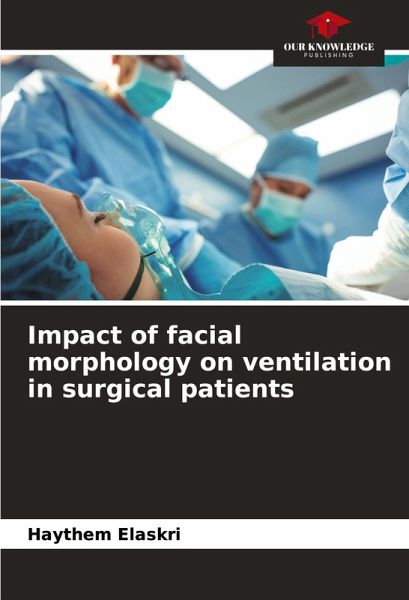
In this work, we included all patients who underwent surgery under general anesthesia. Our study was based on the impact of facial morphology on the ventilation of patients in the operating room. It was found that 48% of patients were difficult to ventilate, while 52% of patients were defined as having non-difficult ventilation. This statistic has demonstrated different results; the latter were classified on two distributions according to demographic data: - Distribution of patients according to the field: Age, Sex, Height, weight, ASA, NYHA, Mallampati, Cromack and size of the mask as well as its type. - Distribution according to the physical state of the patient: ventilation, criteria for difficult ventilation and type of facial morphologies. Our study clearly allowed us to define whether ventilation was difficult or not, based on the criteria of difficult ventilation and facial morphology. The place of facial morphology on the ventilation of patients in the operating room is obvious based on the results obtained.