
Andere Kunden interessierten sich auch für
 Impatto della CCJA sul sistema giudiziario congolese29,99 €
 Wp¿yw CCJA na kongijski system s¿downiczy29,99 €
 Impacto da CCJA no sistema judicial congolês29,99 €
 Courts and Procedure in England and in New Jersey24,99 €
 Auswirkungen der CCJA auf das kongolesische Rechtssystem43,90 €
 Incidences de la CCJA dans le système judiciaire congolais29,99 €
 The Juvenile Justice System in Nepal32,99 €



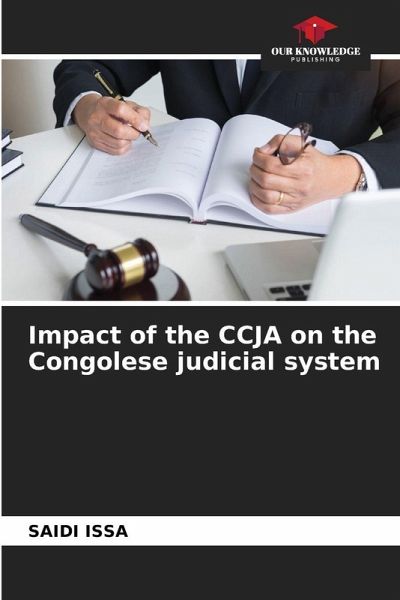
Pursuant to the Treaty of Port-Louis, in particular article 14, the establishment of the CCJA has an abrogatory effect in Congolese law, substituting the CCJA as judge of cassation for all matters requiring the application of OHADA uniform acts. Thus, no domestic court can hear appeals in cassation in all matters of OHADA law. As Congolese law currently stands, there are two cassation jurisdictions: the Congolese Cour de Cassation for matters governed by ordinary law, and the CCJA for matters governed by OHADA law. This raises the question of their coexistence, or rather, the impact of the CCJA on the Congolese judicial system. Without claiming to be exhaustive, the present analysis is intended as a solution to this problem, and analyses the impact of the CCJA on the Congolese judicial system, in terms of both norms and procedures.