
Andere Kunden interessierten sich auch für
 Imperial Germany and the Industrial Revolution30,99 €
 Imperial Germany and the Industrial Revolution32,99 €
 History of Canadian Wealth20,99 €
 The Character and Logical Method of Political Economy21,99 €
 The American Empire23,99 €
 Imperial Germany and the Industrial Revolution.88,99 €
 Transformations of the New Germany38,99 €
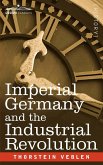



IMPERIAL GERMANY AND THE INDUSTRIAL REVOLUTION. PREFACE: Some apology may seem due on offering at this season so unwarlike a study as what here follows on the case of Imperial Germany and its place in modern civilisation. The essay was projected before the current war came on, though the complexion of subsequent events has also doubtless had its effect o the particular direction taken by the argument at more than one point in the inquiry. The inquiry in hand, therefore, is concerhedeittjer with the controverted merits of the internationaTquarrel nor with the comparative force and probable success of either belligerent. Its aim is the less polemical one of a comparison and correlation between the German case on the one hand and the English speaking peoples on the other hand, considered as two distinct and somewhat divergent lines of the cultural development in modern times and the ground on which the inquiry runs is that afforded by the economic, chiefly the industrial, cir cumstances that have shaped the outcome in either case. It aims to account for Germanys industrial advance and high efficiency by natural causes, without drawing on the logic of manifest destiny, Providential nepotism, national genius, and the like. It is believed to be the first attempt yet made at an explanation, as distinct from description or eulogy, of this episode in modern economic history unless Professor Sombarts Deutsche Volkswirtschaft im Jahrhundert may be so regarded. Apart from Professor Sombarts study of this period, it is believed, nothing of consequence has appeared in the way of a theoretical inquiry into this Imperial era and the run of its industrial affairs, although many scholarly and workmanlike studies have presented the run of the facts from one point of view and another. There is of course no intention here to impart information on the history of this period, whether political or economic 5 and the historical information made use of as material for argument is of the commonplace kind familiar by common notoriety or from the standard manuals accessible to all readers. Anything like a comprehensive citation of sources and authorities has accordingly been dispensed with, though citations and references covering given points have been brought in where special occasion appeared to call for it. The argument runs between the lines of the histories, as conventionally written, and does not lean on recondite mate rial or niceties of detail. To English readers, it is true, the chapter on the Old Order may appear in part to rest on recondite information. The argument bearing on this topic presumes a degree of familiarity with the archseology of the Baltic region, to gether with a fairly exhaustive firsthand acquaintance with what there is extant of literary remains in the Old Icelandic.