
Andere Kunden interessierten sich auch für
 Synthesis and Analysis Methods for Safety and Reliability Studies39,99 €
 Risk Analysis of Complex and Uncertain Systems151,99 €
 Risk Analysis of Complex and Uncertain Systems117,99 €
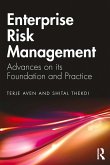
 Enterprise Risk Management66,99 €
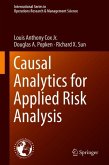
 Causal Analytics for Applied Risk Analysis250,99 €
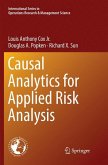
 Causal Analytics for Applied Risk Analysis249,99 €
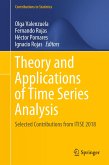
 Theory and Applications of Time Series Analysis113,99 €

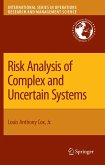
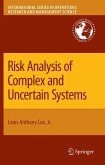
Improving Risk Analysis shows how to better assess and manage uncertain risks when the consequences of alternative actions are in doubt. The constructive methods of causal analysis and risk modeling presented in this monograph will enable to better understand uncertain risks and decide how to manage them.
The book is divided into three parts. Parts 1 shows how high-quality risk analysis can improve the clarity and effectiveness of individual, community, and enterprise decisions when the consequences of different choices are uncertain. Part 2 discusses social decisions. Part 3 illustrates these methods and models, showing how to apply them to health effects of particulate air pollution.
"Tony Cox's new book addresses what risk analysts and policy makers most need to know: How to find out what causes what, and how to quantify the practical differences that changes in risk management practices would make. The constructive methods in Improving Risk Analysis will be invaluable in helping practitioners to deliver more useful insights to inform high-stakes decisions and policy,in areas ranging from disaster planning to counter-terrorism investments to enterprise risk management to air pollution abatement policies. Better risk management is possible and practicable; Improving Risk Analysis explains how."
Elisabeth Pate-Cornell, Stanford University
"Improving Risk Analysis offers crucial advice for moving policy-relevant risk analyses towards more defensible, causally-based methods. Tony Cox draws on his extensive experience to offer sound advice and insights that will be invaluable to both policy makers and analysts in strengthening the foundations for important risk analyses. This much-needed book should be required reading for policy makers and policy analysts confronting uncertain risks and seeking more trustworthy risk analyses."
Seth Guikema, Johns Hopkins University
"TonyCox has been a trail blazer in quantitative risk analysis, and his new book gives readers the knowledge and tools needed to cut through the complexity and advocacy inherent in risk analysis. Cox's careful exposition is detailed and thorough, yet accessible to non-technical readers interested in understanding uncertain risks and the outcomes associated with different mitigation actions. Improving Risk Analysis should be required reading for public officials responsible for making policy decisions about how best to protect public health and safety in an uncertain world."
Susan E. Dudley, George Washington University
The book is divided into three parts. Parts 1 shows how high-quality risk analysis can improve the clarity and effectiveness of individual, community, and enterprise decisions when the consequences of different choices are uncertain. Part 2 discusses social decisions. Part 3 illustrates these methods and models, showing how to apply them to health effects of particulate air pollution.
"Tony Cox's new book addresses what risk analysts and policy makers most need to know: How to find out what causes what, and how to quantify the practical differences that changes in risk management practices would make. The constructive methods in Improving Risk Analysis will be invaluable in helping practitioners to deliver more useful insights to inform high-stakes decisions and policy,in areas ranging from disaster planning to counter-terrorism investments to enterprise risk management to air pollution abatement policies. Better risk management is possible and practicable; Improving Risk Analysis explains how."
Elisabeth Pate-Cornell, Stanford University
"Improving Risk Analysis offers crucial advice for moving policy-relevant risk analyses towards more defensible, causally-based methods. Tony Cox draws on his extensive experience to offer sound advice and insights that will be invaluable to both policy makers and analysts in strengthening the foundations for important risk analyses. This much-needed book should be required reading for policy makers and policy analysts confronting uncertain risks and seeking more trustworthy risk analyses."
Seth Guikema, Johns Hopkins University
"TonyCox has been a trail blazer in quantitative risk analysis, and his new book gives readers the knowledge and tools needed to cut through the complexity and advocacy inherent in risk analysis. Cox's careful exposition is detailed and thorough, yet accessible to non-technical readers interested in understanding uncertain risks and the outcomes associated with different mitigation actions. Improving Risk Analysis should be required reading for public officials responsible for making policy decisions about how best to protect public health and safety in an uncertain world."
Susan E. Dudley, George Washington University
From the reviews:
"This excellent book presents up-to-date material, various portions of which are sure to be of great interest to several distinct audiences. ... The book is full of thorough but accessible examples and case studies with extensive references to the literature. ... this is an important contribution to the literature in that it bridges the gap from theory to practice, includes many fields of application, and is accessible to a wide audience." (Charles R. Hadlock, SIAM Review, Vol. 55 (4), 2013)
"This excellent book presents up-to-date material, various portions of which are sure to be of great interest to several distinct audiences. ... The book is full of thorough but accessible examples and case studies with extensive references to the literature. ... this is an important contribution to the literature in that it bridges the gap from theory to practice, includes many fields of application, and is accessible to a wide audience." (Charles R. Hadlock, SIAM Review, Vol. 55 (4), 2013)
From the book reviews:
"This book is well written, broad in scope, current in topics, concise, and includes many citations. To aid readers who might have been overwhelmed by the contents in the previous chapters, the conclusions in the last chapter summarize the author's messages. These conclusions and recommendations contrast how risk analysis is often practiced today and how it could be practiced to be more credible and useful. I believe this book will be a good source of insight for practitioners and academia." (Seong Dae Kim, Interfaces, Vol. 44 (6), November-December, 2014)
"This excellent book presents up-to-date material, various portions of which are sure to be of great interest to several distinct audiences. ... The book is full of thorough but accessible examples and case studies with extensive references to the literature. ... this is an important contribution to the literature in that it bridges the gap from theory to practice, includes many fields of application, and is accessible to a wide audience." (Charles R. Hadlock, SIAM Review, Vol. 55 (4), 2013)
"This book is well written, broad in scope, current in topics, concise, and includes many citations. To aid readers who might have been overwhelmed by the contents in the previous chapters, the conclusions in the last chapter summarize the author's messages. These conclusions and recommendations contrast how risk analysis is often practiced today and how it could be practiced to be more credible and useful. I believe this book will be a good source of insight for practitioners and academia." (Seong Dae Kim, Interfaces, Vol. 44 (6), November-December, 2014)
"This excellent book presents up-to-date material, various portions of which are sure to be of great interest to several distinct audiences. ... The book is full of thorough but accessible examples and case studies with extensive references to the literature. ... this is an important contribution to the literature in that it bridges the gap from theory to practice, includes many fields of application, and is accessible to a wide audience." (Charles R. Hadlock, SIAM Review, Vol. 55 (4), 2013)