
Nicht lieferbar
Andere Kunden interessierten sich auch für
 Improving the Efficiency of Photon Collection by Compton Rescue52,99 €
 The Olympian System of Physical and Mental Development22,99 €
 The Fortress of Solitude11,99 €
 Step 3 Board-Ready USMLE Junkies 2nd Edition: The Must-Have USMLE Step 3 Review Companion33,99 €
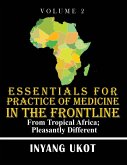
 Essentials for Practice of Medicine in the Frontline126,99 €
 How to live with the Virus: A guidebook to help you through14,99 €
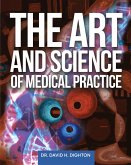
 The Art and Science of Medical Practice41,99 €


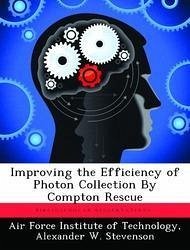
A method to improve the efficiency of photon collection in thin planar HPGe detectors was investigated. The method involved implementing a second HPGe detector to collect Compton scattered photons from the primary detector and incorporating coincident interactions in the two detectors that sum to the full energy event into the energy spectrum. This method is termed "Compton rescue" because the Compton scattered photons make a partial energy deposition in the primary detector and are added back to the spectrum after being detected by the second detector. This research has implications on improving the efficiency of positron annihilation spectroscopy (PAS) techniques including the use of the method in angular correlation of annihilation radiation (ACAR) and Doppler-broadening of annihilation radiation (DBAR) applications. The effect of using Compton rescue on the energy and spatial resolution on these two PAS techniques was investigated. The research was conducted in two phases: simulation, in which a Monte-Carlo program was used to predict the effectiveness of the Compton rescue method based on photon interaction simulations, and experiment, in which a position-sensitive HPGe detector and a large coaxial HPGe detector were used to implement Compton rescue. A two-detector DBAR experiment on single-crystal Ni was conducted using the Compton rescue setup to illustrate its utility. This work has been selected by scholars as being culturally important, and is part of the knowledge base of civilization as we know it. This work was reproduced from the original artifact, and remains as true to the original work as possible. Therefore, you will see the original copyright references, library stamps (as most of these works have been housed in our most important libraries around the world), and other notations in the work. This work is in the public domain in the United States of America, and possibly other nations. Within the United States, you may freely copy and distribute this work, as no entity (individual or corporate) has a copyright on the body of the work. As a reproduction of a historical artifact, this work may contain missing or blurred pages, poor pictures, errant marks, etc. Scholars believe, and we concur, that this work is important enough to be preserved, reproduced, and made generally available to the public. We appreciate your support of the preservation process, and thank you for being an important part of keeping this knowledge alive and relevant.