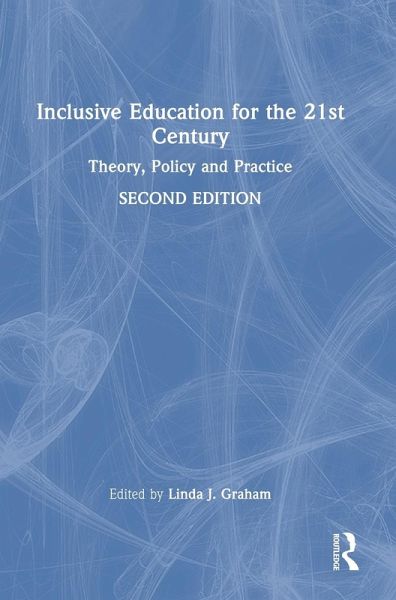
Inclusive Education for the 21st Century provides a rigorous overview of the foundational principles of inclusive education and the barriers to access and participation.
Inclusive Education for the 21st Century provides a rigorous overview of the foundational principles of inclusive education and the barriers to access and participation.
Linda J. Graham is Professor and Director of The Centre for Inclusive Education (C4IE) at Queensland University of Technology (QUT). She leads several externally funded research projects specialising in the inclusion and exclusion of students who experience difficulties in school and with learning.
Inhaltsangabe
Part 1: Foundations of Inclusion 1. Inclusive education: Three (and a bit) Years On 2. What is Inclusion... And What is it Not? 3. Inclusive education as a human right 4. Fundamental concepts of inclusive education 5. The legal foundations of inclusion 6. Inclusive Education: A Review of the Evidence Part 2: Implementing Systemic Inclusive Education Reform 7. Learning from international experience 8. Leading inclusive education reform 9. Multi-Tiered Systems of Support: What are they, where did they come from, and what are the lessons for Australian Schools? 10. The critical importance of language 11. Accessible Pedagogies 12. Including students with complex learning profiles in grade-level curriculum Part 3: Developing an Inclusive School Culture 13. Putting all students at the centre 14. What is Social Emotional Learning (SEL) and why is it important? 15. Supporting a sense of belonging and peer relationships 16. Nurturing close student-teacher relationships 17. Parents and teachers working together 18. Collaborating with colleagues and other professionals 19. Rethinking the use of teacher aides
Part 1: Foundations of Inclusion 1. Inclusive education: Three (and a bit) Years On 2. What is Inclusion... And What is it Not? 3. Inclusive education as a human right 4. Fundamental concepts of inclusive education 5. The legal foundations of inclusion 6. Inclusive Education: A Review of the Evidence Part 2: Implementing Systemic Inclusive Education Reform 7. Learning from international experience 8. Leading inclusive education reform 9. Multi-Tiered Systems of Support: What are they, where did they come from, and what are the lessons for Australian Schools? 10. The critical importance of language 11. Accessible Pedagogies 12. Including students with complex learning profiles in grade-level curriculum Part 3: Developing an Inclusive School Culture 13. Putting all students at the centre 14. What is Social Emotional Learning (SEL) and why is it important? 15. Supporting a sense of belonging and peer relationships 16. Nurturing close student-teacher relationships 17. Parents and teachers working together 18. Collaborating with colleagues and other professionals 19. Rethinking the use of teacher aides
Es gelten unsere Allgemeinen Geschäftsbedingungen: www.buecher.de/agb
Impressum
www.buecher.de ist ein Internetauftritt der buecher.de internetstores GmbH
Geschäftsführung: Monica Sawhney | Roland Kölbl | Günter Hilger
Sitz der Gesellschaft: Batheyer Straße 115 - 117, 58099 Hagen
Postanschrift: Bürgermeister-Wegele-Str. 12, 86167 Augsburg
Amtsgericht Hagen HRB 13257
Steuernummer: 321/5800/1497
USt-IdNr: DE450055826