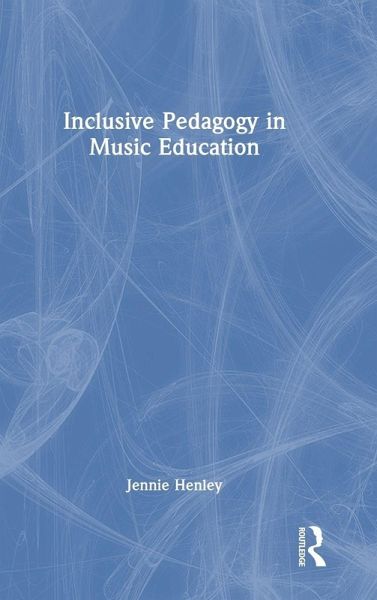
Solidly grounded in practice and research, Inclusive Pedagogy in Music Education enriches the conversation around inclusive practice in music pedagogy for researchers and students in music education, curricular leaders, and working music educators.
Solidly grounded in practice and research, Inclusive Pedagogy in Music Education enriches the conversation around inclusive practice in music pedagogy for researchers and students in music education, curricular leaders, and working music educators.
Jennie Henley is Director of Programmes and Professor in Music Education at the Royal Northern College of Music, Manchester, UK.
Inhaltsangabe
Preface: My story Why pedagogy and inclusion? Decisions as an educator: the 'Good' factor of exclusionary practice A young musician: lived experience of exclusionary practices Moving into academia: understanding pedagogy and reflecting on excellence Chapter 1: To begin with an ending Arriving at pedagogy and inclusion Enacting change through pedagogy Ideas, themes and questions The centrality of belonging The deficit approach Training and education Exploring the book Chapter 2: Understanding Pedagogy Understanding pedagogy Conceptualising pedagogy Learning theory Pedagogy as action What is inclusive pedagogy? The challenges of inclusive pedagogy in music education Value Context Measurement Process/product Pedagogy Chapter 3: Pedagogy and inclusion Cultural Historical Activity Theory The Activity System Working to an objective Mediators The community of learning Social conventions Participation Back to pedagogy Pedagogy and Inclusion Pre-determined outcomes Matching the community Understanding participation and progress Belonging Chapter 4: The excellence agenda The inclusive/exclusive conundrum Working beyond own experience Excellence in performance and teaching The relativity of musicianship Systems, structures and experience Excellence as experience Chapter 5: Musical starting points Student teachers as musical adults Reflection as research Current musical activities Prior musical activities English student teachers in the international context A musical baseline Musical profiles Confidence in context Chapter 6: Who can teach music? Expertise Being qualified A deficit approach Primary teachers can't teach music Musicians can't teach Teachers teach to the test There is no guarantee of quality Embracing difference, working together, and teaching all Chapter 7: Starting with the self Reflection and reflexivity The place of identity in activity Being successful Identity in sociocultural theory A safe place to be vulnerable Chapter 8: Difference is essential Why do we study music? Pursuing excellence? The question of practice Navigating predetermined contexts Starting with what the children already know Working creatively with other subjects Embracing difference Embedding difference in inclusive practice Chapter 9: Vulnerability as growth Stating vulnerabilities Socioemotional growth Socio-emotional growth of educators Stories of growth Sandra's story Alicia's story Jody's story Returning to pedagogy
Preface: My story Why pedagogy and inclusion? Decisions as an educator: the 'Good' factor of exclusionary practice A young musician: lived experience of exclusionary practices Moving into academia: understanding pedagogy and reflecting on excellence Chapter 1: To begin with an ending Arriving at pedagogy and inclusion Enacting change through pedagogy Ideas, themes and questions The centrality of belonging The deficit approach Training and education Exploring the book Chapter 2: Understanding Pedagogy Understanding pedagogy Conceptualising pedagogy Learning theory Pedagogy as action What is inclusive pedagogy? The challenges of inclusive pedagogy in music education Value Context Measurement Process/product Pedagogy Chapter 3: Pedagogy and inclusion Cultural Historical Activity Theory The Activity System Working to an objective Mediators The community of learning Social conventions Participation Back to pedagogy Pedagogy and Inclusion Pre-determined outcomes Matching the community Understanding participation and progress Belonging Chapter 4: The excellence agenda The inclusive/exclusive conundrum Working beyond own experience Excellence in performance and teaching The relativity of musicianship Systems, structures and experience Excellence as experience Chapter 5: Musical starting points Student teachers as musical adults Reflection as research Current musical activities Prior musical activities English student teachers in the international context A musical baseline Musical profiles Confidence in context Chapter 6: Who can teach music? Expertise Being qualified A deficit approach Primary teachers can't teach music Musicians can't teach Teachers teach to the test There is no guarantee of quality Embracing difference, working together, and teaching all Chapter 7: Starting with the self Reflection and reflexivity The place of identity in activity Being successful Identity in sociocultural theory A safe place to be vulnerable Chapter 8: Difference is essential Why do we study music? Pursuing excellence? The question of practice Navigating predetermined contexts Starting with what the children already know Working creatively with other subjects Embracing difference Embedding difference in inclusive practice Chapter 9: Vulnerability as growth Stating vulnerabilities Socioemotional growth Socio-emotional growth of educators Stories of growth Sandra's story Alicia's story Jody's story Returning to pedagogy
Es gelten unsere Allgemeinen Geschäftsbedingungen: www.buecher.de/agb
Impressum
www.buecher.de ist ein Internetauftritt der buecher.de internetstores GmbH
Geschäftsführung: Monica Sawhney | Roland Kölbl | Günter Hilger
Sitz der Gesellschaft: Batheyer Straße 115 - 117, 58099 Hagen
Postanschrift: Bürgermeister-Wegele-Str. 12, 86167 Augsburg
Amtsgericht Hagen HRB 13257
Steuernummer: 321/5800/1497
USt-IdNr: DE450055826