

Andere Kunden interessierten sich auch für
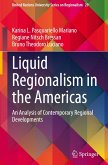
 Liquid Regionalism in the Americas91,99 €
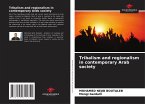
 Tribalism and regionalism in contemporary Arab society47,99 €
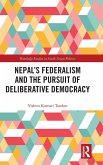
 Nepal's Federalism and the Pursuit of Deliberative Democracy176,99 €
 A reformed European model52,95 €
![]() "...This Land Belongs To..."36,99 €
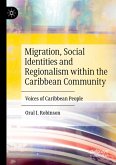
"...This Land Belongs To..."36,99 € Migration, Social Identities and Regionalism within the Caribbean Community38,99 €
") Civil Society and Political Representation in Latin America (2010-2015)91,99 €
Civil Society and Political Representation in Latin America (2010-2015)91,99 €


This book analyses the constitutional and political thinking of Venezuelan war general and political visionary, Francisco de Miranda (1750-1816). It unravels Miranda's emancipatory ideas that were hidden or discarded by local or doctrinal oligarchic interests, and which were not correctly perceived by most historians. The book presents Miranda s political texts (constitutional projects, pamphlets, proclamations, publications, letters) in detail in their respective contexts with analytical commentaries. It rescues the philosophy of an atypical revolutionary and singular hero who proposed an original synthesis of Anglo-Saxon, French and Indigenous cultures. It showcases the farsightedness of Miranda s projects for a federal constitution found in current principles of geographical subsidiarity, pre-empting the work of the European Union: strong federal powers but strictly limited to external defence/diplomacy, economic and monetary union, and human rights, while other policies remain decentralized for efficiency and to protect local identities. Miranda s draft constitutions for Spanish America and Brazil show his belief in a new legal-institutional framework rooted in local and indigenous institutions and cultures, which would warrant regional, social and racial integration, which in turn was necessary to transform political independence into lasting emancipation and sustainable socioeconomic development.
Written in a crucial period of revolutions and wars that shaped the Western world, Miranda s work remains nonetheless very relevant in alleviating profound difficulties of governability, not only for Latin America and the stagnation of its regional integration but also for a globalized world and the socio-political challenge of multicultural societies. This important book appeals to a broad readership, including historians, policymakers, political scientists and constitutionalists, Latin America experts, and experts on regional integration.
Written in a crucial period of revolutions and wars that shaped the Western world, Miranda s work remains nonetheless very relevant in alleviating profound difficulties of governability, not only for Latin America and the stagnation of its regional integration but also for a globalized world and the socio-political challenge of multicultural societies. This important book appeals to a broad readership, including historians, policymakers, political scientists and constitutionalists, Latin America experts, and experts on regional integration.